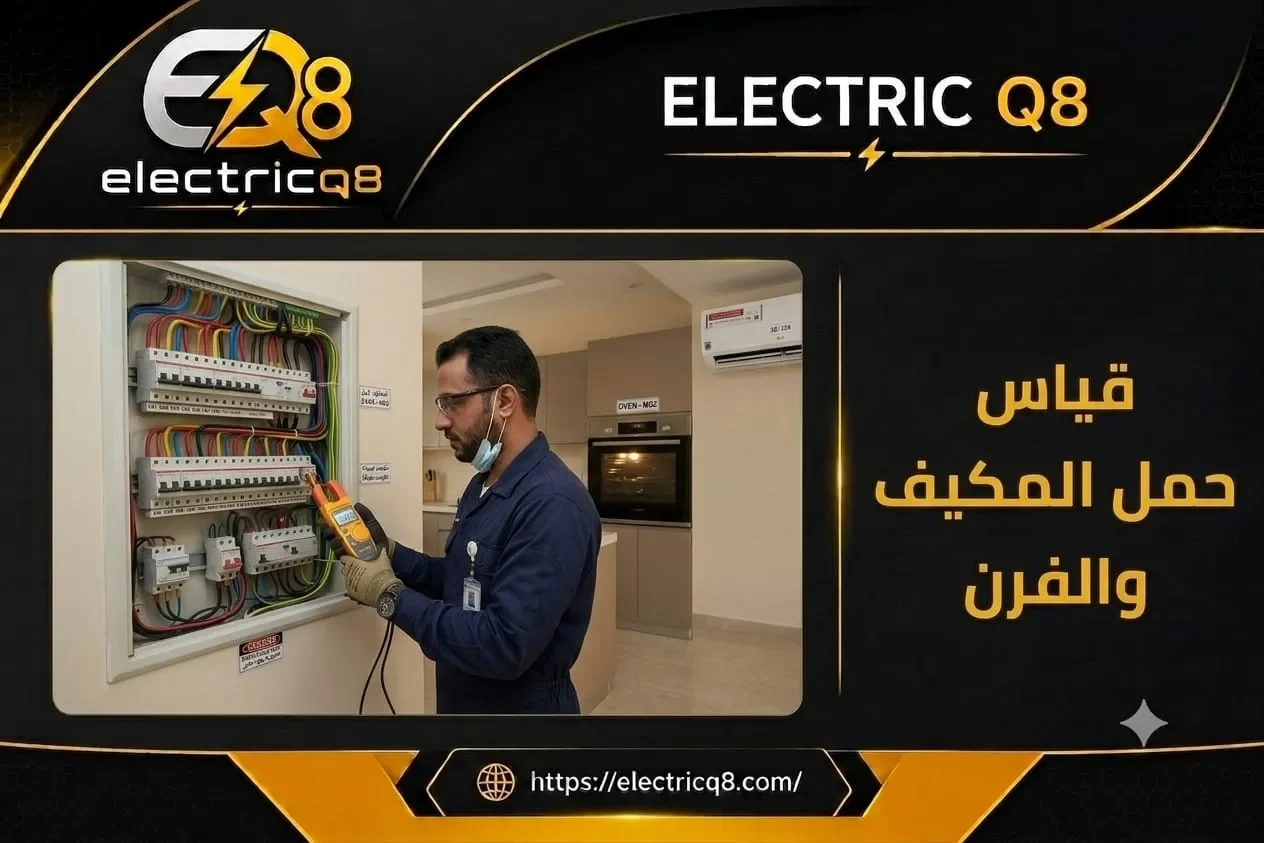
An electrical failure inside a company in Kuwait is not the same as a power interruption in an empty building. The problem can shut down employees' computers, interrupt meetings, affect communication networks and access control systems, and disrupt customer service. Sometimes the power outage affects only one department while the rest of the building continues operating normally. This situation requires an inspection that identifies the location of the fault rather than disconnecting electricity throughout the entire company. Hiring a company electrician in Kuwait helps diagnose problems involving distribution panels, electrical circuits, and wiring connections and determine the appropriate repair method according to the building's electrical system. Most importantly, the work should be coordinated with company management and carried out under clear safety procedures so that a limited fault does not develop into a larger interruption or expose employees and equipment to electrical hazards.
Company Electrician in Kuwait

When searching for a company electrician in Kuwait, you usually need a professional who understands how to work in a business environment containing employees, multiple departments, and equipment that supports daily operations. Repairing electricity inside a company is not simply a matter of finding a tripped circuit breaker and resetting it. The problem may involve a circuit supplying several offices, a sub-distribution panel, or wiring connections in an area where shutting down operations during working hours would be difficult.
Consider an illustrative example of a company with an accounting department, customer service department, and meeting room. If electricity is interrupted only in the accounting department while the other departments continue operating normally, this information helps the electrician narrow down the inspection area. However, if lighting and electrical outlets stop working across several floors, the problem may involve a shared power supply or main distribution panel and require a different technical assessment.
The first step when responding to an electrical fault report is understanding the symptoms and identifying the affected area. Does the problem involve lighting only? Have the computers lost power? Has a circuit breaker tripped? Did the interruption occur after new equipment was connected? These questions do not provide a final diagnosis, but they help organize the inspection and reduce time spent investigating unrelated circuits.
It is also important for the electrician to communicate with the maintenance supervisor or another authorized company representative before beginning work. Some circuits may supply communication equipment, security systems, or operational machinery that should not be disconnected without coordination. If the repair requires isolating a particular circuit, this must be done through appropriate safety procedures while identifying the equipment that will be affected.
Not every company requires the same electrical service. A small administrative office inside a commercial tower differs from a corporate headquarters containing several floors, server rooms, and centralized air conditioning systems. The scope of work must therefore match the size of the premises, the nature of its electrical installations, and the electrician's authorized responsibilities.
A suitable service begins by identifying the cause of the fault, completing the necessary repair, and verifying that the circuit is safe before returning it to operation. The electrician should also explain the completed work to the company's representative rather than simply restoring electricity temporarily.
-
A company electrician must understand how electricity is distributed between departments floors and sub-distribution panels because an outage affecting only the accounting department requires a different inspection approach from a failure involving several floors or a shared electrical supply inside an administrative building
-
Coordinating with the maintenance supervisor before isolating any electrical circuit helps maintain business continuity whenever possible because certain circuits may supply communication systems or essential operational equipment that should not be disconnected without understanding the consequences for the company
-
Evaluating a company electrician's service should focus on identifying the underlying cause verifying the completed repair and explaining the work performed because electricity returning after a breaker is reset does not prove that the original fault has been eliminated or that the circuit is safe for continued operation
Electrical Technician for Companies in Kuwait
Choosing an electrical technician for companies in Kuwait depends on the nature of the fault and the complexity of the electrical installation. Some service requests involve a damaged switch or outlet inside a single office, while others concern distribution panels or circuits supplying several departments. This distinction matters because the technician must have the qualifications appropriate for the work and understand when the problem requires an electrical design specialist or the building's maintenance team.
In companies renting office space inside commercial towers, responsibility for certain parts of the electrical installation may belong to building management, while the internal wiring falls under the tenant's responsibility according to the applicable agreements. It is therefore preferable to establish the boundaries of responsibility before repairs begin. If the fault originates in a shared floor supply, intervention by the building's responsible maintenance provider may be necessary rather than making unrelated modifications inside the company's office.
An important characteristic of a qualified technician is avoiding a final diagnosis based only on hearing that a breaker keeps tripping or that electrical outlets have stopped working. A competent technician gathers information about the fault and examines the relevant components using suitable inspection and measurement equipment while following electrical isolation and safety requirements.
The technician should also be capable of interpreting available circuit labels and electrical drawings and understanding the difference between main distribution panels and sub-distribution panels. In some buildings, wiring installations are old or have undergone repeated modifications. Existing labels should therefore not be relied upon without verifying the actual circuits.
From a cost perspective, choosing a technician solely because they offer the lowest call-out fee is not advisable. Repairing one outlet is different from tracing an intermittent fault across several circuits or inspecting a distribution panel that requires isolation procedures and coordination with building management. A clear quotation identifies the diagnostic work, required repairs, and materials that may need replacement once the problem has been established.
Some faults may also require replacement components, approvals, or a scheduled electrical shutdown. A responsible technician explains these requirements rather than making an unsupported promise that every fault can be repaired during a single visit.
-
Choosing an electrical technician for a company should take into account experience with sub-distribution panels office circuits and the boundaries of responsibility inside commercial buildings because a defective outlet in one office differs from a shared supply problem requiring coordination with tower management
-
A qualified technician relies on inspection and verification of circuit conditions rather than guessing from the reported symptoms because a repeatedly tripping breaker or intermittently failing electrical outlets may have several possible causes that require appropriate technical testing
-
Comparing technician costs requires understanding what is included in diagnosis repairs materials and coordination because a low call-out fee does not necessarily reflect the total cost of a fault that requires tracing several distribution panels or performing work outside normal business hours
Electrical Repairs for Companies
Electrical repairs for companies require a plan that considers employee safety and business continuity whenever possible. An unplanned intervention in a single circuit can interrupt equipment or systems connected to other departments. The correct approach begins with identifying the affected section, understanding which devices depend on it, and selecting a suitable repair method after determining the actual cause of the fault.
Suppose a group of electrical outlets in a customer service area stops working while the lighting continues operating normally. In this situation, it would be incorrect to assume that the outlets themselves are defective. The problem may involve the supply circuit, a wiring connection, or a protective device associated with that group. The electrician should establish the extent of the interruption and examine the circuit using appropriate safety procedures before replacing any components.
If the problem occurs in a distribution panel supplying several offices, the repair may require advance coordination so that affected equipment can be shut down in an organized manner. Some companies rely on information systems, networks, and servers that may be affected by a sudden loss of power. The IT manager should therefore be involved whenever those systems might be affected. The presence of an uninterruptible power supply, or UPS, does not mean that electricity can be disconnected at any time without planning.
A common mistake is replacing a circuit breaker simply because it trips repeatedly without identifying the reason. Depending on the protective device and electrical conditions, the breaker may operate because of excessive load, an electrical fault, or a problem involving a circuit component. Proper repair addresses the underlying cause and verifies that the protective arrangement is suitable rather than replacing components without assessment.
Intermittent faults also require attention, such as electricity disappearing from certain offices and then returning without any obvious intervention. These symptoms need careful investigation because the return of power does not prove that the problem has disappeared. Wiring connections or electrical components may still require urgent assessment.
After the repair, the appropriate tests must be completed and the circuit checked for safe operation before the area is handed back to the company. It is also preferable to document the section repaired, any components replaced, and observations requiring future follow-up.
The real advantage of professional electrical repairs for companies is reducing unnecessary operational interruptions while maintaining safety and avoiding quick fixes that cause recurring problems during subsequent working days.
-
Repairing office outlet circuits begins by establishing the extent of the interruption and inspecting the supply protective devices and wiring connections because several electrical points stopping at once does not automatically mean that every outlet is defective or needs replacement
-
Coordinating repairs with the IT manager is important when servers networks and workplace equipment may be affected because disconnecting a shared electrical circuit without planning can interrupt systems used by several departments simultaneously
-
Intermittent electrical faults must be investigated even if power returns to normal because restored operation alone does not confirm that wiring connections are safe or that the underlying problem has been eliminated and the fault may continue until it is properly repaired
Common Electrical Faults in Companies
Electrical faults in companies do not all appear in the same way or require the same repair method. Sometimes the problem is obvious, such as lighting failing throughout an entire department. In other situations, it is intermittent, such as a particular device repeatedly stopping or a circuit breaker tripping whenever several pieces of equipment operate together. These differences are important because diagnosing electrical faults in business premises requires understanding the circuits and connected equipment rather than simply replacing the component suspected of causing the problem.
Electrical problems in administrative buildings may include weak or interrupted power at certain outlets, failure of a lighting group, or a protective device tripping inside a sub-distribution panel. Employees may also notice abnormal heat around an electrical socket or a burning smell near an electrical point. These last two symptoms require urgent attention because continued use of the affected installation may expose people and equipment to electrical hazards.
It is important to distinguish between an electrical supply fault and a problem inside the connected device. If one printer stops working while other equipment in the same area continues operating, the fault may be inside the printer, its power cable, or the outlet supplying it. However, if several devices connected to one circuit stop simultaneously, the inspection may focus on the shared supply and protective arrangements.
Some electrical faults also appear after modifications to the workplace. For example, a meeting room may be converted into an open working area containing more computers and monitors. If the electrical loads and circuit distribution are not reviewed, problems may develop because the circuit is being used differently from its original design.
However, not every circuit breaker trip indicates an overload. Possible causes may include insulation faults, protective devices, or wiring connections, depending on the circumstances. Diagnosis must therefore be based on suitable inspection and testing.
From a practical perspective, recording the location and timing of the fault and identifying the affected equipment before the electrician arrives can be helpful. This information reduces unnecessary questioning and helps connect the symptoms to a specific area of the premises.
-
Differences between a single failed outlet a complete group losing electricity and a tripped sub-distribution panel require diagnosis according to the extent of the problem because replacing functioning components without identifying the fault can waste time and increase maintenance costs
-
A burning smell or abnormal heat around outlets or electrical connections requires stopping use of the affected equipment and arranging professional inspection because continuing to operate devices through a potentially damaged electrical point can expose employees and equipment to serious hazards
-
Recording when the fault appears which devices are affected and any recent changes to office layouts helps the electrician investigate because additional equipment or changes in room usage can alter electrical loads and reveal problems that were not noticeable under the previous arrangement
Power Outages in Company Offices

When a power outage occurs in a company, the first thing the responsible person needs to establish is the extent of the interruption. Has electricity stopped in one office, throughout an entire floor, or across the whole building? Are the lighting and outlets both affected, or are certain systems still operating? These answers help identify who should respond and prevent every outage from being treated as an internal fault within the company's office.
If electricity is unavailable throughout the building, the problem may involve the external electricity supply or the building's main distribution systems. In that situation, it is important to contact building management or the organization responsible for the electrical supply rather than attempting modifications inside the office distribution panel. If the interruption is limited to one area, however, the associated circuit or sub-distribution panel may require inspection.
Large companies need an organized response to power interruptions because certain systems have specific operating requirements. Servers, communication networks, and electronic access control systems may be affected by sudden outages even when some equipment is supported by backup power. Having a UPS does not mean every device is protected or that backup operating time is unlimited.
Employees should not be instructed to open electrical distribution panels or repeatedly reset circuit breakers. They can report the affected area, identify equipment that has stopped working, and describe visible warning signs. Inspecting electrical connections and protective devices, however, must remain the responsibility of qualified personnel.
Elevators and safety-related systems also require particular attention if they are affected by an outage. Building management should follow the established emergency procedures, and the return of ordinary lighting must not be taken as proof that every building system has returned to normal operation.
After electricity is restored, essential systems should be checked according to company procedures, and the cause of the outage should be reviewed if it originated within the premises. Repeated interruptions require technical investigation rather than simply accepting the return of power each time.
-
Identifying whether the power outage affects one office an entire floor or the complete building helps direct the report to the appropriate party because a main supply problem is different from a fault in a branch circuit inside the company's premises
-
Responding to an outage in a company that depends on servers and communication networks requires coordination with the IT team because backup power systems have operating limits and specific requirements and cannot guarantee uninterrupted operation of every service
-
The return of electricity after an outage does not necessarily mean that all company systems are ready for use because access control devices communication systems and certain operational equipment may require checks under established operating procedures
Electrician for Administrative Buildings in Kuwait
An electrician for administrative buildings in Kuwait works with facilities whose electrical distribution arrangements can be considerably more complex than those of a small independent office. An administrative building may contain several floors, multiple tenants, service rooms, and main and secondary distribution panels. Electrical work therefore requires understanding which parts of the system fall within the electrician's responsibilities and coordinating with building management before disconnecting power or modifying connections.
In some commercial towers, each company has a dedicated sub-distribution panel serving its rented space, while shared electrical installations supply corridors, elevators, and common building services. If a fault appears inside a tenant's office, it may involve the company's internal installation or the electricity supplied through the building's distribution system. Distinguishing between these possibilities is important to avoid carrying out repairs in an area that is not responsible for the problem.
Understanding available electrical drawings and the labels on panels and circuits is another essential consideration. Some buildings have undergone modifications because office spaces were divided or tenants changed. Over time, the existing circuit labels may no longer reflect how the premises are currently used. A qualified electrician must therefore verify the actual circuit before carrying out isolation or maintenance.
Working hours inside the building must also be considered. If a repair requires disconnecting a circuit that affects several tenants, the work may require approval from building management, suitable scheduling, and advance notification to the affected parties. This coordination is part of a professional service rather than an unnecessary delay.
It is also important to distinguish between straightforward maintenance work and tasks requiring electrical design, approvals, or intervention by the party responsible for the main electrical systems. A qualified electrician understands the limits of their competence and authorization and does not work on equipment outside those limits.
Costs are influenced by the scope and location of the fault, accessibility, coordination requirements, and whether work must take place outside normal business hours. Repairing one outlet inside an office should therefore not be compared with repairing a shared electrical supply in a multi-story building solely on the basis of a call-out fee.
-
Working on electrical systems in administrative buildings requires understanding the difference between tenant circuits and shared building services because a fault inside one company's rented space may involve its sub-distribution panel or a supply system managed by the building
-
Verifying electrical drawings and panel labels before isolation is important in commercial towers whose internal layouts have changed repeatedly because older circuit descriptions may no longer match the current distribution of offices and tenants
-
Coordinating repair schedules with building management and affected tenants reduces business disruption because disconnecting a shared electrical circuit during working hours may affect several companies even when the original fault report came from only one office
Repairing Electrical Circuits in Companies
Repairing electrical circuits in companies depends on identifying the function of each circuit and the equipment connected to it before work begins. Administrative premises may contain separate circuits for lighting, general electrical outlets, and equipment groups requiring dedicated supplies according to the electrical design. Each circuit has its own operating characteristics, loads, and protective requirements that the electrician must consider when investigating a fault.
If a group of electrical outlets in a training room stops working when numerous devices are connected, the correct response is not to assume that installing a higher-rated breaker will solve the problem. The actual electrical loads, circuit specifications, cables, and protective arrangements must be assessed to determine whether the current usage is compatible with the original design or whether an approved modification is necessary.
In another situation, a lighting circuit inside an administrative corridor may fail while the lighting in nearby corridors continues operating. The electrician should trace the affected circuit and inspect the relevant components rather than disconnecting every distribution panel in the building. All inspection and isolation work must nevertheless follow appropriate safety procedures and be performed by qualified personnel.
Previous undocumented modifications can also create difficulties. A contractor may have added electrical outlets when office layouts were changed without updating the electrical drawings. This can make it harder to establish the actual loads and locations of connections, making circuit documentation an important part of the repair process.
The approach to a circuit supplying ordinary office equipment may also differ from the approach required for a circuit connected to sensitive operational systems. Some equipment requires specific shutdown and restart arrangements coordinated with the people responsible for its operation.
Once the cause has been corrected, the necessary tests should be completed and the compatibility of replacement components with the circuit requirements verified. A successful repair is not simply the return of electricity but confirmation that the affected installation has been restored safely.
-
Repairing a circuit supplying numerous devices begins with reviewing electrical loads protective arrangements and cable specifications because repeated tripping during equipment use does not justify increasing the breaker rating without assessing the circuit's designed capacity
-
Tracing lighting circuit faults in corridors and offices requires identifying the affected area before electrical isolation because disconnecting unrelated panels can unnecessarily interrupt operations in other departments without contributing to the investigation
-
Updating circuit information after discovering older wiring or undocumented additions supports future maintenance because knowing which electrical points and equipment are connected to a supply reduces the difficulty of tracing faults when office layouts change
Electrical Fault Technician for Companies
Hiring an electrical fault technician for companies is particularly important when a problem is difficult to identify from its visible symptoms. Some faults occur repeatedly at particular times, while others appear unexpectedly and disappear before the technician arrives. These problems require an organized diagnostic approach based on available information and appropriate testing rather than assumptions.
For example, if employees report that electricity in a group of offices stops briefly and then returns, several possible causes may need investigation. It is important to establish whether all the affected devices are connected to the same circuit, whether the problem occurs when certain equipment is switched on, and whether the lighting is affected as well. Each piece of information helps narrow down the inspection.
The technician must use suitable measurement and testing equipment while following appropriate safety procedures. Not every test is suitable for every situation, and some electrical work requires isolation and verification that voltage is absent before components are handled. Random experimentation or touching electrical connections to determine whether they are hot is not an acceptable diagnostic method.
The technician must also distinguish between electrical supply symptoms and problems originating inside electronic devices. A computer repeatedly shutting down may have a problem with its electricity supply, internal components, or the backup power system connected to it. Diagnosis should establish the actual source before assuming that the building's electrical installation is responsible for every interruption.
When choosing a technician, the ability to explain inspection results clearly is another important consideration. If the problem requires an immediate repair or a modification scheduled for a later date, the technician should explain the difference and determine whether the affected equipment can be operated safely following assessment.
Certain faults may require technical monitoring or additional tests to identify an intermittent problem. A responsible technician does not claim a confirmed diagnosis without sufficient evidence or promise a permanent repair before establishing the underlying cause.
-
An electrical fault technician needs information about the timing of the problem its extent and the equipment affected because intermittent faults may disappear temporarily and employee observations can become an important part of determining where the inspection should begin
-
Using suitable testing instruments and procedures for isolation and electrical safety is essential when diagnosing circuits because random experimentation or direct contact with connections of unknown condition can create hazards more serious than the original fault
-
Explaining diagnostic findings and their limitations helps company management make informed decisions because certain faults can be identified during one visit while other problems require additional testing before the cause can be established confidently
Electrical Fault Maintenance for Companies

Electrical fault maintenance for companies differs from emergency repair because it also focuses on reducing recurring problems and improving how electrical system conditions are monitored. A company experiencing repeated breaker trips or damaged outlets in several departments needs to establish whether the faults are unrelated or connected to a common issue involving equipment usage, circuit distribution, or component condition.
Maintaining a fault record is preferable. This record should identify when a problem occurred, where it happened, which equipment was affected, and what repair was completed. Such records make it easier to recognize recurring patterns instead of treating every report as an entirely new incident. If the same area develops another fault after a particular component has been replaced, the underlying cause may require a broader investigation.
Routine maintenance may also include reviewing the condition of accessible electrical components, ensuring that distribution panels remain accessible, and checking for signs of damage or abnormal overheating through suitable inspection procedures. Work inside electrical panels and electrical testing, however, require qualified specialists and appropriate isolation and safety arrangements according to the work involved.
Changes in how the company uses its premises must also be considered. A department that previously contained only a few employees may become a busy workspace with additional computers, monitors, and printers. This change may require reassessing the electrical distribution if the loads have increased significantly.
Maintenance observations should be prioritized according to their potential risk. A broken outlet cover is not the same as a burning smell or evidence of thermal damage inside a distribution panel. Conditions indicating an electrical hazard require urgent action, and the affected equipment should not continue operating.
Maintenance schedules should reflect the type of premises, installed equipment, manufacturer recommendations, and applicable requirements. Not every company needs the same number of visits or identical electrical tests.
Organized maintenance helps management plan repairs instead of waiting for unexpected interruptions, but it cannot guarantee that every future fault will be prevented. Its main benefit is improving the identification of problems and ensuring that corrective actions are monitored and documented.
-
Recording previous faults their locations and completed repairs helps identify recurring problems because repeated interruptions in the same department after several service visits may indicate an underlying cause that has not been adequately addressed
-
Reviewing electrical usage after increasing employee numbers or installing additional equipment is an important part of maintenance because circuit distribution that was previously suitable may require reassessment when electrical loads and operating patterns change
-
Prioritizing maintenance findings according to their level of risk helps determine which actions are most urgent because evidence of burning or abnormal overheating requires a different response from routine improvements or replacement of noncritical components
Company Electrician Services in Kuwait
Choosing a company electrician service in Kuwait requires looking beyond how quickly a technician can arrive. Businesses need a service provider who can respond to reports clearly, establish the scope of the problem, and coordinate with responsible personnel before disconnecting electricity in ways that could affect employees or important systems.
The first consideration when evaluating a service is how electrical fault reports are handled. It is useful for the company representative to provide the business location, type of building, affected department, observed symptoms, and any warning signs. Accurate information helps determine which technical expertise is required and whether advance coordination with building management will be necessary.
The scope of the service must also be clear. Is the request limited to fault diagnosis, or does it include repairs after diagnosis, distribution panel maintenance, or circuit modifications? Some work requires replacement materials and components, while other tasks may require approvals or completion outside normal working hours. The final cost should therefore not be presented as a certainty before the nature of the problem is understood.
Quotations should be compared according to their contents. One quotation may include inspection, repairs, materials, and testing, while another may cover only the technician's visit. A meaningful comparison considers the work included, each party's responsibilities, and how additional work discovered during diagnosis will be handled.
Companies with sensitive departments should also agree on coordination procedures during repairs. If servers, communication equipment, or access control systems may be affected, the personnel responsible for those systems must be involved before electrical interruptions are planned.
After the service has been completed, it is preferable to receive a brief description of the fault, its cause, the repair performed, and any observations requiring further attention. This information helps management review future problems and evaluate maintenance quality.
The most suitable service combines technical competence, clear communication, commitment to safety, and respect for the company's working environment without making unrealistic promises that electrical interruptions will never happen again.
-
Evaluating a company electrician service begins with how clearly fault reports are received and how accurately the affected department and symptoms are identified because organized information helps assign a suitable technician and reduces unnecessary procedures inside the building
-
Comparing electrical service quotations for companies requires knowing whether the price includes diagnosis materials repairs and testing because the call-out fee alone does not reflect the actual value or total cost of the work required after the fault has been identified
-
Receiving a clear report after repairs helps company management monitor the electrical installation because documenting the cause completed work and remaining observations provides a useful reference if the problem returns or future maintenance is planned
Conclusion
Having a company electrician in Kuwait who understands administrative buildings helps businesses respond to electrical faults and power outages in an organized manner while protecting employee safety and maintaining operations whenever possible. Electrical repairs inside a company begin with establishing the extent of the problem, identifying affected circuits and equipment, and performing suitable inspections before replacing components. Coordination with building management and the IT manager is also important when the work may affect shared electrical supplies or sensitive systems. It is preferable to choose a service that clearly explains the fault, repair scope, costs, and completed work rather than simply restoring electricity temporarily. By recording previous faults and following up on technical observations, maintenance becomes more organized, and the likelihood of recurring problems caused by unresolved underlying faults can be reduced.
Frequently Asked Questions
What should I do if electricity goes out in only one department of my company?
Identify the affected area and equipment that has stopped working, then notify the maintenance supervisor or responsible department within the company. Do not attempt to open the distribution panel or repeatedly reset circuit breakers because the circuit, power supply, and protective arrangements need to be inspected by a qualified electrician.
Can a company electrician repair distribution panels and electrical circuits?
This depends on the electrician's qualifications, the scope of work, and their authorization within the building. Some faults involve the company's internal wiring, while problems affecting main distribution panels or shared electrical supplies may require intervention by building management or a specialized contractor.
Why does a circuit breaker keep tripping in my company?
Possible causes include excessive electrical loads, insulation faults, defective connections, equipment problems, or issues involving the protective device itself, depending on the circumstances. Repeated tripping requires professional diagnosis and should not be addressed by installing a higher-rated breaker without reviewing the circuit design.
Can electrical repairs be completed without shutting down the entire company?
Sometimes the affected circuit can be isolated without interrupting the rest of the premises if the electrical design and nature of the fault allow it. However, certain repairs require disconnecting a shared supply or arranging a planned shutdown for safety reasons. These activities must be coordinated with the appropriate company representatives.
How much does it cost to repair company electrical faults in Kuwait?
The cost varies according to the type and location of the fault, the number of affected circuits, the need for replacement components or electrical testing, and whether coordination with building management is required. Accurate pricing depends on identifying the problem and the necessary work rather than estimating the cost from the company's floor area alone.