
When the main breaker trips during peak hours and the power goes out while several appliances are operating at the same time, it is easy to assume that the problem is simply an overload. However, the timing of the trip gives the electrician a diagnostic clue rather than a final conclusion. The cause may be related to the actual load, a particular circuit, connections that require inspection, the condition of the breaker itself, or another factor within the electrical system. For that reason, the solution is not to install a larger main breaker or repeatedly reset it whenever it trips. Proper diagnosis begins by identifying what was operating at the time of the trip and then reviewing the actual loads, supply source, feeders, protection, and connections according to the system design. This makes it possible to determine whether the problem genuinely occurs because of peak demand or whether higher loading is simply exposing another fault that requires a different repair.
Main Breaker Trips During Peak Hours

When the main breaker trips during peak hours repeatedly, the timing is valuable information for the electrician because peak periods usually involve a larger number of simultaneous electrical loads. However, this information alone is not enough to conclude that the main breaker is undersized or that the home or commercial property has exceeded its available capacity. The main breaker is part of a complete protection system, and any decision involving it needs to consider the supply, feeder, actual loads, connections, and electrical system requirements.
Consider a practical scenario. A property operates normally for most of the day, but the trip appears in the evening when air conditioners are operating together with kitchen appliances and other loads. The relationship with the period of heavy use deserves measurement. Instead of immediately assuming that the solution is a larger breaker, the electrician first identifies which loads were actually operating, when the trip occurred, and whether the same pattern happens repeatedly. The system can then be reviewed and the necessary measurements taken by a qualified person under suitable operating conditions.
In another situation, the homeowner may assume that the problem is related to peak demand because the trip occurs while many appliances are operating, while the actual cause requires inspection of a particular circuit, connection, or another system component. Higher electrical demand can sometimes make an existing problem more noticeable without necessarily being its root cause.
If the main breaker trips, do not repeatedly reset it simply to keep the electricity running. If severe heat, a burning smell, smoke, sparking, blackening, or melting is present near the panel, stay away from it, do not open the electrical panel, and make appropriate urgent inspection the priority.
-
A trip that coincides with several loads operating at the same time gives the electrician an important pattern to investigate but does not by itself prove that the available capacity is insufficient because the timing still needs to be connected with measurements and system condition
-
Installing a higher-rated main breaker without confirming the feeder supply load and required protection can compromise part of the intended electrical protection instead of solving the cause which is why the main breaker should never be changed solely because it trips
-
Severe heat a burning smell smoke or sparking at the electrical panel changes the priority from analyzing peak demand to protecting people because approaching the panel or attempting to restore power may be unsafe
Main Breaker Trips Under Load
If the main breaker trips under load, the first question should not be “What larger breaker should replace it?” but rather “What load was actually present when the trip occurred?” This distinction matters because the ratings of the branch breakers inside the electrical panel do not equal actual electricity consumption. Their ratings should not be added together and treated as the load on the main breaker. Breakers are protective devices for circuits rather than meters that show how much current is continuously being used.
For example, a panel may contain many branch breakers while some of those circuits carry very little load at the same time. In another property, there may be fewer circuits while several major loads operate simultaneously during a particular period. Evaluating the main breaker therefore requires an understanding of actual operation rather than relying on the appearance of the panel or the number of breakers.
The electrician connects the trip with the timing of equipment operation and determines whether a particular appliance or group of loads is consistently associated with the problem. This relationship helps direct the inspection but does not prove the cause by itself. If the main breaker trips under a specific operating pattern, the loads, protection, connections, and other relevant system components should be examined according to the condition instead of immediately choosing one explanation.
One potentially dangerous mistake is assuming that the main breaker is “too weak” simply because it trips and then replacing it with a larger one. The breaker rating is not selected merely to prevent tripping at any cost. It must remain compatible with the system design, feeders, required protection, and supply. A breaker that no longer trips is not necessarily an improvement if the electrical system itself is not suitable for that change.
-
Adding together branch breaker ratings does not provide the actual load on the main breaker because the rating printed on each breaker relates to protection of its circuit and does not mean that the circuit continuously draws that amount of current
-
Knowing which appliances were operating at the moment of the trip creates a stronger diagnostic picture because simultaneous demand matters more than simply counting how many electrical appliances are installed in a home shop or office
-
Increasing the main breaker rating simply to stop it from tripping without reviewing the feeder protection and available capacity is not a diagnostic solution because the breaker rating needs to be part of a coordinated electrical design rather than a random response to the symptom
Main Circuit Breaker Keeps Tripping
When the main circuit breaker keeps tripping, power is interrupted across a wider area than when an individual branch breaker operates. The first step is therefore identifying which protective device actually tripped. Some people refer to any large breaker as the “main,” while the arrangement of protective devices can differ between properties. Identifying the device that operated helps the electrician determine where to begin instead of treating every widespread outage as the same fault.
The trip itself is not proof that the main breaker is defective. A breaker's purpose is to provide protection under specific conditions, so the fact that it operated is not enough to declare it faulty. At the same time, it should not automatically be considered healthy simply because it can be reset and power returns. Diagnosis needs to consider the reason for operation, the pattern of tripping, and the condition of the electrical system associated with it.
If the problem began after new equipment was installed, that is important information, but it does not automatically mean that the new appliance is faulty. The addition may have changed the overall load pattern, exposed an existing limitation, or simply coincided with another problem. The electrician therefore reviews the requirements of the new equipment in relation to the existing system rather than either ignoring the new equipment or immediately blaming it.
Breaker age alone is also not sufficient reason for replacement. An older breaker may require assessment according to its condition, but the decision should depend on inspection, compatibility, and required protection. If replacement is genuinely necessary, a breaker that physically fits inside the panel is not automatically an appropriate substitute.
-
Identifying which protective device actually tripped is essential because the main breaker branch breakers and other protective devices perform different functions and the location of the trip changes the direction of diagnosis
-
A main breaker tripping does not prove that it is defective because the protection may have responded to a condition elsewhere in the electrical system while repeated trips require the underlying cause to be identified instead of replacing the breaker based only on the symptom
-
New equipment being installed before the problem appeared is diagnostically important but does not prove that the equipment is faulty because the effect may relate to total load circuit supply arrangements or another condition requiring inspection
Main Breaker Trips When Appliances Are Running
When the main breaker trips when appliances are running, the sequence of events matters more than simply counting how many appliances were switched on. There is a diagnostic difference between a main breaker that trips immediately when a particular appliance starts, one that trips after several loads have been operating for a period of time, and a situation where the trip occurs without a consistent pattern. Timing helps the electrician choose the direction of inspection, but it is not a final diagnosis by itself.
If the problem appears every time a particular appliance is started, that is useful information, but it is still not appropriate to conclude immediately that the appliance itself is defective. The problem could involve its circuit, connections, total simultaneous demand, or another factor that becomes apparent at the same moment. Similarly, if the main breaker trips after several appliances have been operating together, simultaneous demand needs to be reviewed instead of treating one appliance as the only suspect.
A common mistake is repeatedly recreating the same trip in an attempt to discover which appliance “brings the main breaker down.” Intentionally repeating the condition is not a safe diagnostic method, particularly if there is heat, a burning smell, unusual sounds, or sparking. It is better to record which appliances were operating, when the trip occurred, and any changes that happened before the problem began and then leave electrical measurements to a qualified electrician.
Properties where appliances have been added over time may require a wider review of the existing supply. The fact that an appliance operated previously does not mean the complete electrical system remains suitable for every combination of loads operating with it at the same time.
-
The sequence in which appliances operate before the main breaker trips provides more useful information than simply knowing the number of appliances because an immediate trip is diagnostically different from one that occurs after several loads have been operating for a period
-
A problem associated with one particular appliance does not by itself prove that the appliance is defective because its circuit connections simultaneous demand and protective devices all need to be considered before the cause is identified
-
Repeatedly operating the same loads intentionally to make the main breaker trip again is not an appropriate test especially when heat a burning smell or sparking is present because safety becomes the priority under those conditions
Overload on the Main Breaker

The phrase overload on the main breaker is often used as soon as the main protective device trips during periods of heavy electrical use, but confirming an overload requires more than observing the timing. The actual load needs to be established and considered alongside the system design, required protection, feeder, and supply rather than relying on an assumption based on the number of appliances in the property.
Overload should not be calculated by adding the ratings of the branch breakers. Likewise, not every appliance continuously operates at the maximum power shown on its rating information. Some equipment changes its operating demand, some loads operate in cycles, and several pieces of equipment may operate simultaneously only during certain periods. Proper load assessment therefore requires an understanding of actual operating patterns and suitable electrical measurements.
If the current use of the property has genuinely become greater than what a part of the electrical system is designed to support, the solution is not automatically to install a larger main breaker. The condition may require reviewing load distribution, individual circuits, feeders, available supply capacity, or an appropriately designed upgrade depending on the electrical system. The correct decision follows an assessment of the complete picture.
In some situations, the problem appears after the use of the property changes. A home may receive additional appliances, a shop may change its equipment, or an office may experience increased operational demand. In these cases, the issue is not necessarily that the main breaker has somehow become “weak” with age. The new operating conditions need to be compared with the existing electrical supply design.
-
Confirming an overload depends on actual electrical demand operating conditions and system design rather than the number of appliances or the combined breaker ratings because those figures alone do not represent the current actually being used
-
When the use of a property changes and significant electrical loads are added the existing system capacity should be reviewed instead of treating main breaker tripping as direct evidence that a larger breaker is required
-
Correcting an actual load that exceeds suitable system capacity may require changes to circuits distribution or supply design according to inspection findings which is why increasing the main breaker rating alone is not a substitute for evaluating the system
Main Breaker Trips During Peak Hours
If the main breaker trips during peak hours repeatedly, the electrician needs to understand what “peak hours” actually means for that particular property. Peak demand in a home may occur when air conditioning, cooking equipment, water heating, and other appliances operate together. In a shop or commercial facility, peak demand may instead be associated with working hours and the operation of business equipment. Identifying the actual peak period allows measurements to be taken when the problem is present rather than inspecting the system under completely different loading conditions.
This is where comparing normal operation with the trip condition becomes valuable. If measurements change significantly when a particular group of loads operates, the relationship between those loads and the electrical system can be investigated. However, even if the breaker trips at approximately the same time every day, that alone does not prove an overload because the timing may correspond with particular equipment or repeated operating conditions that require further analysis.
The electrician also considers whether the problem is longstanding or appeared after a modification. A new appliance, additional circuit, or change in how the property is used provides useful information because it identifies what changed before the tripping began. However, these details should guide the investigation rather than become predetermined conclusions.
If tripping happens only during peak demand, testing the system while most loads are switched off may provide an incomplete picture. Professional assessment therefore selects operating conditions that reasonably represent the problem without deliberately creating an unsafe or abnormal load condition.
-
The meaning of peak demand differs from one property to another which is why identifying the appliances and equipment operating during that period gives the electrician better diagnostic context than relying only on the clock
-
A trip that occurs at approximately the same time each day directs the investigation but does not prove the cause because a repeated operating pattern can expose either high demand or another problem that appears under the same conditions
-
Measurements taken during low demand may not represent the condition that produces the trip which is why testing should reflect real operating conditions without intentionally creating abnormal loads simply to force the breaker to operate
Main Breaker Keeps Tripping
When the main breaker keeps tripping, the issue has changed from an isolated event into a pattern that requires organized diagnosis. The most important point is not to turn resetting the main breaker into a daily routine. A breaker that repeatedly operates is indicating a condition that needs to be understood whether the cause involves load, a particular circuit, connections, the breaker itself, or another component in the electrical system.
The number of trips alone does not identify the cause. A main breaker that trips immediately after being reset presents a different diagnostic situation from one that operates for several hours and then trips during heavy use. Likewise, a problem that suddenly appears after years of operation is different from one that begins immediately after electrical modifications or new equipment is installed.
The homeowner can help by recording the time of each trip, what was operating beforehand, whether the outage affects the entire property, and whether any additional signs such as unusual sounds, odors, or noticeable heat were observed from a safe distance. However, the electrical panel should not be opened, breakers should not be touched to determine which one feels hot, and connections should not be tightened as an experimental repair.
If the main breaker trips again after resetting, do not continue repeatedly trying to force it to remain on. If dangerous warning signs such as smoke, persistent sparking, severe heat, a strong burning smell, or visible melting are present, stay away from the panel and request appropriate assistance.
-
The repeated tripping pattern becomes diagnostically useful when the timing and operating loads are recorded because an immediate trip points the investigation in a different direction from a trip that occurs after several hours
-
Repeatedly resetting the main breaker does not correct the underlying condition and is not a diagnostic test because protection that continues to operate requires investigation of the condition causing it rather than repeated attempts to overcome the symptom
-
The homeowner can safely record observations without opening the electrical panel or touching breakers and conductors to check temperature because internal electrical inspection should be performed by a qualified person
Main Breaker Load Inspection
A main breaker load inspection is not simply a matter of taking one measurement and comparing it with the number printed on the breaker. The reading needs context that explains the operating conditions, type of supply, connected loads, and electrical system design. If the property has a multi-phase supply, each phase also needs to be considered as part of the complete system rather than reducing the installation to one overall number.
The electrician normally begins with information about the property and the pattern of the problem before choosing the appropriate measurement method. If tripping is associated with a particular period, suitable operating conditions that represent that period are selected as reasonably as possible. The results are then interpreted alongside the feeder, protection, connections, and system requirements rather than treating any high reading as sufficient proof that the main breaker needs replacement.
It is also important to distinguish between checking electrical load and evaluating the condition of the breaker itself. There may be a reason to assess the breaker and its associated connections, but its condition should not be judged solely from age or appearance. Likewise, a breaker that looks normal externally does not prove that every part of the system behind the panel cover is in good condition.
Measuring electrical load inside the panel is not a homeowner task. The panel should not be opened so an unqualified person can place a clamp meter around conductors because measurements near hazardous electrical parts require suitable equipment, procedures, and professional competence.
-
A main breaker load reading needs to be interpreted according to when it was measured which appliances were operating and the type of electrical supply because a number without operating context can lead to an incomplete conclusion about the cause of tripping
-
Load inspection and breaker assessment are related but they are not the same process because a particular load does not prove the condition of the breaker and an older breaker does not automatically prove that it is causing the problem
-
Measurements inside the electrical panel require a qualified electrician because accessing conductors and using test instruments near electrical parts is not an appropriate household procedure for checking main breaker load
Main Breaker Tripping Repair in Kuwait
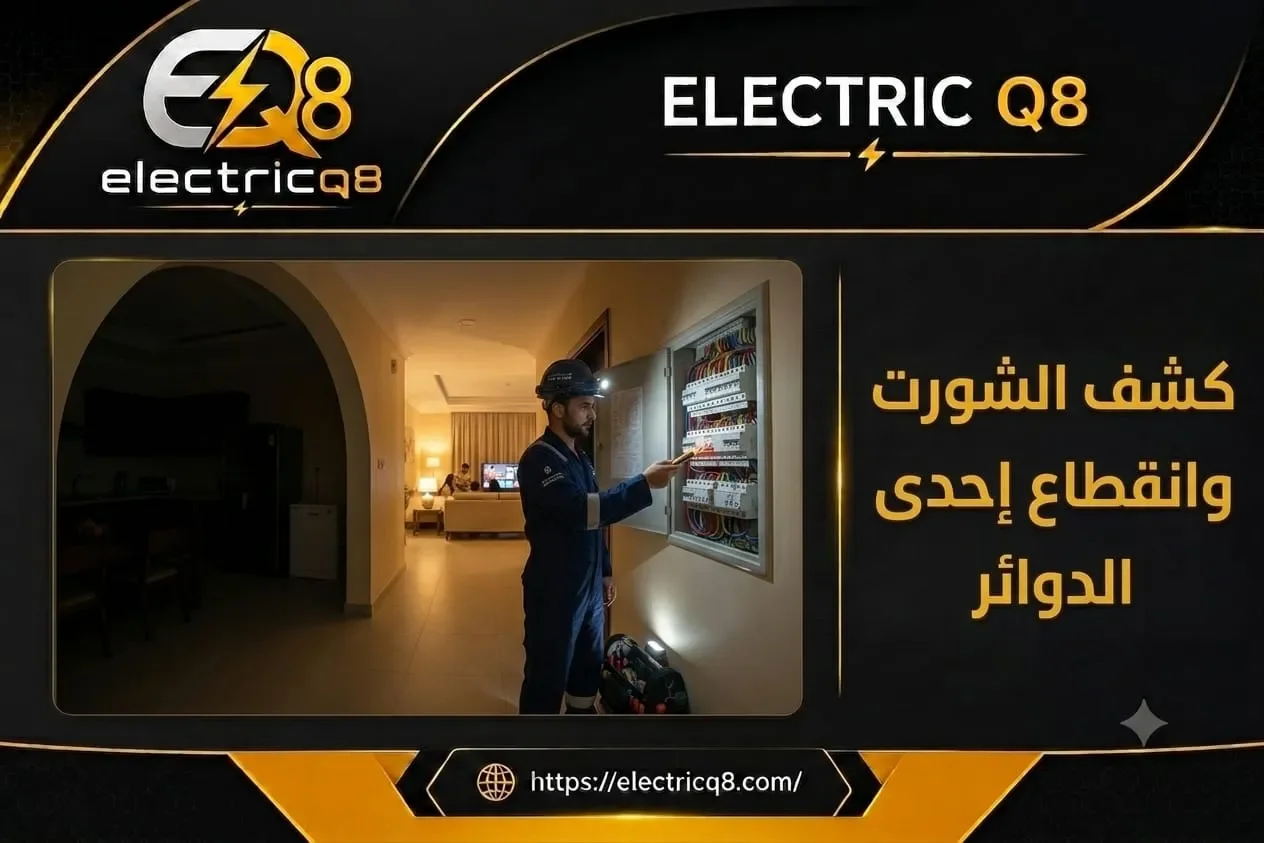
A professional main breaker tripping repair in Kuwait should not automatically begin by replacing the main breaker. The correct repair depends on the cause confirmed through inspection. If the problem is related to electrical load, the solution differs from a condition involving a connection, a particular circuit, or a breaker that has actually been shown to require suitable replacement.
This distinction also matters when discussing price. There is no single reasonable cost for every main breaker tripping problem because the scope of work varies. Diagnosing a load pattern and checking several circuits is different from repairing a specific fault that has already been identified. If the electrical system requires a wider modification, that is also a different scope from simply replacing one component.
When comparing electrician quotations, ask what the price includes. Is it for the visit and inspection only? Does it include measurements, a specific repair, or a replacement component? A clearly defined scope prevents different services from being compared as though they were identical simply because they are all described as “main breaker repair.”
A low price should not automatically be treated as evidence of risky work, just as a high price does not guarantee excellent quality. The important point is whether the electrician can explain what the inspection established, why a particular repair is being recommended, and whether the proposed modification is compatible with the electrical system rather than simply offering a larger breaker as a quick solution.
-
The cost of repairing main breaker tripping depends on the cause diagnostic scope and required repair because an electrical load issue is different from a circuit fault connection problem or replacement of a breaker that has genuinely been shown to require replacement
-
A quotation becomes more useful when it states whether the work covers inspection and measurement only or includes repair and replacement components because the phrase main breaker repair can describe very different scopes of work
-
Service quality is demonstrated by connecting the recommended repair to inspection findings and explaining why the modification is required rather than immediately replacing the breaker without evidence that the breaker itself is the source of the problem
Electrician for Main Breaker Inspection in Kuwait
Choosing an electrician for main breaker inspection in Kuwait should depend more on the diagnostic approach than on how quickly the electrician suggests replacement. A suitable electrician asks when the trip occurs, which loads are operating at the time, whether the problem is new, and whether appliances or circuits were added before the issue appeared. These questions provide useful context before any discussion about changing the breaker begins.
The electrical system can then be assessed to the level required by the condition. The work may involve measuring the load under particular operating conditions, reviewing circuits related to the problem, or checking connections and protective devices. If the results show that the main breaker itself genuinely requires replacement, the replacement should be compatible with the panel and electrical system design rather than simply being a breaker that physically fits in the same location.
The advantage of diagnosis-based service is that it does not attempt to hide the symptom by any means possible. The objective is not to make sure the main breaker never trips regardless of what happens. The objective is to identify and correct the cause while preserving the protective function of the electrical system. Maintaining appropriate protection can be more important than a quick repair that simply keeps the electricity running.
If the problem involves severe heat, smoke, sparking, or a strong burning smell, do not wait for a routine inspection appointment and do not approach the panel. Stay away from the source of danger and request appropriate urgent assistance for the situation.
-
A suitable electrician begins with the history and pattern of the problem before recommending replacement components because knowing when the issue began and what occurs alongside it helps determine which measurements and inspections are most relevant
-
A suitable replacement for the main breaker cannot be selected from physical dimensions alone because compatibility protection panel design and overall electrical system requirements all need to be considered in the replacement decision
-
The objective of repairing the main breaker is not to prevent it from tripping at any cost because the breaker is part of the protection system and the correct approach is to repair the cause while maintaining the appropriate level of electrical protection
Conclusion
If the main breaker trips during peak hours, do not assume that it has become weak and do not start by increasing its rating simply to prevent the outage. The timing of the trip provides important information, but it needs to be connected with the loads operating at the time, the condition of the feeder and connections, the protection system, and the overall electrical design. Sometimes the cause is related to simultaneous electrical demand, while in other cases heavy use simply exposes a different problem that requires separate investigation. A qualified electrician measures and understands the operating pattern before making a decision and then determines whether the required work involves correcting a load issue, repairing a circuit or connection, or evaluating the main breaker itself. If the breaker continues to trip, do not make repeated resetting a daily solution. If smoke, sparking, severe heat, or a strong burning smell appears, staying away from the panel and requesting appropriate assistance becomes the priority instead of attempting to restore power.
Frequently Asked Questions
Why does the main breaker trip only during peak hours?
Peak hours usually involve a larger number of electrical loads operating simultaneously and can make the pattern of the problem easier to observe. However, that relationship alone does not prove an overload. Measurements and inspection are needed to determine whether the cause is electrical demand or another condition in the system.
Should I install a larger main breaker if it keeps tripping?
No. The main breaker rating should not be increased simply because it trips. Its rating needs to remain compatible with the feeder, protection requirements, supply, and overall electrical system design, and any change should follow appropriate professional assessment.
Does a main breaker trip mean the breaker is defective?
Not necessarily. The breaker may be responding correctly to a condition elsewhere in the electrical system, while in other situations the breaker itself may require assessment. Proper diagnosis distinguishes between these possibilities.
What information should I prepare before the electrician arrives?
Record when the trip occurs, which appliances were operating, whether the trip happens immediately or after a period of use, whether new equipment or electrical work was recently added, and any unusual warning signs you can observe safely without opening the electrical panel.
How much does main breaker tripping repair cost in Kuwait?
The cost depends on the inspection scope, cause of the trip, required measurements, and whether the problem requires a circuit or connection repair, another system modification, or replacement of a breaker that has been confirmed to need replacement. An accurate price therefore depends on the condition and the actual scope of work.



