Old Home Electrical Maintenance Kuwait
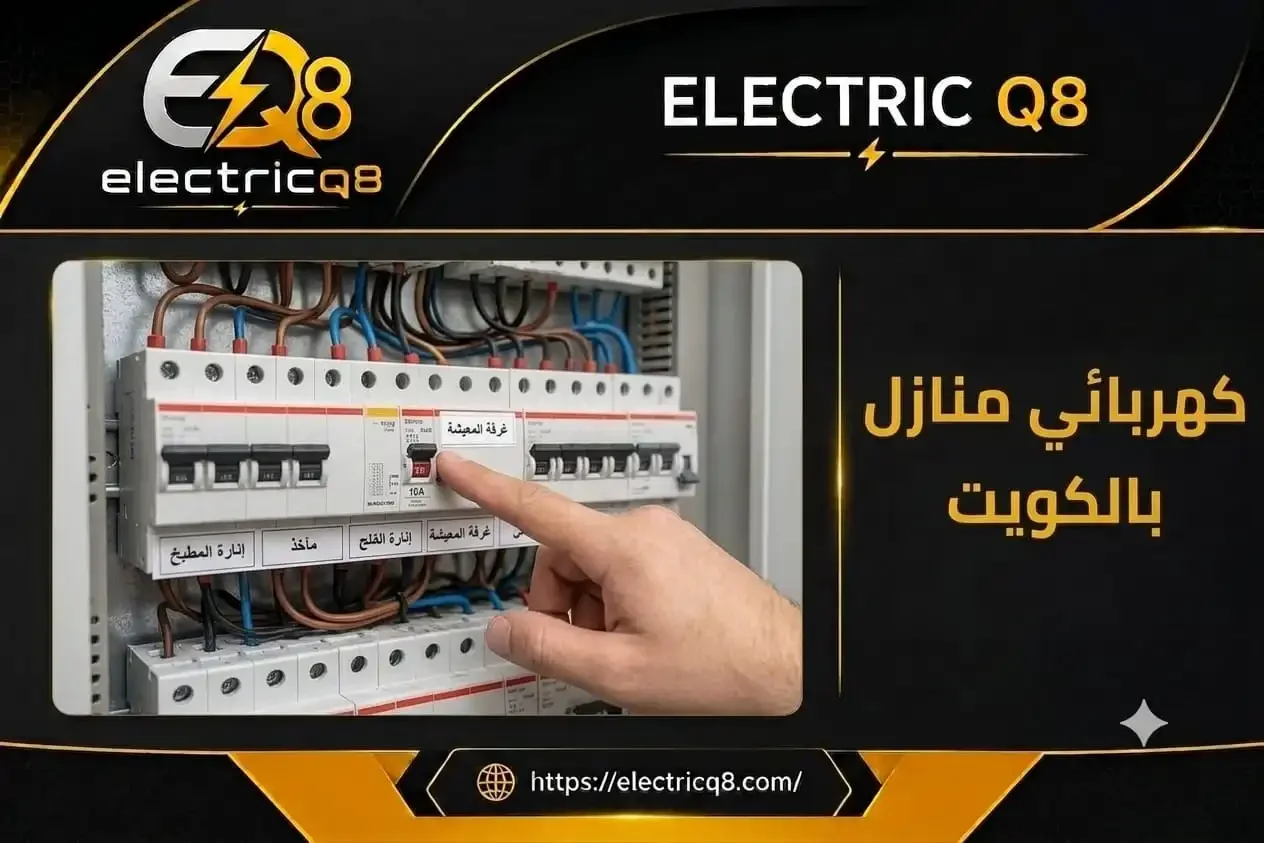
Old Home Electrical Maintenance requires much more than repairing a visible fault or replacing a damaged switch because older electrical systems were usually designed for loads far below the demands of modern homes. As air conditioners, advanced kitchen appliances, water heaters, and smart devices increase, aging wiring is placed under continuous pressure. Warning signs may include repeated breaker trips, overheating outlets, flickering lights, voltage weakness, or frequent appliance damage. Proper maintenance therefore begins with a complete inspection of the electrical system, followed by identifying weak points and arranging repairs according to their level of risk. This approach improves safety and electrical performance without relying on random work or paying for changes that fail to solve the underlying problem.
Old Home Electrical Maintenance
Old Home Electrical Maintenance begins with a realistic assessment of the entire electrical system rather than examining only the point where the fault appears. A visible problem may be caused by an older defect hidden inside the walls or the distribution panel. The electrician first reviews the age of the installation, the type of wiring, and the way circuits are distributed. The main panel, circuit breakers, connection points, and grounding system are then inspected carefully. The existing system is also compared with the number of appliances currently in use because a home wired many years ago was rarely prepared to handle several air conditioners, electric ovens, water heaters, chargers, and modern household devices operating together.
The next step is to identify circuits exposed to the greatest pressure, including the kitchen, air-conditioning lines, and bathroom circuits. Voltage and current are measured, and connection temperatures are checked to reveal hidden overheating. In many cases, replacing the entire system is unnecessary. Redistributing certain loads, replacing damaged sections, and upgrading protective devices may provide a safer and more economical solution than complete demolition because these decisions are based on test results rather than assumptions.
Practical field experience in older homes shows that delaying an inspection simply because the electricity still appears to work can become an expensive mistake. The system may continue operating while certain connections are already close to failure. Preventive maintenance gives the homeowner an opportunity to repair these weak points before they develop into a sudden outage, electrical short circuit, or wiring fire.
-
The process begins with a complete inspection that identifies the condition of the panel, wiring, and the most heavily loaded circuits in the home.
-
Repairs are prioritized according to actual risk instead of replacing every component without a technical reason.
-
Early maintenance helps prevent serious failures while reducing future renovation expenses.
Renovating Electrical Systems in Old Homes
Renovating Electrical Systems in Old Homes does not necessarily mean removing every old wire and rebuilding the complete installation from the beginning. The correct decision depends on inspection results and the actual condition of each part of the system. Some circuits may remain safe and suitable for continued use, while others may require full replacement because of weak insulation, undersized conductors, or inadequate protective devices. A renovation plan should therefore be divided into clear stages that consider both household safety and the available budget.
The plan usually includes upgrading the electrical panel, installing breakers that match circuit loads, separating large appliances into dedicated circuits, adding residual-current protection, and improving the grounding system where necessary. The locations of outlets and switches should also be reviewed because current usage needs often differ greatly from the original design. Permanent dependence on extension cords and multi-outlet adapters may overload specific points beyond their intended capacity. In some homes, the renovation can be completed one room at a time to reduce disruption for the residents.
One common mistake is choosing the lowest quotation without requesting clear details about the types of wires, breakers, and work included. A professional renovation proposal explains exactly what will be changed, why it must be changed, which materials will be used, and which tests will be performed after completion. This level of transparency builds trust and prevents unexpected costs during the project.
-
Only the parts that genuinely require replacement are identified instead of assuming the entire electrical system is unusable.
-
The renovation plan improves protection, grounding, and load distribution rather than focusing on wiring replacement alone.
-
A clearly defined work scope and specified materials provide a safer and more reliable long-term result.
Replacing Old Home Wiring
Replacing Old Home Wiring becomes necessary when there are clear signs that the conductors are no longer suitable for safe use. These signs may include cracked insulation, discoloration, heat around electrical routes, or repeated breaker trips even when appliances are working correctly. Before replacement begins, the existing wiring paths are identified, and the electrician determines whether the internal conduits can be reused or whether new openings and cable routes are required. This decision directly affects the project duration and cost.
Cable size must be calculated according to the real load of each circuit rather than using a single conductor size throughout the home. Lighting circuits have different requirements from outlet circuits, air-conditioning lines, water heaters, and electric ovens. Heavy appliances should be separated from general circuits so that operating one high-power device does not affect the rest of the property. Approved electrical cables and proper termination methods must be used, while all circuits should be labeled clearly to simplify future maintenance.
Field experience shows that the best results are achieved when electrical work is coordinated with finishing and renovation plans before the project begins. Replacing wiring may require opening sections of walls or ceilings. Proper planning reduces damage, protects the final appearance of the home, and prevents the same area from being repaired or opened more than once.
-
The decision to replace wiring is made after testing insulation, loads, and the condition of internal cable routes.
-
Cable size is selected according to circuit function and the expected electrical demand.
-
Early coordination with finishing work reduces demolition and shortens the execution period.
Repairing Electrical Systems in Old Houses
Repairing Electrical Systems in Old Houses requires identifying the true cause of the fault instead of simply resetting a breaker or replacing a burned component. In older properties, one visible problem may result from several accumulated defects, such as a loose connection combined with excessive loading and deteriorated insulation elsewhere in the same circuit. The repair process therefore begins by isolating the affected area and testing the circuit step by step to confirm the condition of the wires, outlets, switches, junction boxes, and distribution panel connections.
In some cases, the fault appears in one room while its actual source is located at a shared connection supplying several parts of the house. A switch or outlet may also burn repeatedly because the conductor behind it is loose or because the connected load exceeds the device rating. Replacing the external faceplate in this situation is not enough. The connection must be corrected, the correct component must be selected for the load, and the breaker protecting the circuit must also be reviewed.
Professional repair work should end with clear post-repair tests. These may include measuring voltage stability, operating the connected loads, and checking the temperature of connection points. These steps confirm that the problem has been properly resolved and that the circuit can continue operating safely after power is restored.
-
Proper repair depends on tracing the source of the fault through the complete circuit instead of addressing only the visible symptom.
-
The electrical load, connections, and protective breaker are reviewed together because a fault may result from several causes.
-
Post-repair testing confirms that the circuit has returned to stable and safe operation.
Upgrading the Home Electrical Network
Upgrading the Home Electrical Network aims to make an older system suitable for the way the property is currently used without carrying out unnecessary changes. The process begins by listing the main appliances and identifying which loads may operate at the same time. These demands are then compared with the capacity of the existing panel and circuits. When an old system relies on only a small number of circuits, it may need to be divided into more independent lines so that several high-demand appliances are not connected to one overloaded circuit.
The upgrade may also include modern protective devices, correctly rated circuit breakers, residual-current protection, and improvements to the grounding system. Outlets can be redistributed, while dedicated points can be installed for high-load appliances instead of relying on permanent extension cords and multi-outlet adapters. These improvements increase convenience, reduce pressure on the wiring, and provide a higher level of electrical safety.
The real value of upgrading becomes especially clear in homes where kitchens have been renovated or additional air conditioners and appliances have been installed without modifying the original electrical system. Instead of waiting for overheating or repeated breaker trips, the network is prepared to support actual household demand. This planning also gives the property greater capacity to accommodate future electrical needs while reducing the risk of sudden failures.
-
The upgrade begins by analyzing consumption patterns and the number of appliances operating at the same time.
-
Separating heavy loads into dedicated circuits prevents excessive pressure on the general electrical network.
-
Modern protective devices provide greater safety for both residents and electrical appliances.
Replacing Old Electrical Wires
Replacing Old Electrical Wires is essential when the insulation loses flexibility or develops cracks and heat damage after years of use. A conductor may continue carrying electricity even when its condition has seriously deteriorated, which means that visual inspection alone is not enough. Insulation resistance, circuit temperature, and terminal condition must be tested before deciding whether full or partial replacement is required.
During replacement, the correct type and size of wire are selected according to the function of each circuit. Old and new conductors should not be joined together in an unplanned manner. Internal conduits must also be checked to ensure they are not blocked and do not contain sharp edges that could damage the new insulation during pulling. Suitable connectors should be used inside accessible boxes, while random concealed joints should be avoided because they are difficult to inspect and maintain later.
One mistake that increases cost without adding value is installing oversized conductors in every circuit without calculation or replacing healthy wires simply because the building is old. A qualified electrician relies on test results and changes only what is technically necessary. This approach balances safety and cost while directing the budget toward the areas that genuinely require attention.
-
The condition of the wiring is evaluated with testing equipment rather than being judged only by the age of the property.
-
Wire size is selected according to the actual load and function of every circuit.
-
Organized installation reduces hidden joints and makes future maintenance easier.
Inspecting Electrical Systems in Old Homes
Inspecting Electrical Systems in Old Homes provides an accurate understanding of the network before buying the property, renovating it, or installing additional equipment. The inspection includes the distribution panel, circuit breakers, wiring, grounding, outlets, and switches, with special attention given to circuits exposed to high loads. Unusual sounds, burning smells, discoloration, and heat marks are also examined because they may indicate faults that do not appear during normal daily use.
The electrician uses measuring equipment to detect current leakage, insulation weakness, and unbalanced electrical loads. Thermal imaging may also be used when necessary to identify hot spots inside panels or boxes without breaking walls. After the inspection, observations are classified into urgent risks, defects requiring near-term repair, and improvements that can be completed at a later stage.
This method allows the homeowner to make an informed decision instead of spending money randomly. When purchasing an older property, for example, the electrical inspection helps estimate the scope of work before finishing begins. A technical report also becomes a useful reference when comparing contractor quotations because it defines the problem and reduces uncertainty about the required work.
-
The inspection covers the electrical panel, circuits, grounding system, and all points of use throughout the property.
-
Findings are classified according to risk so that the most urgent problems are repaired first.
-
A clear report supports accurate cost estimation and selection of the appropriate work scope.
Improving Home Electrical Efficiency
Improving Home Electrical Efficiency is not limited to reducing energy consumption. It also involves improving load distribution, minimizing electrical losses, and correcting weak points that affect appliance performance. A loose connection may generate heat and waste energy, while an overloaded circuit can cause voltage drops whenever an air conditioner or water heater starts. Improving efficiency therefore begins with measuring the actual performance of the electrical network and reviewing the connected loads.
Effective solutions may include redistributing appliances across suitable circuits, repairing weak connections, replacing damaged components, and installing more efficient lighting where appropriate. Correctly matching circuit breakers with conductor sizes and electrical loads also protects the wiring without causing unnecessary interruptions. In homes with limited electrical capacity, major loads can be organized to reduce the pressure created when several high-demand appliances operate simultaneously.
The difference becomes noticeable after the work is completed. Lighting becomes more stable, appliances operate more reliably, and overheating at outlets and the electrical panel is reduced. Failures caused by electrical stress also become less frequent. In this context, efficiency is the result of a complete engineering improvement rather than simply replacing light bulbs or purchasing new appliances.
-
Electrical efficiency depends on reducing losses and improving load distribution throughout the system.
-
Repairing weak connection points helps lower heat and stabilize voltage.
-
Comprehensive improvement leads to better appliance performance and fewer recurring failures.
Electrician for Old Homes
An experienced Electrician for Old Homes must understand how to trace previous modifications and work with networks whose original drawings are no longer available. In many older properties, outlets, air conditioners, extensions, and additional rooms were added during different periods. These changes make circuit tracing more complicated. A specialist does not begin by removing components randomly. Instead, testing equipment is used to identify each circuit and its connection to the main panel.
The electrician should also know how to distinguish between parts that can be repaired and those that must be replaced so that the homeowner does not pay for unnecessary work. Risks should be explained clearly, while practical alternatives are presented according to priority and budget. Proper tools, insulated equipment, accurate testing devices, and safe isolation procedures must be used before any work begins.
A strong sign of professionalism is documenting modifications and labeling breakers after completion. This simple step saves considerable time during future maintenance and reduces guesswork. A reliable electrician also tests each circuit before handing over the project rather than assuming the work is complete merely because the light turns on or the outlet appears to function.
-
The electrician has practical experience tracing old circuits even when original drawings are unavailable.
-
Solutions are arranged according to safety priority and the homeowner’s available budget.
-
All modifications are documented and the complete system is tested before the work is considered finished.
Developing Residential Electrical Systems
Developing Residential Electrical Systems means transforming an aging network into a safer, more flexible system that can support current and future household needs. Development may include upgrading the panel, increasing the number of circuits, improving protective devices, and adding dedicated supplies for air conditioners, kitchens, water heaters, and smart-home equipment. The exact scope is determined after inspection so that the project does not become a complete replacement without technical justification.
It is better to complete the development through one coordinated plan instead of adding every new appliance through a separate temporary modification. When preparing a home for surveillance systems, charging points, or smart control devices, the power source, cable routes, and required protection must be studied in advance. Spare capacity and additional routes can also be included for future expansion, reducing the need for repeated wall openings and renovation work.
The economic value of proper development lies in protecting appliances, lowering future repair costs, and increasing the practical value of the property for sale or rent. It also gives residents greater comfort because the electrical system becomes organized, clearly identified, and easier to maintain. The best service therefore combines inspection, design, installation, and final testing instead of offering separate repairs that do not support a long-term electrical plan.
-
Development connects the present needs of the home with future additions and expansion plans.
-
Comprehensive planning prevents repeated demolition and uncoordinated electrical modifications.
-
An upgraded system improves safety, comfort, and the practical value of the property.
Conclusion
Old Home Electrical Maintenance is a direct investment in household safety and reliable appliance operation rather than a temporary response to visible faults. A successful result begins with a full inspection, followed by setting priorities and selecting the correct solution from repair, renovation, replacement, or system development. When the work is completed by a specialized electrician using modern testing equipment and approved wiring and components, the network becomes more capable of supporting current loads while the risks of overheating, short circuits, and repeated breaker trips are reduced. A phased plan also helps control cost, avoid unnecessary demolition, and create a safe, organized electrical system that can be maintained and expanded in the future.
Frequently Asked Questions
How do I know that an old home needs electrical maintenance?
Common warning signs include repeated breaker trips, overheating outlets, weak or flickering lighting, burning smells, clicking sounds, and discoloration around switches. An inspection should be arranged even when the problem appears and disappears because some electrical faults develop gradually.
Must all wiring in an old home be replaced?
Not always. The decision depends on insulation condition, conductor size, and the ability of the circuits to support current loads. In some cases, replacing specific circuits and upgrading the panel and protective devices is enough. More deteriorated systems may require broader replacement after a complete inspection.
Can the electrical system be renovated without major wall damage?
Demolition can often be reduced when existing conduits remain usable or when suitable routes and suspended ceilings are available. The final approach depends on the design of the home and the condition of the cable paths. A preliminary inspection identifies the method that will have the least effect on the finishing.
What is the difference between repairing a fault and renovating the electrical network?
Repairing a fault addresses a specific problem such as a damaged outlet or disconnected circuit. Renovating the network involves reviewing the entire system and improving wiring, protective devices, grounding, and load distribution to match modern household requirements.
What is the most important step before buying an old home?
A complete electrical inspection by a qualified technician is essential. The inspection should provide a report covering the condition of the panel, wiring, grounding, and circuits. This helps identify safety risks and estimate the cost of required maintenance or renovation before completing the purchase.