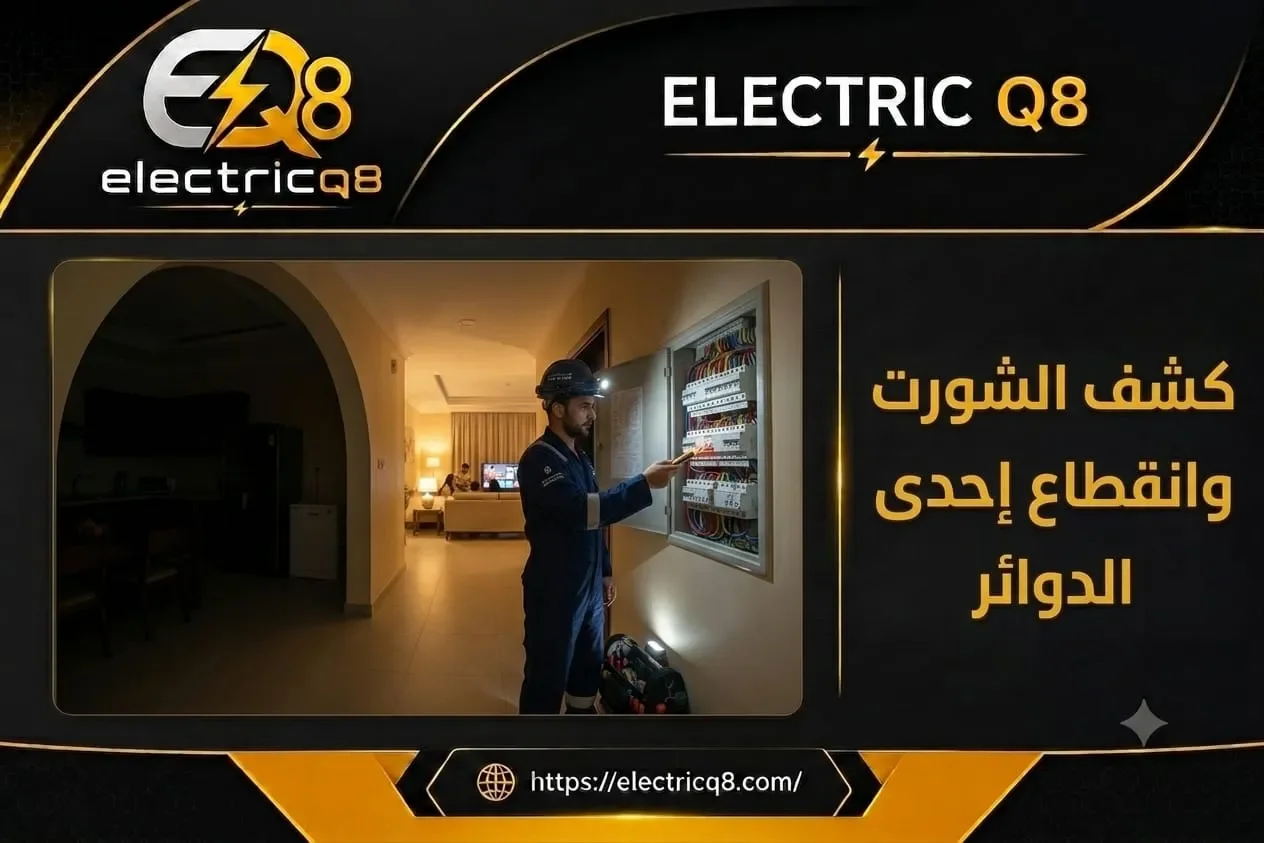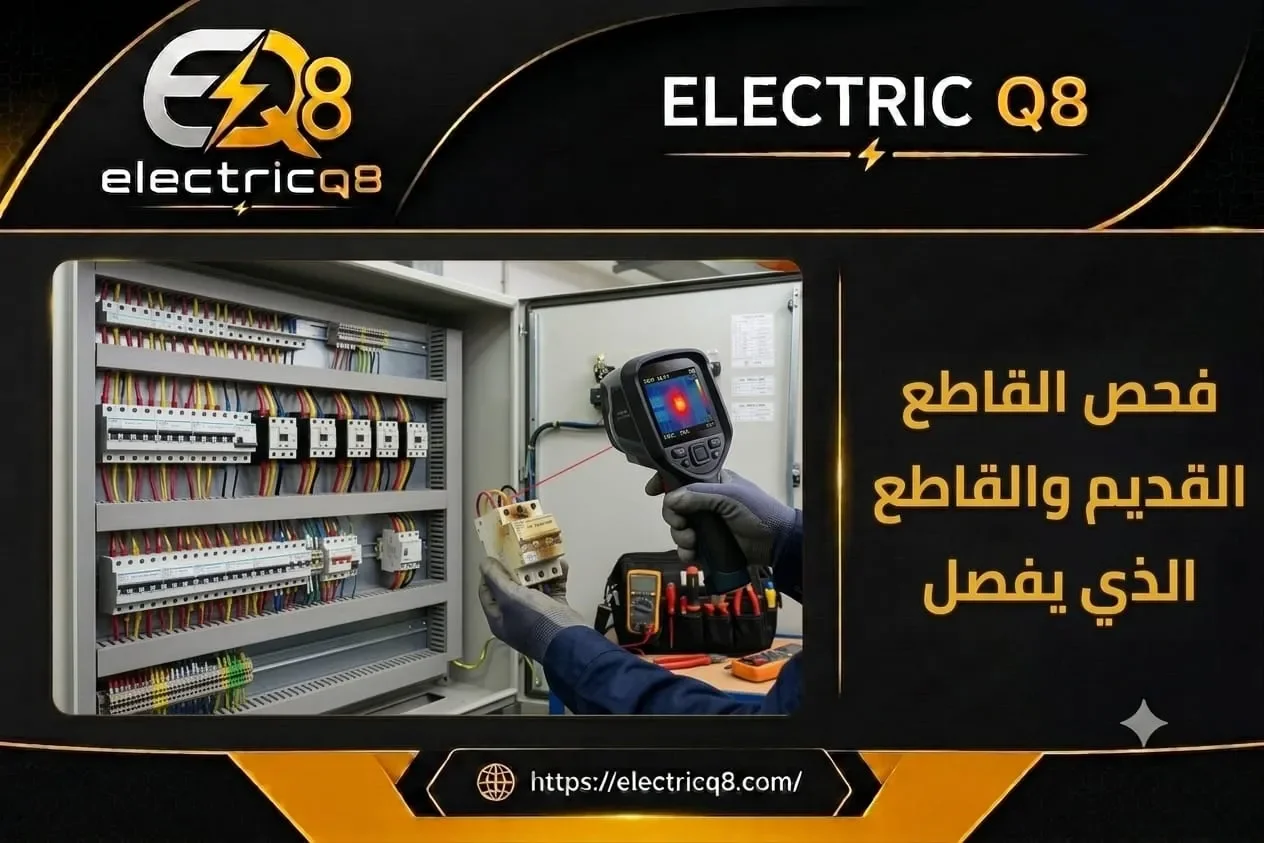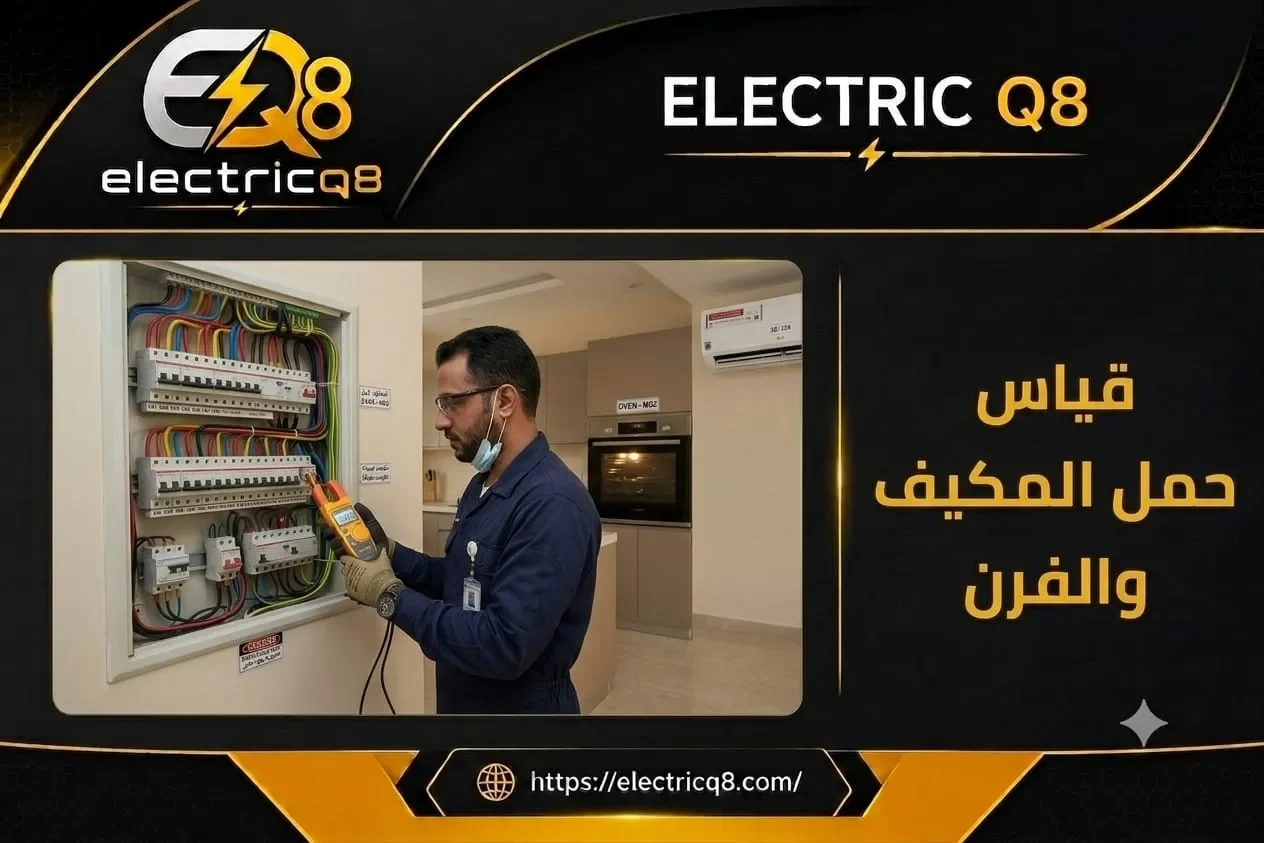
If the breaker trips immediately or a few minutes after you turn on the air conditioner, the problem is not necessarily caused by the AC unit alone, and it does not mean that installing a larger breaker is the correct solution. An air conditioner is a significant electrical load in the home, and a fault in its circuit, connections, breaker, or the unit itself may become noticeable during startup or while the compressor continues operating. The difference between a breaker that trips the moment the AC starts and one that trips after ten minutes provides important diagnostic information. The correct approach is to measure the electrical load, inspect the circuit, breaker, and connections, and compare the results with the AC specifications before replacing anything because randomly increasing breaker size can hide the problem instead of solving it.
Breaker Trips When the AC Starts in Kuwait

When the breaker trips when the AC starts in Kuwait, the timing of the trip is one of the most useful details for understanding the problem. A breaker that trips the instant the air conditioner receives a start command presents a different situation from one that remains on for a period before disconnecting as electrical load or temperature increases. An air conditioner contains electrical components, motors, and a compressor, and its electrical behavior during startup differs from its behavior under stable operating conditions. For this reason, the cause cannot be determined simply because the problem appears whenever the AC is used. The electrician needs to know the type and capacity of the air conditioner, its electrical specifications, the circuit supplying it, and the type of breaker installed before comparing this information with actual operating behavior.
The first mistake to avoid is repeatedly resetting the breaker and restarting the air conditioner just to see whether "it stays on this time." A breaker that trips is providing information that needs to be interpreted. There may be abnormal current, an electrical fault inside the air conditioner, a problem in the circuit, a defective breaker, or another condition that cannot be confirmed without inspection. If the trip is accompanied by a burning smell, a popping sound, noticeable heat around the electrical panel, or overheating at the AC isolator, stop further attempts and do not touch the affected components.
A professional inspection considers the complete electrical system serving the air conditioner. The electrician checks the breaker and its specifications, examines the condition of the connections, reviews the AC circuit path, and measures current under appropriate operating conditions before comparing the readings with the equipment data and circuit requirements. This method prevents unnecessary breaker replacement simply because it trips and also avoids blaming the air conditioner before there is evidence of an internal fault.
-
The timing of the breaker trip, whether it occurs during AC startup or after a period of operation, provides different diagnostic directions and should be recorded accurately before inspection.
-
Repeatedly restarting the air conditioner and resetting the breaker is not a professional testing method because continued tripping may be the protective device responding to a condition that requires diagnosis.
-
The correct decision depends on comparing operating current, AC specifications, breaker rating, cable capacity, and actual circuit condition instead of replacing components based on guesswork.
Electricity Trips When the AC Runs in Kuwait
If electricity trips when the AC runs in Kuwait, the first step is to determine exactly what "the electricity trips" means. Does only the dedicated AC breaker trip while the rest of the home's electrical system continues operating? Does the main breaker trip and disconnect the entire property? Or does a group of circuits lose power together? These details distinguish a problem limited to the air conditioner's circuit from a situation that requires reviewing electrical load distribution or a wider section of the installation. Identifying which breaker actually operates is therefore far more useful than simply saying that the AC cuts the electricity.
Consider a practical example. If the air conditioner operates normally on its own but the problem appears when it runs at the same time as other high-demand electrical appliances, overall load and the way that load is distributed become part of the diagnosis. In contrast, if the dedicated AC breaker trips even when other household loads are low, the investigation becomes more focused on the air conditioner circuit, the unit itself, the breaker, and the associated connections. Comparing these two situations helps prevent a diagnosis based on only one visible symptom.
It is also important to identify any change that occurred before the problem began. Was a new air conditioner with a different capacity installed on an older circuit? Was the breaker replaced previously? Did the problem start after AC maintenance or electrical modifications? Is there excessive heat around the breaker or local isolator? The answers provide useful context for the electrician, but measurements are still required before a conclusion is reached. Electricity tripping when the air conditioner operates does not have one universal solution because the cause may involve load, protection, wiring, connections, or the AC unit itself.
-
Identifying whether the dedicated AC breaker or the main breaker is tripping helps determine how wide the electrical problem may be before repair decisions are made.
-
A trip that occurs only when the air conditioner operates together with other high-load appliances has a different diagnostic meaning from an AC circuit that trips even when other loads are low.
-
Knowing about previous changes to the air conditioner capacity, breaker, or electrical wiring helps guide the inspection but does not replace actual load measurements and circuit testing.
The Air Conditioner Trips the Electrical Breaker
The statement the air conditioner trips the electrical breaker describes the visible result but does not identify the cause. A breaker is a protective device rather than simply an ON and OFF switch, so its operation may be associated with current outside acceptable conditions, an electrical fault, or another issue depending on the type of protection installed. At the same time, the breaker itself could be unsuitable for the circuit, damaged, or affected by a poor connection at its terminals. For this reason, professional diagnosis should never begin with the assumption that replacing the breaker will automatically solve the problem.
It is equally important to know when the breaker trips during the air conditioner's operating cycle. If the trip happens immediately during an attempt to start the unit, the electrician focuses on the electrical conditions associated with startup together with possible equipment and circuit faults. If the air conditioner operates for fifteen minutes before the breaker trips, other factors may need to be considered, including continuous operating current, heat developing at a connection point, breaker condition, and equipment operating conditions. If the trip occurs irregularly, the electrician needs to connect the event with the AC operating stage and other electrical loads running at the same time.
This is where the distinction between an electrician's work and an air-conditioning technician's work becomes important. If electrical measurements confirm that the circuit, breaker, and connections are healthy but the air conditioner draws abnormal current because of an internal equipment fault, the AC unit itself requires further inspection. If the unit's electrical behavior is within the expected range while overheating or weakness is found at a supply connection, the repair belongs on the electrical side. Accurate diagnosis directs the problem to the correct specialist instead of replacing components on both sides at the customer's expense.
-
Breaker operation is a symptom of an electrical condition and is not automatic proof that either the breaker or the air conditioner itself is defective.
-
Knowing which stage of AC operation causes the breaker to trip helps distinguish a startup-related problem from a condition that develops during continuous operation.
-
Measuring both circuit and equipment behavior determines whether the case requires an electrician to repair the supply or an AC technician to investigate an internal equipment fault.
Cause of Breaker Tripping When the AC Starts
Finding the cause of breaker tripping when the AC starts requires connecting three factors: the air conditioner's operating behavior, the condition of its electrical circuit, and the type of protection installed. The breaker may operate because current reaches a level that activates its protective characteristics. There may also be a fault inside the air conditioner causing abnormal current draw, a problem with the cable or electrical connections, or another defective electrical component. The breaker itself should not be completely excluded if it is damaged or was never suitable for the circuit, but this should be demonstrated through inspection rather than assumed.
Timing makes a significant diagnostic difference. An immediate trip when the AC attempts to start directs attention toward startup conditions and faults that become apparent at that stage. A trip after a period of operation requires consideration of continuous operating current, connection temperatures, breaker condition, and the circuit itself. If the problem occurs mainly at particular times when many electrical appliances are operating throughout the home, load distribution should also be reviewed rather than inspecting the air conditioner in isolation.
Diagnosis should not be reduced to a simple rule such as "the AC is large, so the breaker must be too small." Breaker selection is related to cable capacity, installation method, equipment requirements, and circuit design rather than AC capacity alone. The correct process is to collect the equipment data, inspect the circuit, measure actual current, and then determine the cause. Following these steps reduces the risk of replacing healthy components or hiding the fault by installing a larger breaker.
-
The actual cause cannot be determined from AC capacity alone because the breaker, cable, connections, and equipment behavior during operation all contribute to the assessment.
-
Immediate tripping and delayed tripping are diagnostically different conditions, so the timing of the problem should be established before deciding on a repair.
-
Breaker replacement is not an automatic solution because the reason the protective device operates and the compatibility of the circuit with the AC requirements must first be verified.
Electrical Overload Caused by the Air Conditioner

An electrical overload caused by the air conditioner does not always mean that the AC itself is "using more electricity than normal." In some situations, the combined loads connected to a circuit or supply exceed what the electrical system was designed to carry when they operate simultaneously. In other cases, the air conditioner itself may be drawing more current than expected because of an internal problem. Distinguishing between these two situations is important because the first may require reviewing circuit design and load distribution, while the second requires diagnosis of the air conditioner itself.
A practical example occurs when the AC operates normally most of the time but the main breaker trips when it runs together with a water heater, oven, or other high-consumption appliances. In that situation, checking only the dedicated AC breaker is not enough because total electrical demand and load distribution need to be evaluated. On the other hand, if the air conditioner has its own dedicated circuit and that breaker trips even when other loads are minimal, the diagnostic direction is different.
A professional does not determine electrical load simply by counting the number of appliances. Actual current is measured and compared with circuit capacity, cable size, breaker characteristics, and the air conditioner's electrical specifications. Connections should also be examined because excessive heat at a poor termination can produce symptoms that require separate correction. The objective is not merely to stop the breaker from tripping but to confirm that the electrical system can support normal operation within safe limits.
-
Electrical overload can result from several appliances operating on the same supply or from abnormal current draw by the air conditioner, and measurements are necessary to distinguish between these scenarios.
-
Running the AC simultaneously with other high-demand appliances provides useful information when evaluating total electrical load and its distribution throughout the property.
-
Correct load assessment depends on actual current, cable capacity, protective devices, and circuit design rather than assumptions based only on the number of appliances.
AC Electrical Circuit Inspection in Kuwait
An AC electrical circuit inspection in Kuwait begins at the distribution panel and continues to the point supplying the air conditioner while reviewing every component that affects electrical delivery to the unit. Depending on the installation, the circuit may include a breaker, cable, connection points, and a local isolation device near the AC. Each component performs a different function, and weakness or damage in any of them can become noticeable when a relatively high electrical load such as an air conditioner operates even if smaller loads have not caused obvious problems.
During inspection, the electrician verifies breaker specifications and their suitability for the circuit while checking electrical connections for heat damage, discoloration, or poor termination. Current and voltage may then be measured as required under safe operating conditions, and the results are compared with equipment data and circuit requirements. If an abnormal voltage drop or excessive temperature is discovered at a particular point, it should not be ignored simply because the air conditioner manages to operate for several minutes.
A proper inspection also establishes the boundary between an electrical supply problem and an internal AC fault. If the supply remains correct up to the equipment but measurements indicate abnormal behavior from the unit, attention shifts toward the air conditioner components. If the fault appears before the supply reaches the equipment, the electrical circuit should be repaired first. This approach prevents the customer from paying for AC maintenance when the real problem is electrical, or for electrical modifications when the actual fault is inside the air conditioner.
-
AC circuit inspection includes the supply path, protection, and electrical connections rather than being limited to looking at the breaker inside the distribution panel.
-
Heat marks and discoloration at connection points deserve careful evaluation because they may reveal a problem that cannot be identified from breaker information alone.
-
Establishing the boundary between a healthy electrical supply and an internal equipment fault prevents random repairs and directs the case to the correct technical specialist.
Solution for Power Tripping When the AC Starts
Finding a solution for power tripping when the AC starts depends on the cause confirmed by inspection rather than applying one repair to every home. If a damaged connection is responsible, it should be repaired according to its actual condition. If the breaker is defective or unsuitable, the reason must be evaluated before selecting protection that is compatible with the cable and circuit. If load distribution is found to be unsuitable, the solution may require reorganizing circuits based on a proper electrical assessment.
When the air conditioner itself is found to draw abnormal current, installing a larger breaker so the unit can continue running is not the correct solution. The AC should be inspected and the internal cause of the excessive current should be repaired. Increasing protective-device capacity without confirming cable capacity and circuit requirements may allow an unhealthy condition to continue while reducing the level of protection the electrical system was designed to provide.
After repairs are completed, the air conditioner should be operated under appropriate conditions while current, circuit stability, and any abnormal heating are observed. This stage distinguishes a repair supported by diagnosis from a change that happened to work by chance. The homeowner needs an electrical circuit capable of supporting the air conditioner correctly, not simply a breaker that has stopped tripping.
-
The correct solution may involve repairing connections, correcting load distribution, adjusting protection appropriately, or referring the AC for equipment repair depending on what the measurements reveal.
-
Increasing breaker capacity is not a solution for abnormal AC current draw and should never be done without confirming cable capacity and circuit design.
-
Testing the air conditioner under suitable operating conditions after repair confirms that the fault has actually been corrected rather than merely observing that the breaker remains switched on.
AC Breaker Keeps Tripping
When the AC breaker keeps tripping, resetting it every time is not useful and may allow the underlying problem to continue without diagnosis. The breaker is designed to operate according to specific protective characteristics, so repeated tripping means the reason for its operation needs to be identified. The problem could involve the circuit, electrical load, air conditioner, or breaker itself, and no single cause should be accepted without proper measurements.
Recording the pattern of the problem can be very useful. Does the breaker trip every time the AC attempts to start? Does the air conditioner run for half an hour before the breaker operates? Does the problem occur mainly during the hottest part of the day when the unit runs for long periods? Does it happen when another air conditioner starts? These details help the electrician reconstruct the conditions surrounding the fault, particularly if everything happens to be operating normally when the technician arrives.
If the breaker becomes unusually hot or there is a burning smell or visible discoloration of its surrounding plastic, stop using the system and avoid touching internal panel components. Heat can indicate a condition requiring inspection of the breaker, electrical load, and associated connections. Cooling the panel externally or continuing to operate the AC until the breaker trips again does not address the underlying electrical problem.
-
Recording how long the air conditioner operates before the breaker trips helps the electrician understand the fault pattern even when the problem does not immediately occur during the inspection.
-
A relationship between tripping, high outdoor temperatures, or operation of other appliances provides useful context for load assessment but does not replace electrical measurements.
-
Heat, a burning smell, or discoloration around the breaker requires stopping use and leaving inspection of the panel and electrical connections to a qualified professional.
Electrician to Check AC Load in Kuwait

Choosing an electrician to check AC load in Kuwait should be based on the ability to measure and analyze the electrical system rather than simply experience replacing breakers. Load assessment requires measuring actual operating current and relating it to the air conditioner's specifications, cable capacity, protective device, and overall load distribution. A competent electrician asks when the breaker trips, what other appliances are operating at the same time, and whether any changes were made to the air conditioner or its circuit before the problem started.
During the visit, the first recommendation should not automatically be to install a larger breaker. The electrician should review the circuit and perform appropriate measurements under operating conditions when it is safe to do so. If the current reading is normal but excessive heat exists at a connection point, the cause of that heat should be investigated. If the current draw is higher than expected, the electrician determines whether the problem comes from the air conditioner itself or another condition requiring specialist inspection.
From a cost perspective, an accurate and focused load inspection can save the homeowner from paying for unnecessary component replacement. The final repair price will naturally differ between a simple connection problem, a circuit modification, and an internal AC fault. Diagnosing the condition before providing detailed repair pricing therefore creates a clearer and fairer basis for the required work.
-
The right electrician for AC load inspection uses actual measurements and compares them with circuit information instead of judging the system only from the visible size of the AC or breaker.
-
Recommending a larger breaker before inspecting the cable, measuring current, and determining the reason for tripping indicates that the diagnostic process is not yet complete.
-
Accurate inspection reduces trial-and-error expenses by establishing whether the required spending belongs on the electrical circuit or on repair of the air conditioner itself.
AC Electrical Circuit Repair in Kuwait
AC electrical circuit repair in Kuwait should begin only after the faulty section has been identified rather than replacing everything between the electrical panel and the air conditioner. The work may involve repairing a connection point, replacing a damaged protective component, or repairing a section of cable if testing confirms that it has deteriorated. In other situations, the entire electrical circuit may prove to be healthy and the required repair may be inside the air conditioner rather than in the building wiring.
When heat damage is found on a cable or electrical terminal, simply tightening a screw and switching the system back on is not enough. The condition of the conductor, insulation, and terminal must be assessed together with the reason excessive heat developed in the first place. If the circuit requires modification, cable and protection specifications should be selected according to electrical load, installation method, and applicable technical requirements rather than using a general rule for every air conditioner.
Testing follows the repair. Connections are checked before the air conditioner is operated and the breaker behavior and electrical load are monitored under suitable conditions. If several major electrical loads exist in the home, simultaneous operation may also need to be considered when confirming system stability. The desired result is a circuit that operates without abnormal heating or repeated tripping while retaining the electrical protection necessary for safe operation.
-
AC circuit repair should target the component or section proven to be faulty instead of replacing the breaker, cable, and connections together when there is no technical reason to do so.
-
Electrical connections that have experienced overheating require a complete assessment of the conductor, insulation, and terminal before the circuit is returned to service.
-
Post-repair testing confirms that the circuit can operate the air conditioner reliably while electrical protection continues to function as an essential part of the system.
Conclusion
If the breaker trips when the AC starts in Kuwait, do not automatically assume that the breaker is defective and do not install a larger breaker simply to keep the air conditioner running. Tripping may be related to electrical load, the AC circuit, wiring connections, protective equipment, or an internal fault in the air conditioner itself. The most useful diagnostic information includes when the trip occurs, whether only the dedicated AC breaker or the main breaker operates, and whether the problem appears when other major loads are running. The electrician can then measure current, inspect the circuit, and compare the results with the air conditioner, cable, and protection specifications. This approach corrects the actual cause without guesswork and without sacrificing the breaker's essential role in protecting the electrical installation.
Frequently Asked Questions
Why does the breaker trip immediately when the AC starts?
Immediate tripping may be related to an electrical condition that appears during AC startup, an internal equipment fault, or a problem in the electrical circuit. Measurements and inspection are required because the timing alone does not prove that the breaker is defective.
Why does the AC run for a while before the breaker trips?
Tripping after several minutes is different from immediate tripping and may require checking continuous operating current, connection temperatures, breaker condition, equipment operating conditions, and other electrical loads on the system.
Will installing a larger breaker stop the AC from tripping?
Breaker capacity should not be increased without confirming cable capacity, air conditioner requirements, and circuit design. A larger breaker can reduce the level of electrical protection if the rest of the circuit was not designed for that rating.
How can I tell whether the problem is the AC or the wiring?
The distinction is made by inspecting the supply circuit, measuring current, reviewing voltage, checking electrical connections, and evaluating the protective device. If the supply is healthy but the equipment draws abnormal current, the AC itself requires inspection. If the fault is found in the circuit, the electrical side should be repaired.
When should I stop using the AC and call an electrician?
Stop operating the air conditioner if the breaker repeatedly trips or if you notice excessive heat at the electrical panel or AC isolator, smell burning, or hear unusual electrical sounds. Do not continue resetting the breaker until the circuit has been properly inspected.