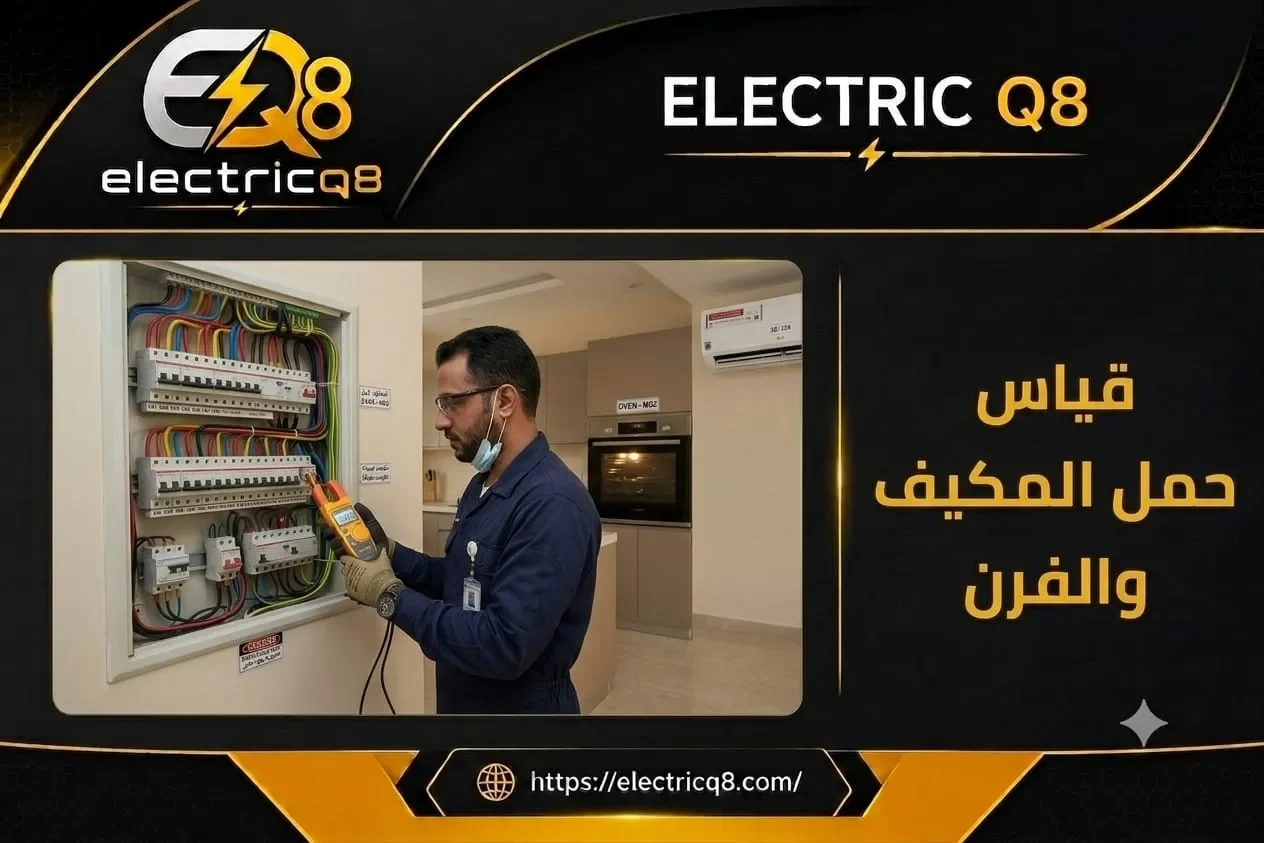
Kitchen electrical renovation in Kuwait is an important step before installing an electric oven, water heater, or dishwasher because these appliances may require electrical loads that exceed the capacity of older wiring installations. Proper renovation begins with inspecting electrical cables, circuit breakers, and outlets and determining the requirements of each appliance rather than simply adding new electrical connection points.
If you are renovating your home's kitchen, upgrading an apartment kitchen, or preparing a new kitchen in a residential building in Kuwait, you need to make sure the electrical system is suitable for the appliances you intend to use. Some older kitchens were originally equipped for a limited number of appliances. After adding a modern oven, dishwasher, and water heater, problems such as repeated circuit breaker tripping, overheating electrical outlets, and excessive loads on existing circuits may begin to appear.
At ElectricQ8 – 24-Hour Electrician in Kuwait | Electrical Installations, Maintenance, and Short-Circuit Repairs, you can request an assessment of your kitchen's electrical system before installing new appliances. This helps determine whether the existing wiring is suitable or whether modifications or dedicated circuits are required, allowing the kitchen to be prepared practically and safely before cabinets and final interior finishes are installed.
Kitchen Electrical Renovation in Kuwait

Kitchen electrical renovation in Kuwait involves evaluating the existing electrical system and identifying the modifications required to operate modern appliances, particularly high-consumption equipment such as electric ovens, water heaters, and dishwashers.
The kitchen is one of the areas in a home where many different electrical appliances are concentrated, including refrigerators, ovens, microwaves, electric kettles, dishwashers, extractor hoods, and water heaters. Several of these appliances may operate simultaneously, making it necessary to calculate expected electrical loads and review the capacity of existing circuits.
The problem is that having a large number of electrical outlets does not necessarily mean the kitchen can safely support more appliances. Several outlets may be connected to the same circuit breaker, and when high-consumption appliances operate simultaneously, the total load may exceed the circuit's capacity.
For this reason, proper electrical renovation begins with reviewing the distribution panel, cables, circuit breakers, and outlet locations. The electrician can then determine whether the kitchen requires modifications to specific connection points, redistribution of electrical circuits, or replacement of certain wiring sections.
When Do You Need Kitchen Electrical Renovation?
-
Before installing new appliances: If you plan to install an electric oven, water heater, or dishwasher, it is preferable to review each appliance's electrical requirements and confirm that a suitable power supply is available before placing the appliance in its final location.
-
When circuit breakers trip repeatedly: If the kitchen circuit breaker trips when several appliances operate, the cause may be an electrical overload, a faulty appliance, or a wiring problem. The underlying cause should be inspected rather than increasing circuit breaker amperage without proper assessment.
-
During cabinet and interior renovation: Changing the kitchen layout provides a suitable opportunity to reposition electrical outlets and install the required circuits before fitting countertops and cabinets, helping avoid unnecessary wall opening and modifications after finishing work.
Do You Have to Replace All Kitchen Electrical Wiring?
Not necessarily. If the existing wiring is in good condition and suitable for the new electrical loads, modifying certain connection points or adding specific circuits may be sufficient.
However, if the wiring is old, damaged, or unsuitable for the electrical requirements of the new appliances, some circuits may need to be rewired or replaced following an appropriate inspection.
Electrical Installation for Kitchen Appliances
Electrical installation for kitchen appliances begins by identifying the appliances that will be installed, their locations, and their electrical specifications because every appliance has different operating requirements.
An electric oven, for example, may require a dedicated power supply depending on its capacity and the manufacturer's instructions. Meanwhile, the requirements of dishwashers, water heaters, refrigerators, and microwave ovens vary from one model to another.
The way the kitchen is used must also be considered. Some households operate the oven, dishwasher, electric kettle, and food preparation appliances within the same period, making electrical load distribution an important element of the design.
Ideally, electrical planning should be coordinated with the kitchen cabinet layout and built-in appliance specifications because relocating an outlet or installing a new electrical circuit after the kitchen has been completed may be more difficult and expensive.
What Does Kitchen Appliance Electrical Installation Include?
-
Identifying the required appliances: Determine which ovens, water heaters, dishwashers, refrigerators, extractor hoods, microwaves, and other appliances will be installed.
-
Reviewing operating specifications: Examine the power rating, current requirements, connection methods, and protective requirements stated in each appliance's installation instructions.
-
Calculating electrical loads: Evaluate expected simultaneous loads and the ability of the existing power supply and circuits to accommodate them.
-
Distributing electrical circuits: Identify appliances requiring dedicated circuits and distribute the remaining loads appropriately.
-
Determining connection point locations: Select suitable positions for outlets and isolation devices according to appliance locations, cabinet layouts, and maintenance accessibility.
-
Inspection and commissioning: Test the safety of electrical connections and protective devices before appliances enter regular operation.
Common Mistakes During Kitchen Electrical Installation
-
Connecting several appliances to one power strip: Using a single power strip to operate high-consumption appliances may cause overloads or overheating connections. Suitable electrical supply points should be provided according to appliance requirements.
-
Selecting circuit breakers without reviewing wiring: Installing a higher-amperage breaker does not increase a cable's current-carrying capacity and may make the protective arrangement unsuitable if the electrical circuit has not been properly assessed.
-
Concealing outlets behind appliances in unsuitable locations: Some appliances require accessible isolation arrangements according to manufacturer instructions and applicable requirements. Electrical connection locations should therefore be coordinated before kitchen cabinets are installed.
Dedicated Electrical Circuit for an Oven
A dedicated electrical circuit for an oven may be necessary depending on the oven's type, electrical capacity, and manufacturer instructions, particularly for built-in ovens or appliances with high power consumption.
Some homeowners connect a new oven to the nearest existing electrical outlet without confirming the circuit's capacity or the suitability of the connection. The oven may initially operate normally, but problems can appear during extended operation or when other appliances are used simultaneously.
An electric oven converts a substantial amount of electrical energy into heat. Therefore, its power supply, electrical cables, and protective devices must be suitable for its operating conditions.
Electrical oven requirements also vary between models, so it is incorrect to assume that all ovens require the same cable size or circuit breaker rating.
When Does an Oven Need a Dedicated Circuit?
-
When the manufacturer requires one: If the oven's installation instructions specify a dedicated circuit or a particular electrical connection method, those requirements must be followed alongside applicable local electrical regulations.
-
When the existing circuit cannot safely accommodate the load: If the kitchen circuit is shared with other appliances and does not have sufficient capacity to operate the oven safely, a suitable electrical line may need to be installed instead of overloading the existing circuit.
-
When installing a high-capacity oven: Ovens with high electrical consumption require careful assessment of current demand, cables, protective devices, and isolation arrangements. A dedicated circuit may be necessary depending on the specifications.
Can an Electric Oven Be Connected to a Standard Outlet?
This depends on the oven's specifications, plug type, required current, and electrical circuit design.
Some appliances are designed to connect through a suitable plug and socket, while others require a fixed electrical connection according to the manufacturer's instructions.
Do not use unsuitable adapters or extension cables to operate an oven that exceeds the capacity of its electrical connection point.
Dishwasher Electrical Wiring

Dishwasher electrical wiring requires a suitable power supply point in a safe and accessible location while considering the appliance's proximity to water supply and drainage connections.
A dishwasher may contain a heating element, pump, and motor, so its electrical consumption can vary throughout different operating stages.
Some users assume that a dishwasher is a relatively small appliance that does not require special electrical consideration. However, the connection point and protective devices must be selected according to the manufacturer's instructions and the electrical circuit requirements.
The presence of water in the kitchen also makes proper earthing and residual current protection important according to applicable electrical requirements.
What Electrical Preparation Does a Dishwasher Need?
-
A suitable electrical supply point: The connection must be capable of accommodating the appliance's requirements and should be positioned to allow maintenance and disconnection when necessary. Installation instructions must be followed without relying on temporary electrical extensions.
-
Correct electrical protection: Circuit breaker specifications, residual current protection, and earthing must be reviewed according to the electrical system design and applicable requirements because the presence of water makes connection safety especially important.
-
Coordination between electrical and plumbing installations: Electrical connection points, water supply pipes, and drainage locations should be determined before cabinets are installed to avoid placing electrical connections in areas exposed to leaks or difficult to access.
Does a Dishwasher Need a Separate Circuit Breaker?
This depends on the dishwasher's power rating, manufacturer instructions, and electrical design requirements.
A dedicated circuit may be appropriate or required for certain installations, but the same requirement cannot be applied to every dishwasher without reviewing its specifications.
Kitchen Water Heater Electrical Wiring
Kitchen water heater electrical wiring requires careful consideration of the heater's electrical capacity, type, and operating method, particularly when installing an electric water heater intended to supply hot water to the kitchen sink.
Water heaters vary in electrical capacity and operating characteristics. A storage water heater differs from an instantaneous water heater, and their electrical supply requirements may be significantly different.
A common mistake is connecting a new water heater to an existing electrical point without checking the cable, circuit breaker, earthing, and required protective arrangements.
Electrical connections must also be coordinated with the water heater's location and plumbing installations to reduce the possibility of electrical components being exposed to moisture or leaks.
Essential Requirements for Kitchen Water Heater Wiring
-
Reviewing electrical capacity: The required current must be determined from the water heater's specifications and compared with the electrical circuit's capacity because some water heaters require a dedicated power supply or specific protective arrangements.
-
Providing a suitable isolation device: An appropriate means of isolation and protection must be installed in accordance with manufacturer instructions and applicable requirements while ensuring reasonable accessibility for maintenance.
-
Verifying earthing and electrical protection: Water heaters should not be operated using unsuitable wiring, and earthing and residual current protection requirements must not be ignored, particularly because water is present near the appliance.
Can a Water Heater and Oven Share the Same Electrical Circuit?
A general answer cannot be given without knowing the electrical capacity of both appliances and the specifications of the circuit.
If the combined electrical load exceeds the capacity of the cables and protective devices, the appliances must not operate on the same shared circuit.
In some situations, dedicated circuits may also be required according to appliance specifications and the electrical design.
If you are planning to install an oven, water heater, and dishwasher in your kitchen, you can request a wiring inspection and electrical load assessment through the ElectricQ8 Electrician Services Website in Kuwait before installing the appliances.
Dedicated Electrical Circuits for Kitchen Appliances
Installing dedicated electrical circuits for kitchen appliances helps distribute electrical loads appropriately, particularly when the kitchen contains several appliances that may operate simultaneously.
This does not mean that every outlet requires its own circuit breaker. Instead, circuits must be designed according to electrical demand, appliance characteristics, and protective requirements.
Certain appliances may require dedicated electrical lines, while other appliances can share appropriately designed circuits when their specifications and the electrical installation permit it.
Dividing electrical circuits also helps reduce the impact of certain faults on other appliance groups. However, it does not prevent every type of power interruption, particularly when the main electrical supply disconnects.
How Are Kitchen Electrical Circuits Distributed?
|
Appliance or Use |
Electrical Considerations |
|
Electric oven |
Review power rating, circuit requirements, and connection method |
|
Dishwasher |
Evaluate electrical load, protection, and connection location |
|
Water heater |
Select the supply and protection according to heater type |
|
Refrigerator |
Provide a suitable connection point and consider continuous operation |
|
Microwave oven |
Review electrical capacity and shared circuit loads |
|
Countertop electrical outlets |
Calculate expected appliance loads and distribute outlets |
|
Lighting and extractor hood |
Design suitable circuits according to intended use |
Benefits of Dedicated Kitchen Electrical Circuits
-
Organizing electrical loads: Distributing appliances across suitable circuits helps prevent high electrical loads from being concentrated on a single line, provided the design is based on accurate calculations and actual appliance specifications.
-
Simplifying maintenance: Clearly identified circuits inside the distribution panel make it easier to locate the affected section when a fault occurs and help electrical inspections and repairs proceed in a more organized manner.
-
Preparing for future appliances: If you intend to add an oven or dishwasher later, it is better to discuss their electrical requirements during kitchen renovation rather than making further modifications after interior finishing is complete.
Do Dedicated Circuits Prevent Circuit Breakers From Tripping?
They may reduce tripping caused by unsuitable electrical load distribution, but they do not correct faults within appliances or electrical wiring.
If a short circuit, earth leakage, or protective device problem exists, the cause must be identified and repaired.
Electric Oven Wiring Installation
Electric oven wiring installation involves preparing the electrical supply route, cable, connection method, and protective arrangements according to the appliance's specifications and installation location.
A built-in oven requires early coordination with the kitchen cabinet design because its final position may make electrical connections difficult to access if they have not been planned correctly.
The high temperatures around certain parts of an oven also make compliance with installation instructions, ventilation clearances, and suitable cable routing particularly important.
An oven circuit should never be installed using whichever cable happens to be available or a circuit breaker selected through guesswork because electrical safety depends on compatibility between all circuit components.
Steps for Preparing Electric Oven Wiring
-
Reviewing oven specifications: Identify the electrical power rating, connection method, and protective requirements stated in the appliance manual.
-
Evaluating the power supply: Confirm that the distribution panel and proposed electrical circuit can accommodate the required load.
-
Determining the cable route: Select a suitable route that avoids conditions capable of damaging the cable while following installation requirements.
-
Selecting cables and protective devices: Determine suitable specifications according to current demand, installation method, and applicable requirements.
-
Preparing the connection point: Install a suitable electrical connection and isolation arrangement according to the appliance's specifications.
-
Testing the circuit: Verify electrical connections and protective arrangements before operating the oven.
What Mistakes Cause Electric Oven Wiring Problems?
-
Using an unsuitable electrical extension: Operating a high-consumption oven through an extension cable or adapter not designed for the required load may cause electrical connections to overheat or become damaged.
-
Connecting the oven to an overloaded circuit: If the circuit already supplies other appliances and the combined load exceeds its capacity, the circuit breaker may trip or electrical connection problems may develop.
-
Ignoring installation instructions: Failure to follow connection specifications, ventilation requirements, or isolation device location guidelines may create operating and maintenance difficulties and affect installation safety.
Preparing Kitchen Electrical Wiring for Appliances

Preparing kitchen electrical wiring for appliances should ideally take place before installing cabinets, countertops, and built-in appliances because modifying electrical installations after finishing work may require additional wall opening and repairs.
Good preparation begins with a clear list of appliances and their intended locations. Electrical outlets, connection points, and circuits are then planned according to the kitchen layout.
It is also important to consider that some appliances may be replaced or upgraded in the future. Therefore, potential future requirements should be discussed during planning without unnecessarily installing excessive wiring.
Electrical connection points must also be positioned away from unsuitable locations while following protective requirements, clearances specified in appliance instructions, and applicable electrical regulations.
Kitchen Electrical Preparation Checklist Before Appliance Installation
|
Electrical Preparation |
Why It Matters |
|
Determining oven location |
Prepare the appropriate power supply before installing cabinets |
|
Determining dishwasher location |
Coordinate electrical connections with water supply and drainage |
|
Determining water heater location |
Review electrical load, protection, and isolation access |
|
Distributing countertop outlets |
Reduce reliance on extension cables and power strips |
|
Reviewing the distribution panel |
Confirm electrical supply and protective device capacity |
|
Planning appliance circuits |
Organize electrical loads according to intended use |
|
Preparing kitchen lighting |
Coordinate lighting with cabinets and interior design |
|
Inspecting electrical wiring |
Verify the safety of the electrical system before operation |
Do You Need to Relocate Outlets When Changing the Kitchen Layout?
You may need to relocate electrical outlets if appliance positions, cabinets, or countertop arrangements change.
However, outlet relocation must account for the circuit supplying the outlet, wiring specifications, and protective requirements rather than simply extending a cable from the nearest available point.
When Is the Best Time to Renovate Kitchen Electrical Wiring?
The best time is before cabinets, countertops, and final interior finishes are installed because electrical routes are easier to access and modify.
If the kitchen is already finished, the available options can still be assessed, and an appropriate wiring method can be selected to minimize unnecessary wall opening without compromising electrical safety.
Replacing Kitchen Electrical Wiring
Replacing kitchen electrical wiring may be necessary when existing cables are damaged, unsuitable for new appliances, or when inspections reveal insulation or connection problems.
Some older kitchens were originally designed for lower electrical loads than those commonly required today. After additional appliances are installed, certain existing circuits may no longer be suitable.
However, the age of the wiring alone is not sufficient evidence that every cable must be replaced. The decision depends on its actual condition, specifications, and inspection results.
Warning signs such as overheating outlets, burning smells, or discoloration around electrical connection points should not be ignored because they may indicate problems requiring prompt professional attention.
Signs That Kitchen Electrical Wiring May Need Replacement
-
Repeated faults or circuit breaker tripping: If the problem continues after appliance faults have been ruled out and electrical loads have been assessed, an electrician may need to inspect cables and connections to identify damage or circuit incompatibility.
-
Signs of overheating or burning: Discolored outlets, burning smells, or damaged insulation require the affected electrical circuit to be taken out of use safely and inspected by a qualified electrician.
-
Wiring unsuitable for new appliances: If cable capacity or protective arrangements do not match the requirements of an oven, water heater, or other appliance, certain circuits may need to be replaced or new electrical lines installed.
Can Kitchen Wiring Be Replaced Without Extensive Wall Demolition?
This depends on the condition of existing conduits and cable routes and whether they can be safely reused.
In some situations, suitable existing routes can be used, while others require new wiring paths or limited wall opening.
It is not possible to guarantee that no wall opening will be necessary before inspecting the kitchen and evaluating the existing installation.
Electrician for Kitchen Electrical Renovation in Kuwait
Choosing an electrician for kitchen electrical renovation in Kuwait requires focusing on inspection and planning before installation begins because kitchen electrical systems combine high-consumption appliances with areas close to water and heat.
A suitable electrician reviews the required appliances, their locations, and operating specifications before assessing electrical cables, circuit breakers, and the distribution panel to determine necessary modifications.
If the kitchen is being renovated, electrical work should ideally be coordinated with cabinet installers, countertop specialists, and plumbers so that electrical connection points match the final kitchen design.
If the kitchen is older and experiences repeated circuit breaker tripping or overheating outlets, the underlying cause must be identified before replacing breakers or connecting additional appliances.
Why Request a Kitchen Electrical Assessment From ElectricQ8?
|
What You Need From the Service |
Benefit to You |
|
Kitchen electrical inspection |
Understand the condition of wiring and circuit breakers |
|
Reviewing kitchen appliances |
Determine oven, water heater, and dishwasher requirements |
|
Circuit planning |
Distribute electrical loads appropriately |
|
Planning outlet locations |
Prepare electrical points according to cabinet design |
|
Distribution panel review |
Evaluate power supply capacity and protection |
|
Inspecting electrical connections |
Identify problems before appliances are operated |
|
Explaining the required work |
Understand the renovation scope before installation |
At ElectricQ8 – 24-Hour Electrician in Kuwait | Electrical Installations, Maintenance, and Short-Circuit Repairs, you can request an assessment of your kitchen's electrical requirements and discuss suitable wiring or renovation work before installing new appliances.
When contacting the service, it is helpful to explain whether the kitchen is new or old, identify the oven, water heater, and dishwasher models, and mention any previous problems involving circuit breaker tripping or electrical outlets.
This information helps determine the nature of the inspection and the work that may be necessary.
Request an Electrician for Kitchen Electrical Renovation in Kuwait
Cost of Kitchen Electrical Renovation in Kuwait
The cost of kitchen electrical renovation in Kuwait varies depending on the condition of existing wiring, the number of new appliances, required circuits, outlet locations, and the nature of the kitchen's interior finishes.
Preparing a suitable electrical line for a new oven differs from completely rewiring a kitchen containing several appliances that require additional wiring and protective arrangements.
Costs also differ depending on whether existing conduits and cable routes can be reused or whether the project requires opening walls, installing new cables, and restoring finished surfaces.
An accurate final price cannot be determined without knowing the scope of work, appliance specifications, and condition of the electrical installation.
Factors Affecting Kitchen Electrical Renovation Costs
|
Factor |
Effect on Cost |
|
Condition of existing wiring |
May require repair or replacement |
|
Number of new appliances |
Affects the number of supply points and circuits |
|
Oven and water heater capacity |
Determines electrical connection and protection requirements |
|
Number of outlets |
Affects materials and installation work |
|
Wiring distance |
Influences cable quantities and installation routes |
|
Distribution panel condition |
May require modifications or additional suitable protection |
|
Existing interior finishes |
Wall opening and restoration work affect the cost |
|
Required inspections and tests |
Vary according to the renovation and inspection scope |
How Can You Reduce Kitchen Electrical Renovation Costs?
-
Identify appliances before wiring begins: Knowing the oven, water heater, and dishwasher models and specifications before work starts helps ensure suitable wiring is selected from the beginning and reduces the need for modifications after installation.
-
Coordinate with the cabinet layout: Determining appliance and outlet positions before countertops and cabinets are installed reduces the likelihood of relocating electrical points or opening walls after finishing work.
-
Request a clear quotation: The quotation should explain the circuits, cables, outlets, circuit breakers, inspection procedures, and included finishing work so you can understand the difference between partial repairs and complete renovation.
Real savings do not necessarily come from choosing the cheapest electrical installation. They come from preparing a system suitable for the appliances that reduces unnecessary faults and modifications in the future.
Steps for Kitchen Electrical Renovation Before Appliance Installation
Kitchen electrical renovation requires a clear sequence of work so that electrical installations are prepared before the oven, water heater, and dishwasher are secured in their final positions.
Ideally, inspection and planning should take place first, followed by the required modifications and testing before cable routes are closed and kitchen cabinets are installed.
Work Stages From Inspection to Commissioning
-
Kitchen inspection: Determine the size of the space, condition of existing wiring and the distribution panel, and locations of new appliances.
-
Reviewing appliance specifications: Identify the electrical capacity and connection and protection requirements of the oven, water heater, and dishwasher.
-
Calculating electrical loads: Evaluate the capacity of existing circuits and expected loads during operation.
-
Planning electrical installations: Determine the required circuits, electrical outlet locations, and cable routes.
-
Carrying out installation work: Install appropriate cables, conduits, electrical connection points, and protective devices.
-
Coordinating interior finishing: Confirm that electrical installations are complete before cabinets, countertops, and built-in appliances are fitted.
-
Inspection and testing: Verify insulation integrity, electrical connections, earthing, and protective arrangements according to the scope of work.
-
Commissioning and handover: Confirm that electrical supply points are ready and explain circuit distribution and any recommendations concerning use and maintenance.
What Should You Check Before Accepting the Renovated Kitchen Electrical System?
-
Confirm that suitable electrical supply points have been provided for the agreed appliances while following manufacturer instructions and ensuring that required isolation and maintenance access arrangements are available.
-
Check that the circuit distribution inside the electrical panel is clear and that temporary extension cables are not being relied upon to operate appliances requiring permanent electrical installations or high electrical loads.
-
Ensure that appropriate electrical tests have been completed before operation because appliances functioning normally does not, by itself, prove that wiring and protective devices are safe.
Conclusion: Prepare Your Kitchen Wiring Before Installing Appliances
Kitchen electrical renovation in Kuwait before installing an oven, water heater, and dishwasher helps prepare an electrical system suitable for new loads and avoid many problems associated with circuit breaker tripping, overheating outlets, and late modifications after interior finishing.
Proper renovation begins with reviewing appliance specifications, inspecting wiring and the distribution panel, determining whether dedicated circuits are required, and then installing and testing the appropriate electrical connections before operation.
If the existing kitchen electrical system is in good condition and can safely accommodate the new appliances, only limited modifications may be necessary. However, if cables are old, damaged, or unsuitable for the required electrical loads, certain circuits may need replacement or partial rewiring.
Do not wait until cabinets and countertops have been installed only to discover that the oven requires a new electrical line or that the dishwasher does not have a suitable power connection point.
Contact ElectricQ8 – 24-Hour Electrician in Kuwait | Electrical Installations, Maintenance, and Short-Circuit Repairs to request an assessment and renovation of your kitchen's electrical system before installing new appliances.
Request Kitchen Electrical Renovation Services in Kuwait
Prepare your kitchen with carefully planned wiring and circuits suitable for your appliances so you can use your oven, water heater, and dishwasher more safely and conveniently.
Frequently Asked Questions About Kitchen Electrical Renovation in Kuwait
Does an electric oven need a dedicated electrical circuit?
It depends on the oven's electrical capacity, manufacturer instructions, and circuit design. Some ovens require a dedicated power supply, so their specifications must be reviewed before connection.
Does a dishwasher need a separate circuit breaker?
Not in every situation. This depends on the appliance's requirements, existing electrical loads, and network design. Suitable electrical protection and earthing must also be provided.
Can a water heater and oven operate on the same kitchen circuit?
This depends on the electrical capacity of both appliances and the specifications of the cables and circuit breakers. If their combined load exceeds the circuit's capacity or dedicated circuits are required by the specifications, they must not be connected to the same circuit.
How much does kitchen electrical renovation cost in Kuwait?
The cost varies according to the number of appliances and circuits, condition of existing wiring and the distribution panel, outlet locations, and interior finishing work. A more accurate cost can be determined after inspecting the kitchen and identifying the required work.
Do I have to replace all kitchen wiring before installing new appliances?
Not always. If the existing wiring is in good condition and suitable for the electrical loads, modifying certain circuits may be sufficient. Damaged or unsuitable wiring must be repaired or replaced according to the inspection results.