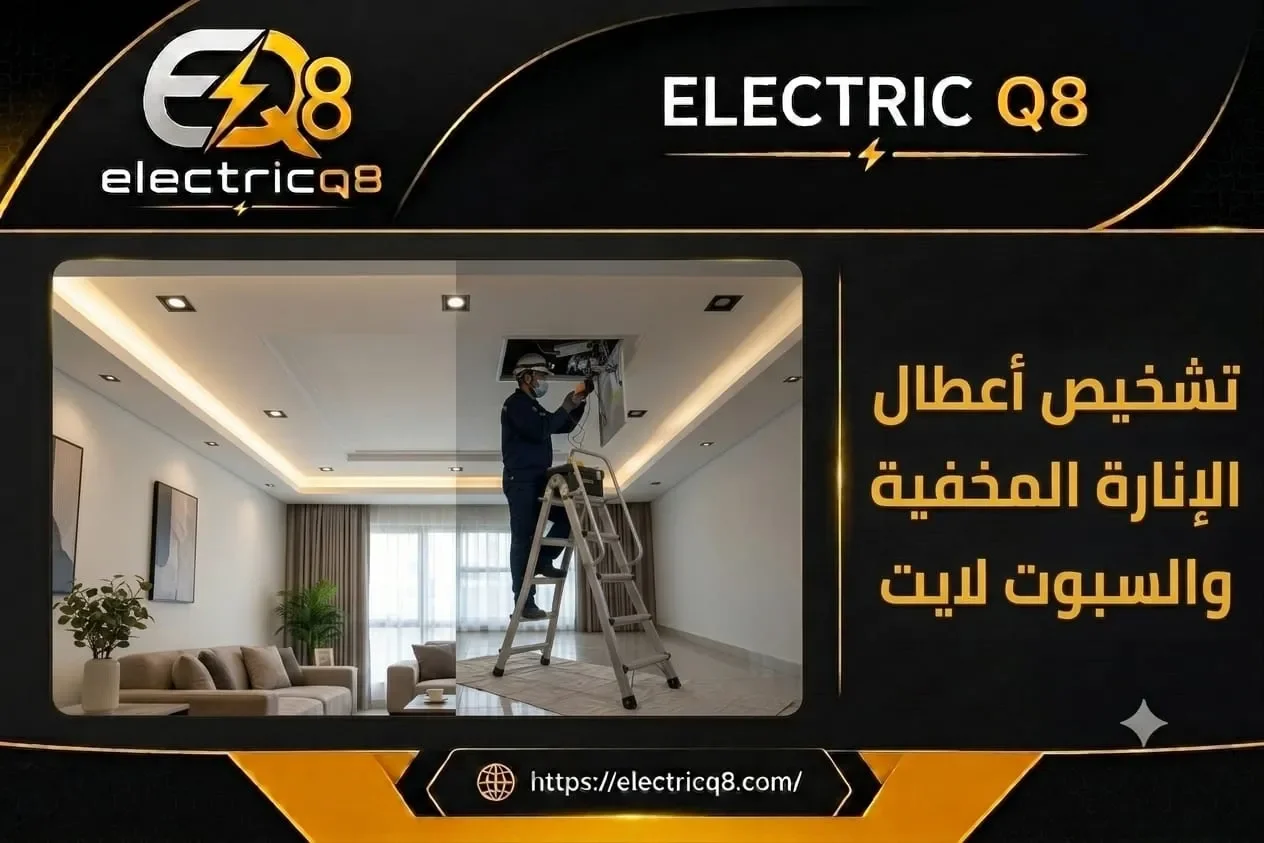
Hidden LED installation in Kuwait with maintenance-friendly access begins by planning the locations of LED strips, drivers, electrical cable routes, and access arrangements before closing gypsum ceilings or installing decorative finishes. Proper installation is not simply about achieving attractive lighting. It also involves making sure electrical components can be inspected and replaced in the future without having to break open ceilings or damage finished surfaces whenever a fault occurs.
Many homeowners, villa owners, apartment residents, and diwaniya owners in Kuwait choose concealed lighting because it gives interiors an elegant appearance and highlights architectural details in ceilings and walls. However, problems arise when the LED lighting stops working after the interior finishing is complete, and the homeowner discovers that the driver is concealed inside the gypsum ceiling without a suitable access opening, or that the LED strip has been installed in a way that makes replacement difficult.
If you are finishing a new home or renovating a living room, bedroom, or office, it is preferable to prepare the concealed lighting system with future maintenance in mind from the beginning. At ElectricQ8 – 24-Hour Electrician in Kuwait | Electrical Installations, Maintenance, and Short-Circuit Repairs, you can request an assessment of concealed LED lighting preparation, electrical wiring, driver locations, and maintenance access arrangements so that the lighting installation is compatible with the interior design, operating requirements, and future maintenance needs.
Hidden LED Installation in Kuwait

Hidden LED installation in Kuwait involves preparing lighting inside gypsum ceiling recesses, behind decorative edges, or within specially designed profiles so that the light appears indirectly without exposing all the lighting components.
However, successful installation depends on more than the appearance of the lighting. It also requires compatibility between the LED strip, power supply, mounting method, ventilation conditions, temperature requirements, and electrical cable routes.
Some LED lighting systems operate at low voltage and require a compatible driver or power supply, while other concealed lighting products have different electrical requirements. Therefore, the product specifications must be reviewed before electrical wiring is installed.
It is equally important to consider how the LED strip or driver will be replaced if a fault develops because concealing all components inside gypsum without suitable access arrangements may make maintenance more difficult and expensive.
What Does Proper Hidden LED Installation Include?
-
Determining the lighting location: The LED strip's position inside the gypsum ceiling or decorative structure is selected according to the desired design and the direction of light distribution, while ensuring that individual LED points do not create an unpleasant appearance or unwanted reflections on glossy surfaces.
-
Selecting a suitable LED strip: The strip's power rating, voltage, light color, LED density, mounting requirements, and cooling needs are reviewed because these factors influence lighting quality and operating stability.
-
Preparing the driver or power supply: A power source compatible with the strip's voltage, electrical capacity, and control method must be selected, with a suitable installation location determined according to manufacturer instructions.
-
Planning future maintenance: The installation should establish how the driver, electrical connections, and LED strip can be accessed for inspection or replacement without relying on breaking decorative finishes as the only available maintenance method.
Can Hidden LED Lighting Be Installed Without Breaking the Ceiling During Maintenance?
Yes. Many concealed LED lighting systems can be designed so that their components remain accessible for inspection and replacement without breaking the gypsum ceiling, provided this requirement is considered before interior finishing.
However, maintenance without demolition depends on the ceiling design, driver location, LED strip mounting method, and available access space.
It is not possible to guarantee that opening finished surfaces will never be necessary, particularly when older electrical installations are completely concealed or were originally installed without maintenance access.
Hidden LED Lighting in Gypsum Ceilings
Hidden LED lighting in gypsum ceilings is a popular solution for adding indirect lighting to suspended ceilings and decorative edges, particularly in living rooms, bedrooms, corridors, and diwaniyas.
A recess or decorative ledge is usually prepared within the gypsum design, allowing the LED strip to be installed in a location that is not directly visible from normal viewing angles while the light reflects across the ceiling or wall.
However, the available space inside gypsum ceilings may be limited and may contain metal framing, air-conditioning installations, or other lighting cables. Coordination between the electrician and gypsum installer is therefore necessary before closing the ceiling.
Mounting and heat dissipation requirements must also be considered according to the LED strip type because some products require an appropriate profile or specific installation surface in accordance with manufacturer instructions.
Best Locations for Hidden LED Lighting in Gypsum Ceilings
|
Location |
Hidden LED Installation Considerations |
|
Living room |
Distribute lighting according to seating arrangements and ceiling design |
|
Bedroom |
Choose comfortable, indirect lighting |
|
Diwaniya |
Highlight decorative edges without creating uncomfortable glare |
|
Corridors |
Provide balanced lighting according to the space's use |
|
Home entrance |
Highlight interior design while supporting convenient movement |
|
Office |
Avoid distracting reflections on work screens |
|
Commercial shops |
Highlight decorative features and display areas |
Does Hidden LED Lighting Require Space Inside the Gypsum Ceiling?
Yes. Adequate space is required for the selected installation method and the type of LED strip or profile, and a separate location may also be necessary for power supply components.
However, there is no single space requirement suitable for every product because dimensions and ventilation requirements vary according to the lighting system and its design.
Can Hidden LED Lighting Be Installed After Gypsum Finishing?
This may be possible if the existing design already includes a suitable recess and prepared electrical cable routes.
However, if no space or wiring has been prepared, installation may require modifications to the gypsum ceiling or the addition of alternative lighting solutions compatible with the decorative design.
Hidden LED Lighting Electrical Preparation
Hidden LED lighting electrical preparation means preparing the electrical infrastructure, lighting locations, and operating components before gypsum installation, painting, and decorative finishing are completed.
This stage is important because it allows cable routes, power supply points, driver locations, and maintenance access arrangements to be determined before closing spaces that may become difficult to reach later.
A common mistake is preparing the LED strip recess inside the gypsum ceiling without determining the driver's location or calculating the electrical supply requirements. Problems then become apparent during the final installation.
For this reason, it is preferable to select the LED lighting type and specifications, or at least establish its technical requirements, before installing electrical wiring so that unsuitable cables or connections are not used.
Steps for Preparing Hidden LED Lighting Before Interior Finishing
-
Reviewing the decorative design: Determine concealed lighting locations, installation route lengths, and the desired light distribution.
-
Selecting the lighting system: Identify the LED strip type, voltage, power rating, and operating and control requirements.
-
Planning the electrical supply: Review the electricity source, suitable circuits, and connection methods.
-
Determining driver locations: Choose positions that meet product requirements and allow access during maintenance.
-
Preparing electrical cable routes: Install suitable wiring before closing gypsum ceilings or walls.
-
Coordinating with the gypsum installer: Review the locations of recesses, profiles, and required maintenance access openings.
-
Inspecting the electrical preparation: Verify wiring and connection safety before closing concealed areas.
Why Is Preparing LED Lighting Before Gypsum Installation Better?
Early planning allows electrical cable routes, operating components, and maintenance access locations to be prepared without modifying finished surfaces after completion.
It also improves coordination between the electrician and gypsum installer and reduces the possibility of discovering conflicts between lighting, decorative features, or air-conditioning installations at a late stage.
Concealed LED Lighting
Concealed LED lighting provides indirect illumination that can highlight gypsum ceiling edges, walls, or fixed furniture features. However, it requires appropriate selection of brightness, light color, and distribution method.
Some homeowners prefer warm lighting in bedrooms and seating areas, while other spaces may require different lighting colors depending on their function and interior design.
Color alone should not determine the choice of LED lighting because the quality and consistency of light distribution, strip power, and operating characteristics also influence the final result.
It is also important to establish whether the concealed lighting will serve as supplementary decorative illumination or form part of the main lighting system because this affects the required brightness and number of LED lighting routes.
Common Uses of Concealed LED Lighting Inside Homes
-
Gypsum ceiling edge lighting: This is used to highlight ceiling levels and decorative architectural details indirectly. The direction of illumination and strip position must be planned so that individual LED points do not become visible in an undesirable way.
-
Lighting behind television units: Concealed LED lighting can create a visual effect behind a wall or television unit, provided cable routes, power supply locations, and future access remain possible after the decorative structure is installed.
-
Cabinet and shelf lighting: This can highlight interior spaces or displayed items, but suitable components must be selected according to installation conditions, temperature requirements, and the intended usage.
-
Corridor lighting: Concealed LED lighting may be used as supplementary illumination according to the design. However, an adequate lighting level must be maintained for safe movement, and weak decorative lighting should not be relied upon alone when it is insufficient.
Can Hidden LED Lighting Replace Main Lighting?
Not always, because this depends on the brightness of the lighting, the room design, and how the light is distributed.
Concealed lighting may be sufficient for certain uses, while other rooms require spotlights or additional lighting fixtures to achieve the desired illumination level.
Hidden LED Driver

The hidden LED driver, or power supply, is an essential component in many LED strip systems because it provides the electrical supply required by the strip according to its specifications.
Different lighting systems must be distinguished because some LED strips require a constant-voltage power supply, while other lighting fixtures use constant-current drivers. The correct component cannot be selected solely based on its appearance or stated power rating.
Voltage, electrical capacity, dimming requirements, and control compatibility must also be reviewed where applicable because incompatible components may cause weak lighting, unstable operation, or component damage.
One of the most serious installation mistakes is placing the driver in an inaccessible enclosed space inside the gypsum ceiling, making it necessary to open the ceiling when the driver fails.
Where Should a Hidden LED Driver Be Installed?
Ideally, the driver should be installed in a location suitable for its operating and ventilation requirements according to manufacturer instructions, while remaining accessible for inspection or replacement.
The location may be within a designated service space, behind a removable cover, or accessible through an appropriate maintenance opening, provided the installation complies with electrical requirements.
The driver should not be left exposed in areas subject to unsuitable moisture or heat conditions, nor should it be concealed inside a sealed space that contradicts its installation instructions.
Signs That May Indicate a Hidden LED Driver Problem
-
The LED lighting does not work at all: Possible causes include a power supply interruption, faulty driver, connection problem, or damaged LED strip. Therefore, the components must be inspected rather than automatically assuming that the driver is responsible.
-
Flickering or unstable lighting: This may be associated with an incompatible power supply, unsuitable control components, or another electrical problem requiring diagnosis.
-
LED lighting switches off after operating: The problem may involve temperature, electrical loading, or another component. Product specifications and operating conditions must be reviewed before replacement.
Can an LED Driver Be Replaced Without Breaking the Gypsum Ceiling?
Yes, if the driver has been installed in an accessible location with a suitable maintenance opening or cover that allows inspection and replacement.
However, if the driver is completely concealed behind gypsum without any access arrangement, reaching it may require opening part of the finished ceiling.
If you are preparing a new concealed lighting installation or experiencing problems with existing LED lighting, you can request an assessment of the wiring, driver, and maintenance accessibility through the ElectricQ8 Electrician Services Website in Kuwait before carrying out unnecessary demolition.
Maintenance Access Opening for Hidden LED Lighting
A maintenance access opening for hidden LED lighting is an access arrangement planned within gypsum ceilings or decorative structures to allow certain concealed components to be inspected and replaced when necessary.
The opening may take the form of a designated access panel or a removable section of the decorative structure. Its selection depends on the driver's location, component dimensions, and access requirements.
The objective is not to create a random opening in the ceiling. Instead, it is to provide a practical maintenance solution that allows repairs without damaging decorative finishes while preserving the overall appearance of the space.
However, an access opening alone is insufficient if the components are positioned too far away or there is not enough space to remove and inspect them. Actual accessibility must therefore be evaluated during planning.
Why Is a Hidden LED Maintenance Opening Important?
-
Access to the driver: A suitable opening allows the power supply to be inspected or replaced without opening a large section of the gypsum ceiling when a fault occurs.
-
Inspection of electrical connections: It may provide access to components requiring inspection or maintenance, provided their locations and installation methods are appropriate and safe.
-
Reducing damage to decorative finishes: When a suitable access arrangement is planned, the need to break ceilings or repaint surfaces because of faults in concealed components may be reduced.
-
Simplifying future maintenance: It makes inspection and replacement more practical, particularly when the lighting system contains several drivers or control units.
Where Should a Hidden LED Maintenance Opening Be Located?
Its position is determined according to the location of the driver and the connections requiring access, while considering the gypsum design and the ability to open the panel and remove components.
Coordination between the electrician and gypsum installer is preferable before closing the ceiling so that the opening is not positioned somewhere that prevents effective maintenance.
Must the Maintenance Opening Be Visible in the Decorative Design?
Not necessarily. Access solutions can be selected to complement the design and minimize the visibility of the cover, provided inspection and maintenance accessibility are not compromised.
However, certain designs may require a visible opening or designated access panel depending on component locations and access requirements.
Hidden LED Lighting Maintenance
Hidden LED lighting maintenance includes inspecting the LED strip, driver, electrical connections, and control components when lighting becomes weak, stops operating, or behaves differently from normal.
It is important not to assume that every LED lighting fault requires replacement of the entire strip because the problem may involve the power supply, a connection point, or a control unit.
In some cases, one section of the LED strip stops working while the remaining sections continue operating. Diagnosing this situation differs from investigating a complete lighting failure.
If the system was originally installed with component accessibility in mind, inspection and replacement may be easier and less disruptive to the decorative finishes.
Most Common Hidden LED Lighting Problems
|
Problem |
Possible Causes Requiring Inspection |
|
LED lighting does not operate |
Power supply, driver, electrical connections, or LED strip |
|
One section of the strip is off |
LED strip damage or a connection point problem |
|
Lighting flickers |
Incompatible components or an electrical supply problem |
|
Uneven brightness |
Strip characteristics, power distribution, or electrical connections |
|
LED lighting turns off after some time |
Operating conditions, temperature, or component problems |
|
Light color changes |
Product characteristics or deterioration of some LED elements |
|
Lighting controls stop working |
Control unit, connection, or compatibility problems |
Can Hidden LED Lighting Be Repaired Without Replacing the Entire Strip?
Yes. In certain situations, if the fault is in the driver, control unit, or an electrical connection, replacing the LED strip may not be necessary.
However, if the strip itself is damaged, the section requiring replacement or the need to replace the entire strip is determined according to the product design and installation method.
When Do You Need an Electrician for Hidden LED Maintenance?
You should request an electrician when lighting stops operating, repeatedly flickers, produces unusual heat or a burning smell, or experiences an electrical supply problem.
The electrical supply must be safely disconnected before inspection, and exposed electrical connections should not be handled without appropriate qualifications.
Electrical Wiring for Hidden LED Lighting
Electrical wiring for hidden LED lighting requires identifying the power source, cable routes, driver locations, and LED strip type before electrical connections are installed.
Some LED lighting systems use low-voltage power after the power supply, while the section connected to the main electrical supply has different requirements. Appropriate separation, organization, and protection must therefore be considered according to the system design.
The length and power rating of the LED strip may also affect the way power is distributed, particularly in long lighting routes where voltage drop and lighting uniformity must be reviewed according to product specifications.
Randomly connecting long LED strip runs or using unsuitable cables should be avoided because this may cause inconsistent brightness or operating problems.
What Does Hidden LED Electrical Wiring Include?
-
Determining the power source: Review the appropriate electrical circuit and the system's connection point.
-
Calculating lighting requirements: Determine LED strip power and installation route lengths according to the specifications.
-
Selecting the power supply: Confirm compatibility with voltage, electrical capacity, and operating type.
-
Planning cable routes: Determine suitable cable paths and connection methods.
-
Preparing maintenance locations: Choose accessible positions for drivers and control units.
-
Installing electrical wiring: Fit cables and connections according to safety requirements.
-
Inspection and commissioning: Review connections, lighting uniformity, and control operation.
Can Hidden LED Lighting Be Connected to a Standard Light Switch?
This may be possible depending on the type of LED system, driver, and required control method.
However, if the system includes dimming or specialized control features, compatibility between the switches, control units, and lighting components must be confirmed.
Hidden LED Strip Installation
Hidden LED strip installation requires selecting a suitable mounting surface, determining the direction of illumination, and planning how the strip can be accessed when replacement becomes necessary.
Some LED strips are installed inside specially designed profiles, while mounting methods for other products vary according to manufacturer instructions and the decorative design.
Temperature and operating conditions must also be considered because installing the strip in an unsuitable location may affect its performance and service life.
The mounting method should also allow the strip to be removed when maintenance is required, particularly in areas containing fixed decorative structures that are difficult to dismantle.
Steps for Installing a Hidden LED Strip
-
Determining length and location: Measure the required installation route and review corners and connection points according to the lighting design.
-
Selecting a suitable LED strip: Review voltage, electrical capacity, light color, and mounting requirements according to the intended application.
-
Preparing the mounting surface: The surface must be compatible with the selected mounting method while meeting the product's heat dissipation requirements.
-
Installing a profile when necessary: A suitable profile may help secure the strip, organize light distribution, and meet cooling requirements according to the lighting system.
-
Connecting the power supply: Install electrical connections using components compatible with the LED strip and driver.
-
Testing the lighting: Confirm that the strip operates correctly, distributes light consistently, and shows no visible problems before closing the final decorative sections.
Is It Better to Install LED Strips Inside a Profile?
A profile may be suitable for many applications because it helps secure the strip, organize the appearance of the lighting, and may assist with thermal management if designed for that purpose.
However, profile selection depends on the LED strip type, manufacturer requirements, and decorative design. Not every profile is suitable for every LED product.
Can an LED Strip Be Replaced After Interior Finishing?
Yes, if the strip has been installed in a way that allows it to be accessed, removed, and replaced without damaging surrounding components.
However, if it is installed behind a sealed decorative structure or secured in a way that prevents access, additional modifications may be required during maintenance.
Hidden LED Electrician in Kuwait
Choosing a hidden LED electrician in Kuwait requires focusing on proper electrical preparation and maintenance accessibility rather than simply ensuring that the LED strip turns on after installation.
A suitable electrician reviews the lighting type, installation route lengths, driver specifications, and connection locations before determining how electrical cables should be installed and maintenance access points prepared.
Coordination with the gypsum installer or interior decorator is also important before closing the ceiling, particularly when drivers or control units require future access.
If the concealed LED lighting is already installed but has stopped working, it is preferable to inspect the power supply, connections, and LED strip before deciding to replace components or open the decorative structure.
Why Request a Hidden LED Assessment From ElectricQ8?
|
What You Need From the Service |
Benefit to You |
|
Reviewing the lighting design |
Identify suitable hidden LED locations |
|
Evaluating electrical preparation |
Determine wiring and power supply requirements |
|
Reviewing the driver |
Confirm compatibility between the power supply and LED strip |
|
Planning maintenance access |
Reduce the need to open gypsum ceilings in the future |
|
Coordinating with interior finishing |
Reduce conflicts between electrical installation and decoration |
|
Diagnosing LED lighting faults |
Identify the cause before replacing components |
|
Explaining the scope of work |
Understand the required materials and modifications |
At ElectricQ8 – 24-Hour Electrician in Kuwait | Electrical Installations, Maintenance, and Short-Circuit Repairs, you can request an assessment of concealed LED lighting installation, electrical preparation, or existing faults while discussing driver locations and their accessibility.
When contacting the service, it is preferable to explain whether the project is still undergoing interior finishing or has already been completed and whether you require a new installation or maintenance of existing lighting.
It is also helpful to specify where the hidden LED lighting is installed, whether inside a gypsum ceiling, behind decorative wall panels, or within cabinets, because the location affects inspection and installation methods.
Request a Hidden LED Installation and Maintenance Electrician in Kuwait
Cost of Hidden LED Installation in Kuwait
The cost of hidden LED installation in Kuwait varies according to the LED strip length, type, specifications, mounting method, number of drivers, electrical cable routes, and the nature of the gypsum or decorative structure.
Installing concealed LED lighting in a small room differs from preparing a large living room or diwaniya with several gypsum ceiling levels and multiple lighting groups.
Costs also vary depending on whether the work involves a new installation before interior finishing or adding lighting to an already completed decorative structure, particularly when gypsum sections must be opened or new electrical routes prepared.
Future maintenance requirements may also affect the scope of work, such as preparing access openings or choosing profiles that allow LED strips to be removed and replaced.
An accurate final price cannot be determined without knowing the lighting route lengths, product types, existing wiring conditions, and installation requirements.
Factors Affecting Hidden LED Installation Costs
|
Factor |
Effect on Cost |
|
LED strip length |
Influences material quantities and installation work |
|
LED strip type |
Specifications and operating requirements vary |
|
Lighting power rating |
Affects power supply selection |
|
Number of drivers |
Influences materials and electrical connections |
|
Cable routes |
Vary according to location and distance |
|
Profile type |
Affects mounting methods and cost |
|
Gypsum ceiling design |
May require coordination or additional preparation |
|
Maintenance access openings |
May require work within the decorative structure |
|
Interior finishing stage |
Modifications after painting may increase the work |
|
Inspection and testing |
Vary according to the project scope |
How Can You Reduce Hidden LED Installation and Maintenance Costs?
-
Select the LED system before interior finishing: Choosing the system and its specifications early helps prepare suitable wiring and avoid changing cables or drivers after decorative work has been completed.
-
Plan driver locations: Positioning power supply components in suitable, accessible locations may reduce the need to open gypsum ceilings when a fault occurs in the future.
-
Coordinate between the electrician and gypsum installer: Reviewing lighting locations, profiles, and maintenance openings before closing the ceiling helps reduce conflicts and late modifications.
-
Request a clear quotation: It is preferable to know whether the price includes the LED strip, driver, profile, cables, installation, testing, and agreed gypsum work.
Real savings do not come from concealing every component inside the decorative structure. They come from preparing attractive lighting with components that remain accessible for maintenance without unnecessary damage.
Steps for Installing Maintenance-Friendly Hidden LED Lighting
Completing hidden LED installation in Kuwait with maintenance-friendly access requires an organized process that begins with reviewing the decorative design and ends with testing the lighting and confirming that components requiring maintenance remain accessible.
Electrical planning should preferably be completed before closing the gypsum ceiling, with coordination between the relevant installers so that drivers and connections are not concealed in locations that are difficult to reach.
Work Stages From Inspection to Handover
-
Inspecting the location: Review the ceiling or wall design and the proposed concealed lighting positions.
-
Selecting the LED type: Choose the LED strip, specifications, and operating method.
-
Reviewing the power supply: Determine the electrical circuit and driver or power supply requirements.
-
Planning installation routes: Identify cable, profile, and electrical connection locations.
-
Determining maintenance arrangements: Choose suitable driver positions and access openings when necessary.
-
Installing electrical wiring: Fit cables and prepare power supply points according to the requirements.
-
Coordinating gypsum installation: Confirm that recesses, profiles, and maintenance openings are compatible with the design.
-
Installing the LED strip: Secure and connect the strip according to manufacturer instructions.
-
Inspection and commissioning: Test lighting, electrical connections, and control units, and review accessibility to the components.
What Should You Check Before Accepting a Hidden LED Installation?
-
Confirm that the lighting operates consistently and achieves the desired appearance without flickering or unexpected differences in brightness.
-
Verify that the driver or power supply is suitable for the LED strip specifications and installed in a location compatible with its operating and ventilation requirements.
-
Ensure that components requiring inspection or replacement can be accessed appropriately and that electrical connections have been inspected before the decorative structure is closed.
Conclusion: Hidden LED Installation in Kuwait Without Décor Damage
Hidden LED installation in Kuwait is not simply about achieving attractive lighting inside gypsum ceilings or behind decorative features. It also requires planning that considers electrical wiring safety and the ability to maintain components in the future.
The most important step is determining the LED strip type, driver specifications, cable routes, and maintenance access locations before closing the gypsum ceiling because concealing components without a maintenance plan may turn a minor fault into a reason to open the ceiling or damage finished surfaces.
If you are finishing an apartment, villa, diwaniya, or office in Kuwait, it is preferable to coordinate between the electrician and gypsum installer before completing concealed lighting, while reviewing the strip mounting method, driver locations, and required maintenance openings.
However, if concealed LED lighting is already installed and has stopped working, it is preferable to inspect the power supply, driver, electrical connections, and LED strip before deciding to break open decorative surfaces or replace the entire system.
Contact ElectricQ8 – 24-Hour Electrician in Kuwait | Electrical Installations, Maintenance, and Short-Circuit Repairs to request an assessment, installation, or maintenance of concealed LED lighting and prepare electrical wiring with suitable access to components whenever necessary.
Request Hidden LED Installation Services in Kuwait
Prepare concealed lighting that complements your home's interior design while allowing future maintenance wherever possible, so you can enjoy an elegant appearance and comfortable illumination without expensive modifications or unnecessary damage when faults occur.
Frequently Asked Questions About Hidden LED Installation in Kuwait
Can hidden LED lighting be installed for maintenance without breaking gypsum ceilings?
Yes, provided driver locations, electrical connections, and LED strip mounting methods are planned with suitable access arrangements before closing the gypsum ceiling. However, maintenance without breaking finished surfaces depends on the system design and installation conditions.
Where is the best location for a hidden LED driver?
Ideally, it should be installed in a location with suitable ventilation and operating conditions according to manufacturer instructions, while remaining accessible for inspection or replacement, such as a service space or an appropriate maintenance opening.
Does hidden LED lighting need a maintenance access opening?
A maintenance opening or another access arrangement may be necessary when drivers or other components require inspection or replacement. This should be determined according to the lighting design and component locations.
Can a concealed LED strip be replaced without removing the decorative structure?
Yes, in some systems, if the strip is installed inside a profile or accessible space that allows it to be removed and replaced. However, if it is concealed behind a sealed decorative structure, modifications may be required to reach it.
How much does hidden LED installation cost in Kuwait?
The cost varies according to the LED strip length and type, number of drivers, profiles, electrical cable routes, gypsum ceiling design, and maintenance requirements. A more accurate price can be determined after assessing the location and scope of work.