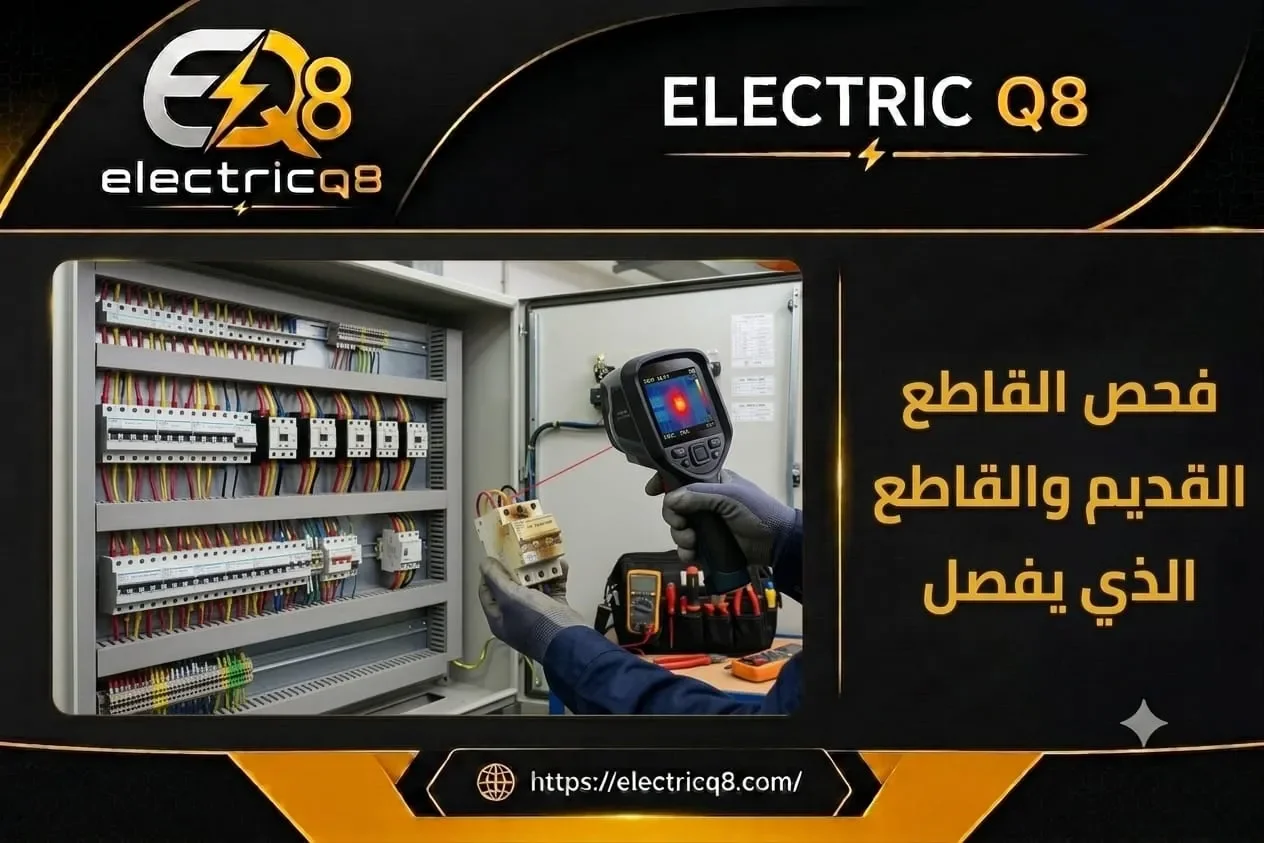
A clicking sound coming from the electrical panel when an air conditioner, water heater, or another high-demand appliance starts should not automatically be treated as a normal panel sound, especially if it appeared suddenly or repeatedly occurs with a particular appliance. Sometimes the sound may be associated with an electrical component designed to switch during operation, but in other cases it can indicate an unstable connection point, a damaged breaker, or electrical arcing that requires prompt inspection. The important thing is not to open the panel and try tightening terminals yourself because parts of the panel may remain energized. The correct approach is to identify when the sound appears and which appliance triggers it, then have the connections, breakers, electrical load, and temperature conditions professionally and safely inspected.
Clicking Sound From the Electrical Panel in Kuwait
Hearing a clicking sound from the electrical panel in Kuwait requires first identifying the nature of the sound and when it occurs rather than making a judgment based only on the word "clicking." Some electrical panels may contain switching components such as contactors or relays that can produce a mechanical sound when they operate or release, depending on the design of the system. However, a new or repetitive clicking sound, especially when accompanied by buzzing, sparks, a burning smell, or unusual heat, should not be considered normal without inspection. This is particularly important when the clicking begins exactly when an air conditioner, water heater, electric oven, or another substantial electrical load starts and disappears when that appliance is switched off.
The homeowner's observations can be extremely useful in this situation. Is there a single click at startup or continuous clicking? Does the sound seem to come from one specific breaker or is its location difficult to identify? Do the lights flicker at the same time? Does the breaker feel unusually hot from the outside or is there a smell resembling overheated plastic? These details help the electrician distinguish between a potentially normal switching sound and a condition that requires isolation and inspection. If noticeable heat, smoke, or sparks appear, do not approach or open the panel to locate the source.
A professional inspection begins by identifying the circuit and appliance associated with the problem before examining the breaker, connection points, and electrical load path. The electrician may need to measure current, evaluate abnormal heating, and assess terminals and electrical components using safe procedures. The real value of this approach is that it identifies why the sound occurs before anyone replaces a breaker or an entire electrical panel without evidence.
-
A single click from a known switching component is different from new and repetitive clicking under load, so the sound pattern should be described accurately before its cause is determined.
-
A sound that consistently appears when a particular appliance starts provides an important diagnostic clue because it allows the electrician to focus on the associated circuit instead of inspecting the entire panel randomly.
-
If the clicking is accompanied by sparks, smoke, a burning smell, or abnormal heat, do not open the electrical panel or touch its components and leave the inspection to a qualified professional.
Clicking in the Home Electrical Panel
Clicking in the home electrical panel when electrical demand increases deserves different attention from the normal mechanical sounds that certain control devices may produce. In practical electrical cases, the problem sometimes appears only when a substantial load begins operating because increased current makes a weak connection or deteriorated component reveal itself more clearly. The breaker may not necessarily trip even when the sound is present because the nature of the fault may not immediately reach the operating threshold of the protective device.
A common mistake is waiting for the breaker to trip and treating the absence of tripping as proof that the panel is healthy. Circuit breakers perform specific protective functions, but they are not devices that detect every possible form of poor electrical connection. An unstable connection point can develop increased resistance and produce heat or intermittent electrical arcing while the total current remains within a range that does not immediately cause the breaker to operate. This is why inspecting terminals, evaluating component condition, and measuring electrical load and temperature when necessary are important parts of the diagnostic process.
A practical example is a panel that remains completely quiet while lights and small appliances are operating but begins clicking when a water heater or air conditioner starts. In this situation, it would be incorrect to immediately declare that the appliance is defective or that the breaker is undersized. The relevant circuit should be identified and its load, connection points, and breaker evaluated. If the problem is confirmed at a connection point, the cause should be corrected and any heat damage around that area assessed before the circuit is returned to operation.
-
A breaker remaining switched on does not automatically mean the clicking is safe because some connection problems can produce heat or sound before any obvious protective trip occurs.
-
A problem that appears only with high-demand appliances makes load measurement and inspection of the associated circuit more useful than immediately replacing the breaker.
-
Repairing a connection point should involve more than simply tightening it when heat damage is present because the terminal, conductor, insulation, and surrounding component need to be evaluated for actual damage.
Clicking Sound From the Electrical Breaker
When a clicking sound comes from the electrical breaker itself or appears to originate from the area surrounding it, it should not be treated as nothing more than an annoying noise. A breaker's electrical connections are expected to remain secure, and the breaker should perform its designed function without repetitive electrical clicking. However, confirming that the sound actually originates from the breaker requires inspection because noises can travel through components inside the panel and may be difficult to locate accurately from outside the enclosure.
One possibility an electrician investigates is the condition of the conductor connections entering and leaving the breaker and whether there are signs of excessive heat, discoloration, or physical deterioration of the breaker body. The electrical load passing through it should also be reviewed together with whether the sound occurs only when a specific appliance operates or when overall electrical demand rises. In some situations, the breaker itself may be internally damaged, but this should not be concluded before checking the connections and nearby components. Replacing the breaker while leaving a poor connection unresolved, for example, may cause the same problem to return even with a new component.
Homeowners should not attempt to tighten breaker terminals themselves. Turning off some breakers does not necessarily mean that every section inside the electrical panel is de-energized, and dangerous incoming supply points may still be present. A qualified electrician isolates the electrical supply using the appropriate procedure, verifies safe working conditions, and then carries out the necessary inspection and repair. If the breaker is confirmed to be damaged, it should be replaced with a component appropriate for the circuit rather than a larger breaker simply to prevent another electrical problem from becoming visible.
-
Locating the sound inside an electrical panel requires inspection because clicking that appears to come from a breaker may actually originate from a connection point or another nearby component.
-
Discoloration, heat marks, or unusual odors around the breaker are important indicators that require evaluation of the breaker, terminals, and conductors rather than treating the sound alone.
-
Breaker replacement should follow identification of the actual cause and use specifications appropriate for the circuit because randomly increasing breaker capacity does not correct a poor connection or electrical fault.
Electrical Panel Makes Noise When Appliances Start
When the electrical panel makes noise when appliances start, the type of appliance and the exact timing of the sound become essential parts of diagnosis. If clicking appears when a high-demand appliance such as an air conditioner or water heater starts and disappears when that appliance is turned off, the relationship deserves inspection of the circuit supplying that appliance and the electrical load passing through the panel components. If the sound remains present when electrical demand is low or appears randomly, the electrician may need to broaden the inspection rather than linking the problem to only one appliance.
It is also useful to notice whether the sound occurs only at the instant the appliance starts or continues throughout its operation. A single click from a control component designed to switch is different from intermittent noise, buzzing, or continuous clicking from an area that should normally remain quiet. In homes where substantial electrical appliances have been added over the years without reviewing load distribution, starting a newer appliance may expose a weakness in a connection point or panel component that had not previously produced noticeable symptoms.
The electrician does not inspect the appliance separately from its circuit. The breaker supplying it, electrical connection points, cable path, actual load, and condition of panel components should be reviewed within safe working procedures. If the problem appears only under load, suitable electrical and thermal measurements may help identify a point whose condition changes during operation. The objective is to determine why the sound appears when electrical demand increases rather than simply trying to make the panel quiet.
-
Identifying the appliance whose operation coincides with the sound helps connect the problem to the relevant circuit and electrical load instead of expanding the investigation unnecessarily to every part of the home.
-
Clicking that continues throughout appliance operation is different from a single switching sound, so the duration, repetition, and character of the noise should be described accurately to the electrician.
-
Adding high-demand appliances to older electrical installations makes reviewing load distribution and connection points particularly important when new sounds begin coming from the electrical panel.
Cause of Clicking in the Electrical Distribution Panel

Finding the cause of clicking in the electrical distribution panel does not end with one possible explanation because sounds inside a panel can result from several different conditions. A switching component may be operating normally according to the system design, or there may be an unstable connection, a heat-damaged terminal, a deteriorated breaker, or intermittent electrical arcing. The sound, its location, and the conditions under which it occurs therefore need to be evaluated before any repair decision is made.
A weak electrical connection deserves particular attention because it may appear visually acceptable while the quality of electrical contact is poor. When resistance increases at a connection point, heat can develop and the condition may become more noticeable as current rises. Over time, signs such as discoloration of the terminal or insulation and unusual odors may appear. If intermittent electrical arcing develops, clicking can be one of the warning signs that justifies stopping use and arranging prompt inspection instead of waiting for a more serious failure.
However, every sound should not automatically be blamed on a loose screw. The electrician needs to inspect the breaker, neighboring components, electrical load, and circuit type because some panels contain control devices with recognizable operating sounds. Correct diagnosis distinguishes normal switching from abnormal electrical noise based on panel design, measurements, and the actual condition of the components.
-
Poor electrical contact at a connection point can generate heat and noise that become more noticeable as load increases even when visible damage is not obvious from outside.
-
The presence of control components in some electrical panels means the source of the sound should be identified before every click is treated as evidence of a damaged breaker or connection.
-
Clicking accompanied by a burning smell, heat marks, or discoloration requires faster attention because it may indicate a problem more significant than an inconvenient sound.
Electrical Noise When Appliances Start
An electrical noise when appliances start requires identifying where the sound actually originates before connecting it to the distribution panel. Sometimes a homeowner believes the clicking is coming from the panel when its real source is an isolator switch, electrical outlet, or connection close to the appliance. In other cases, the sound genuinely originates inside the panel and appears when current rises as a particular appliance starts. Accurately locating the source prevents a healthy component from being repaired while the damaged point remains untouched.
The relationship between the appliance and the sound can be observed without approaching exposed electrical parts. If the noise occurs every time a particular appliance is switched on and disappears when it is turned off, that is valuable information for the electrician. If the sound appears with several high-demand appliances, reviewing the general load and shared supply may become more important. Flickering lights, an unusual smell, or excessive heat occurring at the same time provide additional clues that help determine the urgency of the condition.
The homeowner does not need to repeatedly operate every appliance to reproduce the sound. If the clicking is clear and recurring, particularly when accompanied by other warning signs, it is better to stop using the associated load and arrange an inspection. Repeatedly recreating the problem can expose a damaged point to additional heating. An electrician can operate the required loads when necessary as part of a controlled diagnostic process using suitable measuring equipment.
-
Determining whether the sound originates from the panel or from an electrical point near the appliance prevents repairs from being directed toward an area that is not responsible for the problem.
-
A sound associated with one appliance has a different diagnostic meaning from clicking that appears with several high-demand loads because each pattern directs the inspection differently.
-
There is no need to restart the appliance repeatedly to prove the fault because clear clicking associated with a particular load already provides useful information for beginning an inspection.
Inspecting a Noisy Electrical Panel in Kuwait
Inspecting a noisy electrical panel in Kuwait requires more than simply opening the cover and looking at the breakers. The electrician begins by obtaining a precise description of the sound, identifying which electrical loads are operating when it occurs, determining whether the problem is new or longstanding, and asking whether any electrical modifications were recently completed. The circuit or panel section most closely associated with the symptom can then be prioritized before internal inspection and measurements begin.
After the supply has been isolated using appropriate procedures and safe working conditions have been verified, the electrician reviews connection points, breakers, conductors, and surrounding components. The inspection looks for heat marks, discoloration, distorted insulation, and other evidence of poor electrical contact. When necessary, electrical load can be measured and circuits compared, while suitable thermal inspection methods may be used under controlled operating conditions to identify points developing abnormal temperature.
The value of a specialized inspection is that it provides a specific conclusion rather than a vague statement such as "the panel is old." An older panel may still contain many serviceable components and require repair of only one particular connection or device. In contrast, evidence of widespread deterioration may justify a broader assessment. The decision should be based on actual component condition rather than panel age alone.
-
The inspection begins with the history of the sound and the electrical loads associated with it because this information helps prioritize the circuit that should be tested first.
-
Heat marks, deformation, and discoloration around terminals provide important evidence when evaluating connection quality and component condition inside the distribution panel.
-
Panel age alone does not determine the repair scope because a professional decision depends on inspection results, component condition, and the panel's ability to support current electrical loads.
Connection Point Problems in the Electrical Panel
A connection point problem in the electrical panel requires careful assessment because a good electrical connection depends on more than simply having a conductor inserted into a terminal. The conductor type, preparation of its end, terminal design, appropriate tightening requirements, and condition of the electrical component all affect connection quality. If a connection becomes unstable, its resistance may increase and begin producing heat as current passes through it, with symptoms becoming more noticeable when a substantial load operates.
Sometimes the first sign is only a slight unusual smell or minor discoloration around a terminal. In other situations, the homeowner hears intermittent clicking whenever a particular appliance starts. Leaving the condition unresolved can eventually cause greater deterioration of the insulation, breaker, or connection point itself. For this reason, the solution is not always simply to "tighten the screw." If the conductor or terminal has been exposed to significant heat, its condition should be assessed to determine whether it can be correctly prepared and reused or whether the damaged part requires replacement.
Excessive tightening is not professional repair either and can damage the terminal or electrical component. Connection work should therefore follow the component's requirements using appropriate tools and should be performed by a qualified person after the electrical supply has been safely isolated and verified. The objective is to restore a stable electrical connection rather than merely making a screw appear tight.
-
Connection quality depends on the terminal condition, conductor preparation, and correct installation method rather than simply applying as much tightening force as possible.
-
Heat damage around a connection means the insulation, conductor, and electrical component should all be evaluated before deciding whether the connection can safely be reused.
-
Excessive or uncontrolled tightening can cause damage just as inadequate tightening can, which is why panel connections require appropriate tools and technical procedures.
Electrician to Inspect an Electrical Panel in Kuwait
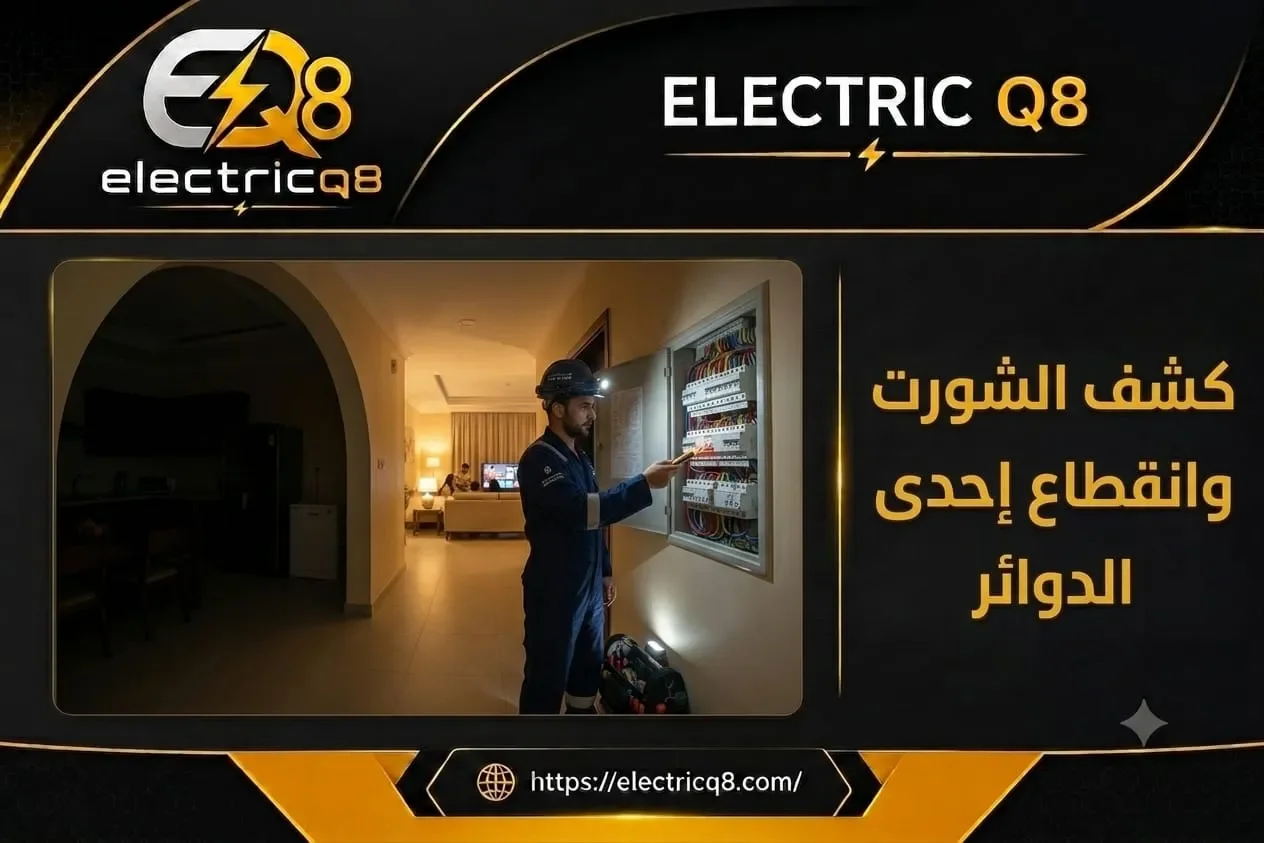
Choosing an electrician to inspect an electrical panel in Kuwait when clicking is present should focus on diagnostic ability rather than selecting someone who recommends replacing the entire panel during the first phone call. The right electrician asks when the sound occurs, which appliances are operating at the time, and whether there is heat, an unusual smell, or breaker tripping. These questions provide useful context before the panel is opened and help establish inspection priorities.
At the property, the electrician should distinguish between a switching component producing its normal operating sound and noise caused by an abnormal condition. The electrical load, connection points, breakers, and relevant circuits are reviewed using appropriate measurements rather than relying only on hearing the clicking. If a damaged point is found, the electrician should explain the cause, the extent of the damage, and whether the repair can remain localized or whether evidence supports broader work.
Cost also depends on what the inspection reveals. Diagnosing and repairing one specific connection can cost significantly less than replacing an entire distribution panel unnecessarily. However, if inspection reveals widespread heat damage or several components that are no longer appropriate for current loads, the repair scope may be larger. Accurate pricing therefore comes after the condition of the panel is understood rather than before it has been examined.
-
An electrician who first identifies when the sound occurs and which electrical load is associated with it has a stronger diagnostic basis than someone who immediately assumes the entire panel requires replacement.
-
Combining electrical measurements with visual and thermal inspection when appropriate provides clearer evidence than relying only on hearing the clicking and guessing its source.
-
Repair cost depends on the actual extent of damage, so a localized connection repair should be distinguished from a condition that genuinely requires broader panel work.
Repairing Clicking Noise in the Electrical Panel
Repairing clicking noise in the electrical panel begins with identifying its actual source rather than simply trying to silence the sound. If testing confirms a connection-point problem, the conductor, terminal, and surrounding component should be assessed before the appropriate repair is performed. If a breaker is damaged, the reason for that damage should be understood before it is replaced. If the sound comes from a control component operating normally, that should be explained instead of replacing healthy electrical parts.
When heat-related deterioration is present, the repair may require more than restoring the connection. Carbonized material, damaged insulation, or a terminal that has lost its proper condition should not be ignored. The electrical load passing through that point also needs to be reviewed because repairing the visible effect while leaving the underlying cause unchanged can allow the problem to return. This is particularly important when the sound appears during operation of high-demand appliances.
After repair, the circuit should be tested and the relevant component observed while the associated load operates under safe conditions. The electrician should verify that the abnormal sound has disappeared and that there is no unusual heating, smell, or change in breaker behavior. This makes the repair a verified correction of the cause rather than simply replacing a component and waiting to see whether the problem returns.
-
Repair begins by identifying the actual source of the clicking and correcting the damaged area instead of replacing different components until the sound disappears by chance.
-
Heat-related damage requires assessment of all affected parts because simply tightening a connection that has experienced overheating does not guarantee restoration of a reliable electrical contact.
-
Testing the panel under an appropriate load after repair confirms that the underlying cause has been corrected and that abnormal clicking and associated heating have not returned.
Conclusion
If you hear a clicking sound from the electrical panel in Kuwait when an appliance starts, do not automatically consider it normal and do not open the panel to tighten connections yourself. First notice whether it is a single click or continuous clicking, which appliance causes it, and whether there is also heat, an unusual smell, or flickering lights. The electrician can then identify the source and inspect the connection points, breaker, electrical load, and component condition. Some sounds may be associated with the normal operation of specific control devices, but new or repetitive clicking requires a clear explanation. Accurate diagnosis addresses the actual cause while avoiding unnecessary replacement of a healthy electrical panel or breakers.
Frequently Asked Questions
Is a clicking sound from the electrical panel always dangerous?
Not every sound indicates danger because some control components can produce a normal click when switching on or off. However, new or continuous clicking, especially when accompanied by heat, a burning smell, or sparks, requires professional inspection.
Why does the clicking appear only when the AC or heater starts?
High-demand appliances increase the electrical load on the circuit and can make an existing connection or component problem more noticeable. Identifying the actual cause requires measuring the load and inspecting the circuit associated with the appliance.
Can I open the panel and tighten the screws if I hear clicking?
It is not recommended. Parts of the electrical panel may remain energized even when certain breakers are switched off, and a proper electrical connection depends on terminal condition, conductor condition, and component requirements rather than simply tightening a screw as hard as possible.
Does a breaker staying on mean the electrical panel is safe?
No. Some electrical connection problems can generate heat or noise without causing the breaker to trip immediately. Breakers remaining on therefore does not rule out a fault inside the panel.
When should I stop using the appliance and call an electrician?
If the clicking is repetitive, becomes more noticeable as electrical load increases, or is accompanied by a burning smell, smoke, sparks, or significant panel heating, stop using the appliance associated with the problem, do not open the electrical panel, and arrange a qualified electrical inspection.