
Finding a burnt wire or melted insulation inside an electrical panel is not a fault that should be treated by simply cutting away the damaged section, installing a new wire, and considering the job finished. The heat that caused the damage may be related to a poor connection, unsuitable load conditions, a damaged component, or another electrical problem that needs diagnosis before the circuit is returned to service. If there is a burning smell, discoloration, or visible melting inside the panel, the correct response is to avoid touching internal components or attempting a DIY repair and arrange an inspection by a qualified electrician. A professional repair starts by identifying the heat source and extent of damage, correcting the cause, and testing the circuit instead of replacing only the visible damage and allowing the problem to return.
Burnt Wire Inside an Electrical Panel in Kuwait
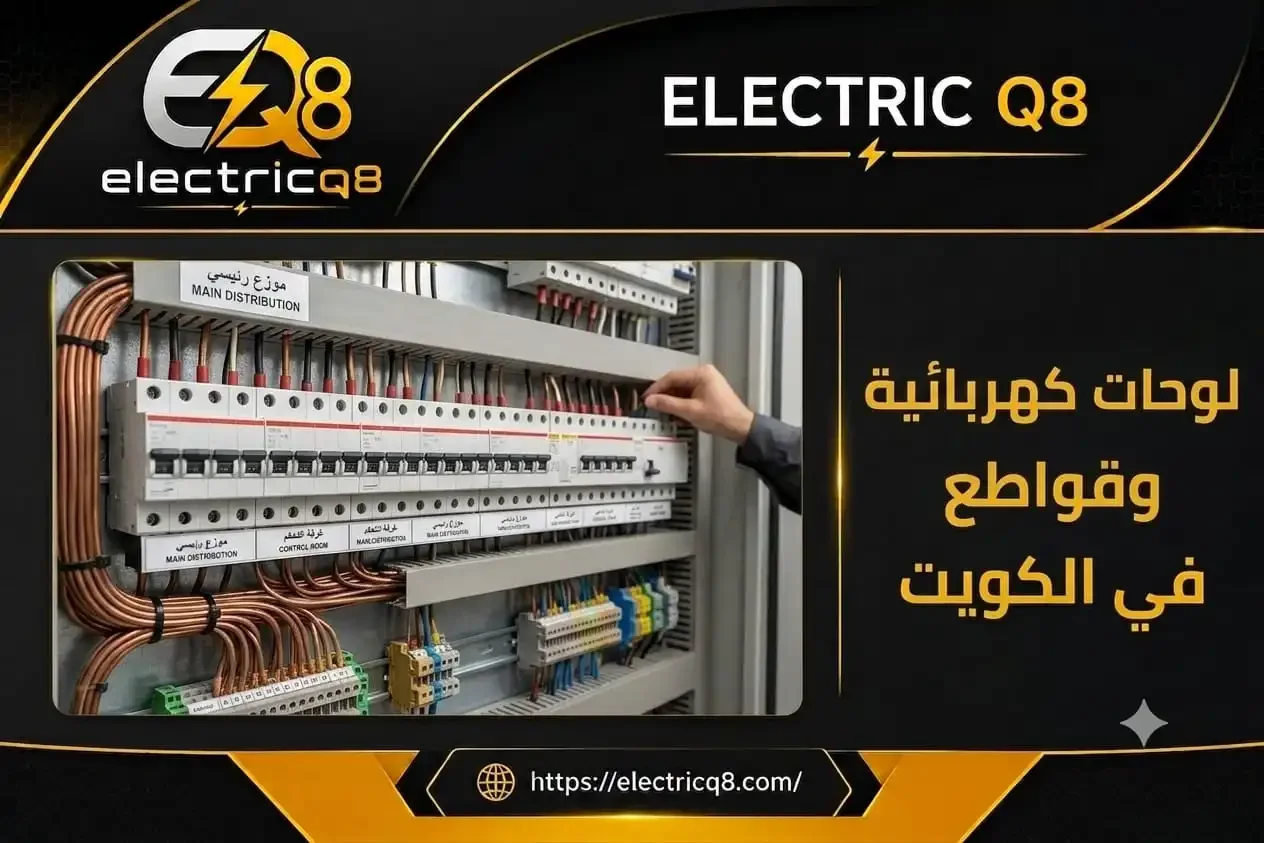
A burnt wire inside an electrical panel in Kuwait requires a different approach from damage to an exposed wire at an ordinary electrical point because the distribution panel brings circuits, protective devices, and electrical connections together within a confined space. The first step is determining exactly where the damage occurred and how far it extends. The visible damage may be concentrated at the end of a conductor connected to a breaker or termination point while the remaining wire appears normal, or the heat may have affected a larger section than what is immediately visible. For this reason, the color of the insulation alone is not enough to determine the full repair scope.
Professional diagnosis looks for the relationship between the location of the burn damage and the source of heat. If the damage is concentrated around a connection point, that provides different diagnostic information from heat damage extending along a section of conductor. If the problem appeared after a new appliance was added, a circuit was modified, or a breaker was changed, that history is important because it helps the electrician understand what changed before the fault appeared. Nearby components should also be assessed because excessive heat may affect a terminal, breaker, or adjacent part even when the wire shows the most obvious visible damage.
A common mistake is seeing a few centimeters of blackened or melted insulation and assuming that this is the entire problem. The burnt or melted section is an outcome whose cause needs to be understood. If there is a strong burning smell, smoke, sparks, or severe heat coming from the electrical panel, the panel should not be opened to move wires or repeatedly reset breakers to see whether they remain on. It is safer to stay away from the panel and request urgent qualified electrical inspection while following appropriate emergency procedures if there is an active fire or immediate danger.
-
The location of the burnt wire inside the panel provides an important diagnostic clue because damage concentrated around a termination point differs from heat extending along part of the conductor and each pattern requires its cause to be evaluated before the repair scope is decided.
-
The history of the problem is particularly useful when a new appliance was installed or a circuit or panel component was recently modified because connecting the latest change with the location of the damage can help narrow the inspection without assuming the cause before measurements and examination.
-
Smoke, sparks, a strong burning smell, or severe heat inside the panel makes safety and urgent inspection the priority rather than opening the panel at home, moving conductors, or repeatedly resetting the breaker to see whether it will remain on.
Burnt Electrical Panel Wiring
Burnt electrical panel wiring does not automatically mean that all wiring throughout the home needs replacement, but it also does not mean that replacing only the visibly damaged wire will be sufficient. The decision depends on the extent of the damage, the cause of the heat, the condition of termination points, and the components associated with the circuit. In some cases, the damage may be confined to a specific area and the affected section can be repaired after the cause has been diagnosed. In other cases, inspection may reveal that heat has affected more than one conductor or component inside the panel, requiring the repair scope to be expanded according to the actual findings.
One important consideration is that the appearance of the damage can be misleading. Sometimes the insulation shows only minor discoloration while the connection point itself has been repeatedly exposed to excessive heat. In another case, obvious burning may appear near a terminal while the underlying problem is related to the way the circuit is loaded or to another damaged component. For this reason, the electrician should not rely on appearance alone. The related circuit, load, components, and connections should be reviewed and appropriate tests performed after the work has been made safe. The objective is for every replaced component to have a clear technical reason for replacement rather than being changed simply because it is located near the burnt wire.
It is also important to distinguish between repairing the damage and restoring electricity as quickly as possible. The customer may understandably want power restored because an important circuit has stopped working, but urgency should not come at the expense of identifying the cause. Re-energizing the circuit without correcting the condition that generated the heat may expose the new connection to the same problem. A stronger repair service identifies the extent of the damage, addresses the cause, reviews affected components, and then tests the circuit after repair before considering the job complete.
-
A burnt conductor inside the panel is not sufficient evidence that the entire home's wiring must be replaced because the correct replacement scope depends on circuit condition, the extent of damage, and inspection findings rather than the appearance of one electrical point.
-
Inspecting components around the damaged wire is important because heat may affect a termination point, breaker, or nearby insulation even when the burnt conductor is the most visually obvious part of the problem.
-
Restoring the circuit quickly without understanding the cause of the heat may expose the new connection to the same conditions so a professional repair addresses the source of the problem and verifies the result before returning the circuit to normal service.
Melted Wire Inside the Electrical Panel
A melted wire inside the electrical panel indicates that the insulation was exposed to enough heat to lose its normal condition, but the appearance of the melting alone does not identify the cause. The heat may be related to an unstable connection point, loading conditions that need investigation, damage to another circuit component, or another factor revealed during inspection. Therefore, saying that “the wire melted because it was old” is not an adequate diagnosis, just as assuming that overload is responsible for every case would be inaccurate.
The electrician considers the melting pattern and its location in relation to the termination point and nearby components and then connects those observations with the history of the fault. Was there a burning smell before power was interrupted? Was the breaker tripping? Did the problem appear while a particular load was operating? Has work previously been carried out inside the panel? This information does not replace electrical measurements, but it helps create a logical diagnostic direction instead of beginning with random component replacement. The electrician also determines whether the conductor remains appropriate for the circuit or whether the damaged section requires replacement within a broader repair scope after its condition is evaluated.
A section whose insulation has lost its normal properties due to heat should not simply be reused because the copper underneath appears acceptable from the outside. Evaluating the affected area and determining the correct repair is the responsibility of a qualified electrician because thermal damage can alter the condition of the insulation or termination. After the repair, the circuit should be tested according to the diagnosed cause rather than simply checking whether the breaker can be switched back on. If the problem was related to load conditions, those operating conditions should be assessed appropriately. If the problem was associated with a connection point, the repair and affected components should be reviewed according to the requirements of the work.
-
Melted insulation is evidence of heat rather than a final diagnosis of its cause so the location of the melting should be considered together with the termination point, circuit condition, and nearby components before a replacement decision is made.
-
Knowing what happened before the damage appeared such as breaker tripping, operation of a particular load, a burning smell, or previous modifications inside the panel gives the electrician useful context for directing the inspection without jumping to an unsupported conclusion.
-
A successful repair is not measured only by whether the breaker can be switched back on because the circuit should be tested in relation to the cause of the melting to confirm that the new wire or repaired section is not being returned to the same previous heating conditions.
Causes of Burnt Electrical Panel Wiring
Determining the cause of burnt electrical panel wiring is the most important stage of the repair because the damaged section visible inside the panel is often the result of a problem that developed before it. Conditions that may need investigation include a connection point exposed to abnormal heating, electrical loading that requires assessment, a damaged component, or previous circuit modifications that may not have been carried out appropriately. However, one of these possibilities should not be selected simply because it is common. Correct diagnosis depends on the location and pattern of the damage, the associated circuit, and how the electrical system behaved before the problem appeared.
The location of the heat provides useful information to the electrician. If deterioration is clearly concentrated around the end of a conductor at a termination point, the inspection direction differs from a case where heat damage extends over a larger section of wire. If damage appears at several points inside the panel, the electrician should determine whether there is a common factor or whether the points have separate problems. Recent modifications should also be reviewed because a fault appearing after an additional load was introduced or work was performed inside the panel is relevant information, although it does not by itself prove the cause.
In some cases, the mistake is treating the result rather than the cause. The burnt section is cut away, a new section is installed, and the power returns, leading the customer to believe the problem has been solved. If the condition that produced the heat remains present, the damage can begin again even when the replacement component is new. This is why diagnosis-based service is more valuable than rapid component replacement. It connects the repair to an identified cause as far as the available evidence allows and then tests the result before the panel is closed and the job is handed over.
-
Identifying the cause of burning depends on the location of the damage, circuit behavior, and associated components because the presence of a charred wire alone does not reveal whether the problem began at a termination point, from loading conditions, or from another panel component.
-
Damage appearing at several locations inside the panel requires the relationship between those areas to be assessed rather than automatically assuming they all share one cause because an older panel may contain several previous modifications and separate problems.
-
Replacing the burnt section without correcting the condition that produced the heat may provide apparently normal operation for a short period but it does not represent a complete repair if the circumstances that caused the damage remain present.
Electrical Wire Overheating

Electrical wire overheating inside a panel should be evaluated in relation to the load, electrical connections, and circuit design rather than by touching the panel or guessing the temperature. Conductors are intended to operate within defined conditions, and determining whether heat is abnormal is part of a technical assessment that considers the circuit, installation method, actual load, and condition of the connections. Not every degree of warmth means that burning is about to occur, but a burning smell, discoloration, or visible melting should never be ignored simply because the electricity is still working.
If the heat appears only while certain loads are operating, that information can help explain the circuit's behavior. The electrician reviews the appliances or loads connected to the circuit and determines whether the problem appears with one particular load or during combined use. On the other hand, severe heating may be concentrated at a specific connection even when the total circuit load is not the primary issue. This is why distinguishing between a load problem and a termination problem matters because the appropriate corrective action is not the same in both situations.
A dangerous mistake is responding to overheating by installing a higher-rated breaker simply to prevent tripping. The breaker forms part of the protective system and its specification should not be changed merely to keep the circuit energized. Any modification must take account of the conductors, load, circuit design, and protection requirements. If overheating is accompanied by a burning smell, smoke, sparks, or obvious insulation deterioration, the priority should be to stop using the affected section safely and obtain qualified inspection rather than continuing to operate it to see whether the condition becomes worse.
-
Connecting the overheating pattern with the operation of electrical loads helps distinguish a problem that appears under particular usage conditions from localized heating at a termination point that requires a different diagnostic approach.
-
The fact that electricity continues to operate does not prove that the temperature is normal because some thermal faults develop before a complete electrical interruption occurs so insulation condition, smell, and visible changes remain important indicators during assessment.
-
Increasing the breaker rating to stop tripping is not a solution to overheating because any change in protection must be compatible with the circuit, conductors, and load and a larger breaker should never be used to conceal a cause that has not been properly diagnosed.
Burnt Connection Inside the Electrical Panel
A burnt connection inside the electrical panel makes the termination itself an important focus of inspection because heat may be concentrated where the conductor connects to an electrical component. If discoloration or melting appears around the terminal, it is not enough to clean the visible damage or cut away a short section of wire and reconnect it without assessing the terminal, component, and conductor. Excessive heat may have affected several parts of the same connection, so the electrician needs to determine what remains serviceable and what genuinely requires replacement based on its actual condition.
The burnt connection also raises the question of why it reached that condition. Is there a problem at the connection itself? Has the connected component been damaged? Is the circuit operating under conditions that require further review? Has previous work been carried out at the same location? These questions prevent the repair from becoming a simple reconnection exercise. The electrician evaluates related components and addresses the cause supported by inspection and testing instead of replacing the wire while leaving a damaged termination that could generate heat again.
The job does not end simply because the blackened section is no longer visible after repair. The connection should be reviewed after the work is completed and the circuit tested appropriately while checking for any abnormal sign associated with the previous fault. If damage extends to an adjacent component, it should be addressed within the repair scope rather than ignored because it still happens to operate. This difference between a cosmetic repair and a technically sound repair helps reduce the likelihood of the same problem returning at the same connection point.
-
A burnt connection requires the conductor, terminal, and connected component to be evaluated together because replacing only the visible section of wire while leaving a damaged connection point may allow overheating to return after the circuit is energized.
-
Knowing whether the same point was previously modified or whether the problem appears under particular operating conditions can help explain how the connection became damaged instead of simply reinstalling it in the same way without understanding the cause.
-
Testing the connection after repair is important for confirming stable circuit operation and checking that signs associated with the previous fault have not returned because a clean appearance after installation alone does not prove that the underlying problem has been corrected.
Melted Wire Insulation Inside the Panel
When wire insulation is melted inside the panel, the problem is not merely cosmetic because insulation is an essential part of separating and protecting electrical conductors. The extent and location of the damage should be determined by a qualified electrician after the panel has been made safe for inspection. The melted section should not simply be covered in an improvised way and treated as normal again because thermal damage needs assessment to determine whether an appropriate repair is possible or whether the affected section requires replacement.
The pattern of melting can provide a clue about where the investigation should focus. Melting located very close to a termination point directs attention toward the terminal and associated component, while heat damage spread across another section requires a different assessment. If neighboring wires have also been exposed to the heat, their condition should be examined even when they do not show the same degree of visible melting. The objective is not to replace the largest possible amount of wiring but to identify the real boundaries of the damage without either minimizing or exaggerating it.
It is also important not to touch the insulation to determine whether it still feels soft or move a damaged conductor inside a panel that may contain energized components. The homeowner only needs to observe safely visible signs such as smell, smoke, or operating problems and leave internal inspection to a qualified professional. If there is immediate danger, smoke, or sparking, people should stay away from the panel and treat the condition as an emergency instead of trying to take close photographs or remove covers to reach the damaged area.
-
Melted insulation should not be treated as cosmetic damage because its function is directly related to conductor insulation so the affected area must be evaluated before a decision is made about repair or replacement.
-
Inspecting wires and components near the melted area prevents the assessment from focusing only on the most visibly damaged point while overlooking other parts that may have been exposed to the same heat to a lesser degree.
-
Touching or moving a damaged wire inside an electrical panel to assess its condition creates unnecessary risk so internal examination should take place only after appropriate isolation and by a qualified electrician.
Replacing a Burnt Wire Inside the Electrical Panel
Replacing a burnt wire inside the electrical panel should not be approached as a simple like-for-like component swap without reviewing why the damage occurred. Before the replacement scope is determined, the damaged section, its termination points, the connected component, and the circuit condition should be assessed. If the damage is localized, the work may remain limited after the underlying cause is corrected. If heat has spread farther or affected additional components, the replacement scope should expand only as far as the inspection and testing justify.
Selecting the replacement conductor should not be based solely on the appearance or apparent thickness of the old wire. The conductor must be appropriate for the circuit, electrical load, installation method, system conditions, and protection requirements. There is no single conductor size that can be recommended for every wire inside an electrical panel because circuits have different functions and designs. If the old conductor overheated because of a termination problem, installing a new conductor without correcting the terminal or associated component will not address the cause.
After replacement, the work should be reviewed before handover. The completed connection should be checked, the circuit tested according to the nature of the fault, and the operating behavior associated with the previous burning assessed. If the problem appeared with a particular load, the final verification should relate appropriately to actual operating conditions. If the cause cannot be established conclusively because the fault is intermittent, the customer should be told that clearly rather than presenting replacement of the wire as a guarantee that the problem can never return.
-
The replacement scope should follow the true extent of the damage because localized deterioration does not automatically justify replacing serviceable sections while widespread heat damage should not be reduced to changing only a few visibly burnt centimeters.
-
The replacement conductor should be selected according to circuit requirements, installation method, load, and protection rather than copying the appearance of the burnt wire or using one standard conductor size for every circuit.
-
Testing the circuit after replacing the wire connects the new component with the previous fault and provides greater assurance than simply restoring power and confirming that the breaker can be switched on.
Electrical Panel Wiring Repair in Kuwait

A service for electrical panel wiring repair in Kuwait is more reliable when it begins with diagnosis before presenting a list of parts to replace. A customer with a burnt wire first needs to know whether the damage is limited to one connection, related to a complete circuit, or has affected another panel component. A good electrician therefore should not base the final repair decision only on a photograph when the condition requires direct inspection. A photo can help with an initial understanding of the situation, but the repair scope should be confirmed on site.
The repair may involve a damaged conductor, termination point, or component affected by heat, but every case has its own scope. For this reason, an accurate price cannot be determined from the words “burnt wire” alone. There is a significant difference between localized damage that is easy to access and a problem requiring circuit tracing, inspection of several points, or replacement of a component inside the panel. A clear quotation should distinguish between inspection, labor, materials, and any additional repair discovered after the work area has been safely accessed.
When choosing a service, the main criterion should not be how quickly electricity can be restored. What matters more is whether the electrician explains what was found, why the damage occurred, what was changed, and how the result was tested. If an additional component is recommended for replacement, there should be a clear reason connected to its condition or the circuit. This transparency helps the customer distinguish diagnosis-based repair from unnecessary precautionary replacement of parts without supporting evidence.
-
Electrical panel wiring repair begins by identifying the extent of the damage and the cause of the heat because a photograph of a burnt wire may support initial assessment but cannot replace the inspection required to determine the condition of connections and components.
-
Repair cost is affected by the location and extent of damage, required components, accessibility, and diagnostic work so a fair comparison should be made between quotations covering the same inspection, repair, and material scope.
-
A trustworthy service explains why each component needs replacement and how the result was verified after repair instead of treating rapid power restoration as the only measure of service quality.
Electrician for Burnt Wire Repair in Kuwait
Choosing an electrician for burnt wire repair in Kuwait should focus on the ability to diagnose the source of heat inside the panel rather than only the ability to install a new wire. Before booking, useful information can be provided without opening the panel: is there a burning smell, did the electricity go off, was there smoke, does the problem appear related to a particular circuit, and was any electrical work performed recently? These details help the electrician understand the type of situation and prepare for the inspection without asking the homeowner to approach hazardous internal components.
After arriving, the electrician should first make the situation safe and inspect the source of the damage before deciding what needs repair. An electrician who recommends replacing a breaker or a large group of wires at first glance should be able to explain the technical reason. At the same time, the best option is not someone whose only objective is to cut away the burnt section and restore electricity as quickly as possible. The goal is a repair that matches the actual extent of the damage without being either insufficient or unnecessarily extensive.
At handover, ask about the identified cause, the components that were changed, and the testing performed after the repair. If there is a recommendation to monitor the circuit or complete additional work, it should be specific. If an intermittent fault prevents the inspection from proving one cause conclusively, it is better for the electrician to explain that uncertainty than to invent confidence that the evidence does not support. These details build more trust in an electrical service than broad promises.
-
Choosing the right electrician depends on how the source of heat is diagnosed and whether the damage can be connected logically to the circuit rather than judging the service only by arrival speed or how quickly a new wire can be installed.
-
A professional electrician should be able to explain why a conductor, breaker, or termination needs replacement and distinguish genuinely damaged parts from serviceable components instead of expanding the repair without technical justification.
-
Final handover should include an explanation of the cause, repair, testing, and any required follow-up so the customer understands what was done inside the panel rather than relying only on the fact that electricity has returned.
Conclusion
A burnt wire inside an electrical panel in Kuwait requires more than replacing the section whose color has changed or whose insulation has melted. Burning is evidence of heat whose source needs to be identified and whose effect on the conductor, termination point, breaker, and nearby components should be assessed before the circuit is returned to service. Professional repair begins by making the situation safe, diagnosing the cause, determining the extent of the damage, replacing only the components that genuinely require replacement, and then testing the circuit under conditions appropriate to the original problem. If there is a strong burning smell, smoke, sparks, or severe heat, the electrical panel is not a place for DIY experimentation. Staying away from the affected area and requesting urgent assistance from a qualified electrician is more important than trying to reset the breaker or touch the wiring to locate the fault.
Frequently Asked Questions
Does a burnt wire in the panel mean all wiring must be replaced?
No. The replacement scope should be determined after inspecting the damage, identifying its cause, and assessing the circuit condition. The damage may be localized or may extend to additional conductors or components, but the condition of the entire home's wiring should not be judged from one burnt wire without proper inspection.
Why does a wire burn inside an electrical panel?
There are several possible causes that may need investigation, including a problem at a connection point, electrical loading conditions that require review, a damaged associated component, or previous circuit modifications. The appearance of the burn alone is not enough to establish the final cause, which is why diagnosis should come before replacement.
Is cutting away the burnt section and installing a new one enough?
Not always. If the source of the heat remains present, the replacement section may also become damaged. The connection point, associated component, and circuit should be assessed and the cause supported by the inspection should be corrected before the repair is considered complete.
Can I reset the breaker if I smell burning from the panel?
If there is a strong burning smell, smoke, sparks, or severe heat, do not repeatedly reset the breaker and do not open the panel or touch its internal components. Stay away from the area and seek urgent qualified electrical assistance while following appropriate emergency procedures if there is an active fire or immediate danger.
What determines the cost of burnt wire repair?
The cost depends on the location and extent of the damage, the condition of the connection point, affected components, required materials, and the diagnostic work involved. Two wires that appear to have similar burn damage may therefore require very different repair scopes after professional inspection.




