Old electrical wiring does not need to be replaced simply because a home is old, but ignoring warning signs such as repeated short circuits, an insulation smell, or unusual heat around switches and outlets can allow the problem to become more serious. In homes that have undergone years of additions and modifications, some circuits may remain in good condition while others have experienced heavier loads, aging connections, or insulation damage. That is why the correct decision begins with inspecting the circuits, locating the fault, and evaluating conductor condition before opening walls or replacing the entire electrical system. Sometimes a specific section only needs repair, while in other cases inspection confirms that the old wiring is no longer suitable for the home's current electrical use and requires a properly planned upgrade.
Replacing Old Electrical Wiring in Kuwait
The decision about replacing old electrical wiring in Kuwait should be based on the actual condition of the installation rather than the age of the property alone. A home may be old while part of its electrical system was previously renovated and remains in suitable condition. On the other hand, a newer property may have a circuit that has experienced overheating, unsuitable loading, or repeated modifications that affected its condition. Therefore, the first step is not purchasing new wires or agreeing to open walls. It is identifying which circuits are actually experiencing problems and understanding the signs that caused the homeowner to consider replacement. Does a breaker trip repeatedly? Is there a smell of overheated insulation? Does one electrical point become unusually hot? Are there signs of discoloration around an outlet or switch? Or is the objective simply to renew the electrical installation before a larger home renovation?
During a professional inspection, every warning sign should be treated as evidence that requires interpretation rather than as a final diagnosis. Repeated breaker tripping, for example, does not prove by itself that the wiring has reached the end of its serviceable condition because the cause may be excessive load, a defective appliance, electrical leakage, or a poor connection. Similarly, heat on the cover of a switch or outlet does not automatically mean that all wiring inside the wall is overheating. The problem may be concentrated at one termination or damaged component. For this reason, replacing the entire installation without proper diagnosis may cost the customer significantly more while still failing to address the real cause if it is located somewhere else.
At the same time, the possibility that “the problem may be simple” should never be used as a reason to delay inspection when clear warning signs are present. If a burning smell repeatedly appears, noticeable overheating develops, insulation damage is discovered, burn marks become visible, or faults continue occurring on the same circuit, the affected area should be isolated when there is an immediate hazard and inspected by a qualified electrician. The purpose of a good service is not to sell the largest possible project. It is to identify the smallest appropriate scope of work that genuinely corrects the problem and leaves the circuit suitable and safe for its expected use.
-
The age of electrical wiring is only one part of the assessment and is not enough by itself to justify replacement because insulation condition, electrical loads, previous modifications, and the history of faults provide more useful information about whether renewal is actually required.
-
Repeated breaker trips or overheating at an electrical point require diagnosis to determine whether the fault is in the conductor, connection, appliance, or electrical load instead of assuming that the entire home's wiring needs to be replaced.
-
A professional decision defines the replacement scope according to inspection findings so that a damaged section can be repaired when the problem is localized and broader renewal is recommended only when clear technical evidence justifies it.
Changing Home Electrical Wiring in Kuwait

A project involving changing home electrical wiring in Kuwait is completely different from replacing one damaged conductor within a single circuit. When an entire home installation is being considered, there should be a clear understanding of the current circuit distribution, existing loads, how the property is used, and any renovations planned for the future. If the home is about to undergo a complete renovation, for example, the project conditions are very different from those of an occupied property where specific circuits need to be corrected with minimum disruption to finished surfaces. Defining the scope from the beginning prevents the phrase “changing the wiring” from becoming an open-ended project without a clear plan.
A property that has undergone several electrical modifications over many years deserves a deeper assessment. Part of the wiring may be original, another section may have been replaced during a kitchen renovation, and a third section may contain points added at a later stage. In this situation, the entire network should not be treated as though every part has the same age and condition. The electrician needs to identify which circuits were previously updated and which remain in their original condition before connecting that information with the inspection findings. In some cases, renewing a defined group of circuits is more practical and less disruptive than removing wiring that remains suitable simply because it exists inside an older home.
The current electrical loads should also be considered before work begins instead of copying the original circuit arrangement exactly as it was. If the home now uses significantly more appliances than it did when the electrical installation was first designed, installing new wiring according to the same outdated distribution philosophy may reproduce the same limitations later. A well-planned replacement reviews circuit division, fixed-appliance requirements, wiring routes, and future maintainability according to the appropriate design and project requirements. One universal wire size should not be recommended for every circuit because conductor selection depends on the load, installation method, protective arrangement, route length, and project conditions.
-
Changing a home's electrical network begins by identifying which circuits actually require work and distinguishing original wiring from sections that were previously renewed so that serviceable parts are not replaced without a technical reason.
-
Rewiring should not simply reproduce an old distribution arrangement that no longer suits the way the property is used because the project provides an opportunity to review circuit division according to today's appliances and electrical loads.
-
Selecting conductors and protective devices requires a design appropriate for each circuit and its installation conditions which means using one wire size as a universal solution for every part of the home is not a professional approach to electrical renewal.
Replacing Old Electrical Installations
The case for replacing old electrical installations becomes stronger when problems appear across more than one point or circuit or when inspection shows that several sections of the network no longer provide sufficient confidence for continued use in their existing condition. The distinction between an isolated fault and a recurring pattern is important. One outlet with a burned termination may only require a local repair, while similar problems appearing in several areas combined with a long history of electrical modifications can justify a broader assessment instead of repairing each fault separately and waiting for the next one to appear.
A comprehensive assessment begins by building a picture of the property's electrical history. Approximately when was the wiring installed? Which sections have been changed? Have significant electrical loads been added over the years? Are there circuits that trip repeatedly? Have burning smells, overheating, or burn marks appeared before? The accessible circuits and components can then be inspected and appropriate tests performed by a qualified electrician. The purpose is not to search for an excuse to replace the wiring. It is to determine whether the faults are isolated and unrelated or whether they indicate a broader deterioration within the electrical installation.
If replacement is confirmed as necessary, the project should be planned before walls are opened. The required circuits, wiring routes, access points, and an appropriate method of minimizing unnecessary disruption to finishes should be identified before electrical work begins. The electrical work can then be coordinated with any renovation the property requires. One frustrating mistake is to begin breaking into walls first and only afterward decide where the new circuits should run. Proper planning reduces random opening of finished surfaces and provides an opportunity to document the new routes so that the homeowner and future electricians understand how the renewed system was installed.
-
Repeated similar problems across several circuits provide a stronger reason for a comprehensive wiring assessment than a single isolated fault that can be identified and repaired locally without replacing the remaining installation.
-
Reviewing the history of electrical modifications, loads, and previous faults helps determine whether the property has a broader network problem or several unrelated faults and the age of the home alone should not be treated as proof of the condition of every electrical circuit.
-
When replacement is confirmed as necessary, circuits, routes, and access points should be planned before finished surfaces are opened so the project does not become uncontrolled demolition that increases cost and disruption without providing electrical value.
Old Electrical Wiring Is Overheating
When you notice that old electrical wiring is overheating or unusual heat appears on a wall near a switch, outlet, or electrical route, the age of the wiring should not automatically be treated as the only explanation. Electrical overheating may be associated with excessive load on a particular circuit, increased resistance at a connection point, a damaged component, or a conductor that is unsuitable for current operating conditions. In some situations, the heat may even originate from an appliance or another source near the wall. Identifying the actual source therefore comes before deciding to open the wall or replace wiring.
The location and timing of the heat provide the electrician with useful diagnostic information. If the temperature rises only while a particular appliance is operating, the inspection can focus on that circuit, the appliance, and the load conditions. If heat is concentrated around an outlet or switch rather than along the surrounding area, the connection point itself may require closer attention. If there is an insulation smell, discoloration, unusual sound, or severe overheating, the affected point should not continue to be used as though the condition were normal. Several warning signs appearing together make prompt professional inspection even more important.
One mistake is attempting to solve overheating by installing a larger breaker so that it no longer trips. The breaker is part of the protective system and should never be increased randomly when the circuit or conductors have not been confirmed as suitable. Cooling the wall or switch and continuing to operate the circuit is equally ineffective because the heat is only a symptom while the electrical cause remains. A qualified electrician traces the heat source and determines whether the appropriate response is repairing a specific point, replacing part of the circuit, or considering broader wiring renewal based on the actual condition discovered.
-
The timing of overheating in relation to appliance operation and the location where the heat is concentrated help define the inspection area because heat around one electrical point is different from a problem affecting an entire circuit under load.
-
Overheating combined with an insulation smell, discoloration, crackling, or sparks is a warning sign that justifies stopping use of the affected area and arranging qualified inspection instead of continuing until the breaker eventually trips.
-
Installing a larger breaker or attempting to hide the effects of overheating does not correct the underlying cause because the solution must address the heat source while maintaining proper coordination between circuit capacity and protection.
Renewing Home Wiring in Kuwait
Renewing home wiring in Kuwait provides an opportunity to correct problems in an older electrical network while also reconsidering what the property actually needs today. If the work is part of a renovation, the electrical system should not be treated as a secondary stage that is considered only after the interior design is completed. Identifying the locations of fixed appliances, kitchen equipment, air conditioning, water heaters, lighting, and outlets before walls are closed helps create a network that serves actual household use rather than repeating an arrangement that may no longer suit the way the property functions.
The difference between a well-planned renewal and random replacement becomes clear during the planning stage. An organized project has a defined understanding of the circuits, electrical points, routes, and requirements of different loads before conductors and protective devices are selected according to the appropriate design. Future access for maintenance should also be considered and the completed work documented wherever practical. Simply removing old wires and replacing them with new ones while retaining weaknesses in circuit division and routing may renew the material without genuinely improving the electrical system.
Early planning can also reduce additional costs later. If the homeowner already knows that a fixed appliance will be installed or the kitchen layout will change soon, that information should be discussed during the renewal project. This does not mean installing unnecessary circuits or arbitrary additional capacity. It means avoiding the need to reopen finished walls because of a requirement that was already known before the work started. The real value of renewal appears when the property is left with a clearer electrical system that suits its use and is easier to maintain rather than simply having newer wires.
-
Renewing the electrical network during a home renovation provides an opportunity to coordinate electrical points with the new layout before finishes are closed instead of discovering missing circuits or unsuitable locations after construction is completed.
-
A successful project updates the distribution design where necessary in addition to replacing materials because installing new conductors within the same unsuitable arrangement can reproduce some of the limitations of the old system.
-
Discussing known future changes before installation reduces the likelihood of reopening walls later without encouraging unnecessary circuits or electrical capacity that has no defined purpose.
Rewiring Home Electrical Circuits

The decision to rewire home electrical circuits represents a larger project than repairing an ordinary electrical fault and therefore requires a clear reason and defined scope. Sometimes a homeowner requests complete rewiring after experiencing one short circuit, but inspection shows that the rest of the electrical network remains in suitable condition. In another case, the original complaint may appear minor before inspection reveals that the wiring has undergone numerous modifications and deserves a broader assessment. This is why diagnosis should come before project pricing or opening finished surfaces.
When rewiring is confirmed as necessary, the work should be divided into clear stages according to the property conditions. The circuits, routes, and access points need to be identified before coordinating the electrical work with walls, ceilings, and other finishes where required. In an occupied home, the sequence may be different from a vacant property undergoing renovation because maintaining usable areas and reducing disruption become part of the project planning. The phrase “rewire the house” alone therefore does not describe the actual size, complexity, or method of execution.
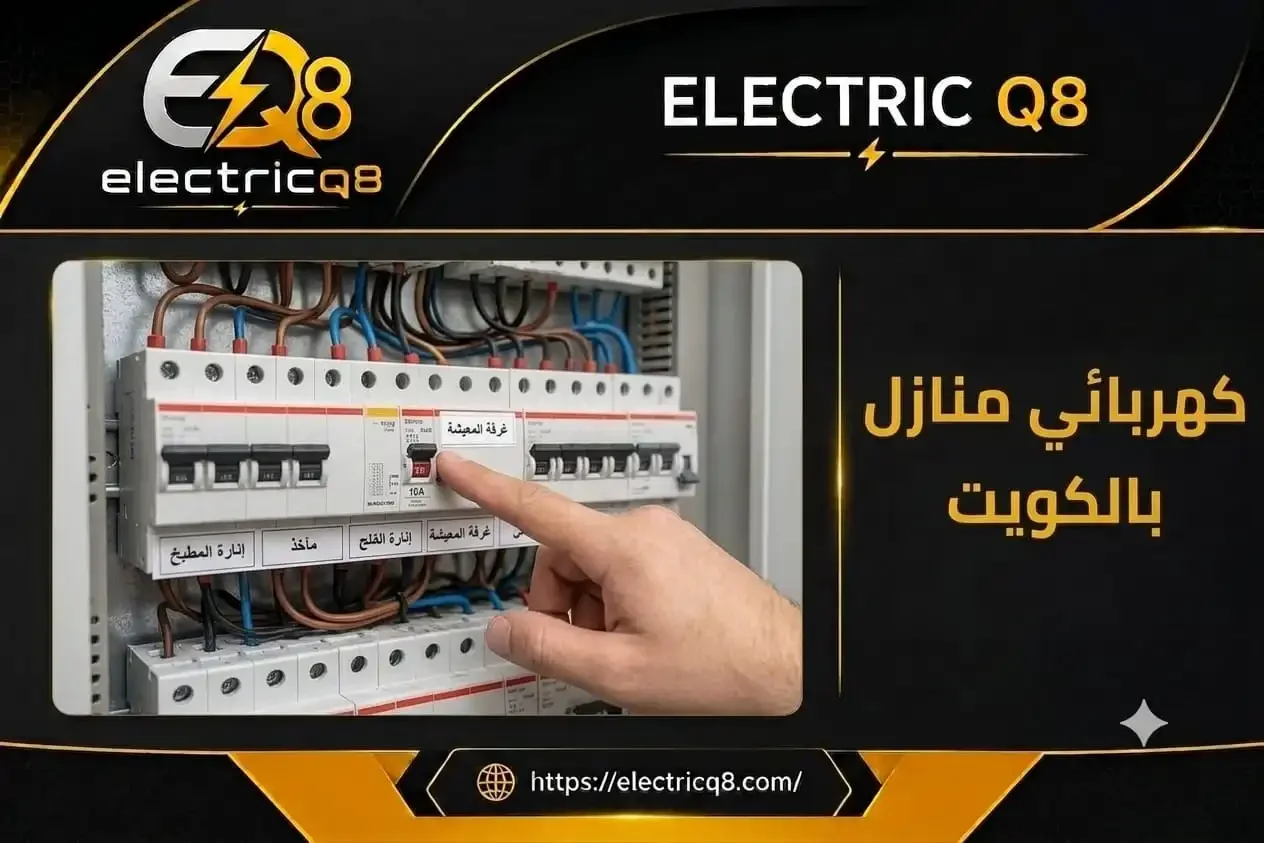
It is also useful to document the new circuits after completion and connect them to a clearly organized distribution panel. If all wiring is renewed but the breakers are left without accurate labels, an important benefit of the project is lost. The new network should be easier to understand and maintain than the one it replaced. Quality is not measured by the number of meters of wire removed and installed but by whether every circuit has become identifiable, appropriate for its intended purpose, and easier to service in the future.
-
Complete rewiring should not automatically become the first solution after one electrical fault because the project scope should reflect the condition of the remaining network and the actual inspection findings.
-
The rewiring method changes depending on whether the home is occupied or undergoing renovation and according to wiring routes and finishing requirements so phased planning helps reduce unnecessary disruption during the project.
-
Connecting the renewed network to a clear circuit schedule and accurate breaker numbering preserves the value of the project and makes future maintenance easier than dealing with new wiring that has no reliable documentation.
Replacing Wiring That Causes Short Circuits
Before replacing wiring that causes short circuits, it should first be confirmed that the wiring itself is actually responsible for the fault. The term “short circuit” is sometimes used to describe almost any situation in which a breaker trips, but protective devices can operate for several different reasons that need to be distinguished. If an actual short circuit exists, the affected circuit should be identified and the fault location traced instead of replacing random sections in the hope that the problem disappears.
The fault may be located in a visible section, at a connection point, along a concealed route, or inside an appliance connected to the circuit. The history of when the problem began can therefore be very useful. Did the short circuit begin after something was fixed to the wall, after renovation work, after moisture entered an area, after a new appliance was installed, or following another electrical modification? Does the breaker still trip when the appliances normally used on the circuit are disconnected? This information helps narrow the investigation, but appropriate professional testing is what confirms the actual location and condition of the fault.
If a damaged section of conductor is identified, the decision about replacing that section or the entire circuit depends on the extent of the damage, whether a reliable repair can be completed, and the condition of the remaining route. A random concealed splice inside a wall should not be created simply to avoid replacing an appropriate section of wiring. At the same time, there is no reason to remove all wiring in the home when the fault is localized and can be corrected properly. The repair scope should follow the confirmed extent of the damage rather than the level of concern created by the phrase “short circuit.”
-
Breaker tripping alone does not prove that the wiring has a short circuit so a genuine short circuit should be distinguished from leakage, overload, and other electrical conditions before wiring replacement is approved.
-
Knowing what happened immediately before the fault began such as wall work, moisture exposure, or installation of a new appliance can help identify likely areas but does not replace professional inspection and appropriate testing.
-
The amount of wiring replaced should depend on the location of the damage, the condition of the remaining circuit, and whether a reliable repair is possible instead of automatically choosing between an inadequate small repair and unnecessary complete rewiring.
Electrician for Wiring Replacement in Kuwait
Choosing an electrician for wiring replacement in Kuwait requires focusing on diagnosis and planning rather than simply selecting whoever offers the lowest price per meter. A suitable electrician first asks why replacement is being considered, reviews the history of faults and renovations, and inspects the circuits before defining the project scope. If the immediate recommendation is “replace everything” without explaining the condition of the existing network, or if serious warning signs are dismissed as a simple repair without inspection, both approaches deserve closer consideration.
An important difference between quotations is what the work actually includes. Does it include circuit tracing? Will finished surfaces need to be opened and restored, and who is responsible for that work? Does the distribution panel require modification as part of the project? How will additional damaged areas discovered during the work be handled? Will circuits be tested after installation and clearly identified at the panel? These details are more useful than comparing two numbers without understanding how the service scope differs.
A professional electrician also avoids giving one general conductor size for the entire property before understanding the loads and installation conditions. Circuits have different functions, appliance requirements vary, and conductor routing affects the design. When the project is substantial, it is reasonable for the property to be assessed before a final scope is established. Clear technical reasoning provides more confidence than an immediate price based on assumptions that have not been verified.
-
Choosing the right electrician depends on their ability to explain why replacement is necessary and identify the affected circuits instead of turning every older property into a complete rewiring project without diagnosis.
-
A useful quotation explains electrical work, finishing responsibilities, testing, and any panel-related modifications so that service providers can be compared according to similar project scopes.
-
Avoiding universal conductor sizes and predetermined solutions before loads and wiring routes are known is part of professional electrical work because every circuit requires a selection appropriate to its purpose and installation conditions.
Renewing an Old Electrical Network
Renewing an old electrical network is broader than replacing a group of wires because it considers the relationship between wiring, the distribution panel, breakers, electrical points, and the way circuits are divided. The conductors may be part of the problem, but replacing them alone may not be enough if the property still has a poorly organized panel, unsuitable circuit distribution, or damaged connection points. The project should therefore begin by assessing the electrical network as one connected system before deciding what requires renewal and what can remain after its condition has been verified.
This approach becomes particularly important in properties whose use has changed over the years. An ordinary room may have been converted into an additional kitchen or another space containing more electrical equipment, or the property may have been divided and additional loads introduced that did not exist in the original design. The old network should then be evaluated according to current use rather than simply comparing the age of the wiring with a general expected lifespan. There is no single age number that can determine by itself whether every part of an electrical network needs replacement.
Renewal is also an opportunity to correct documentation. Circuits can be identified, matched with their breakers, and clearly labeled after the work so the renewed system remains understandable. If some existing sections are retained, they should be documented rather than leaving the impression that the entire electrical network is new. Transparency about what was replaced and what remained is valuable both to the homeowner and to any electrician who works on the property in the future.
-
Electrical network renewal treats wiring, protection, distribution, and documentation as interconnected parts of one system instead of replacing conductors while leaving other weaknesses within the same installation unresolved.
-
Changes in how rooms are used and the addition of electrical loads over the years are important assessment factors because an electrical network should be evaluated according to current requirements rather than its age alone.
-
Clearly documenting which sections were renewed and which remained after inspection provides a more accurate and useful record than describing the entire property as having a new electrical network when the work was only partial.
Cost of Changing Home Wiring in Kuwait
Determining the cost of changing home wiring in Kuwait cannot be done accurately from the number of rooms alone because two properties of similar size may require very different amounts of work. The wiring method, accessibility, condition of existing conduits and routes, number of circuits, type of finishes, and amount of distribution-panel work can all affect the final cost. There is also a substantial difference between replacing one particular circuit and completely rewiring a property as part of a renovation.
One major reason quotations differ is that each contractor may be pricing a different scope. One quotation may cover electrical work only, another may include opening and closing sections of walls, while a third may also include panel modifications or additional electrical points. To compare prices fairly, request a clear description of what will be replaced and whether materials, civil or finishing work, and electrical testing are included. The lowest price is not necessarily the least expensive final option if important work has been excluded and later appears as an additional charge.
Older properties can also reveal conditions that were not visible before certain access points were opened. It is better to agree in advance on how additional work will be approved if the electrician discovers a damaged route or an unexpected obstruction. This creates realistic flexibility without turning the project into an open-ended bill. Reliable pricing does not always mean receiving an absolute final number during the first phone call. It means having a clear pricing method where any increase is connected to an understandable technical reason.
-
Wiring replacement cost depends on the number and scope of circuits, their routes, accessibility, finishing requirements, and panel-related work so the number of rooms alone cannot provide an accurate project estimate.
-
Price comparisons become fair when you know whether each quotation includes materials, testing, opening and restoration work, and panel modifications instead of comparing figures for different services presented under the same general name.
-
Agreeing on a clear process for approving potential additional work protects the customer from uncontrolled costs while allowing the electrician to address a concealed problem if one is genuinely discovered during the project.
Conclusion
The decision to replace old electrical wiring in Kuwait should not begin with the age of the home or with fear after the first breaker trip. The correct starting point is understanding the symptom, its location, and how often it occurs before inspecting the circuit and determining whether the problem involves a conductor, connection point, appliance, electrical load, or a broader section of the network. When the damage is localized, the repair should match the actual problem. When repeated warning signs appear across several circuits or clear deterioration is found throughout the installation, renewing the old electrical network becomes an option that deserves proper planning. Most importantly, severe overheating, a burning smell, sparks, or visible damage should never be ignored or repeatedly tested. Safely isolating the affected area and arranging inspection by a qualified electrician is better than waiting for another short circuit to reveal the problem in a more dangerous way.
Frequently Asked Questions
Does every old home need its electrical wiring replaced?
No. The age of the property alone is not enough to determine the condition of its electrical installation. Some sections may have been renewed previously or may remain in suitable condition while other circuits require attention. The better decision is based on inspection, insulation condition, circuit performance, previous faults, and the history of electrical modifications.
Does a hot wall mean the wiring inside it is burning?
Not necessarily. The heat source may be a connection point, an electrical component, or even a nearby non-electrical source. However, unusual heat near an electrical point deserves inspection, especially when it is accompanied by discoloration, an unusual smell, crackling, or other warning signs.
Do repeated short circuits mean the whole house needs rewiring?
Not automatically. The affected circuit and the actual fault location should be identified first. If the problem is localized and can be repaired properly, there is no reason to replace a serviceable electrical network. If inspection reveals repeated problems or broader deterioration across several circuits, more extensive renewal can then be evaluated.
Is it better to replace wiring during a home renovation?
If the electrical network already requires renewal, a renovation can be a practical time to complete the work because access to wiring routes and coordination with finishes may be easier. However, serviceable wiring should not be replaced simply because the walls are already open without first assessing whether replacement is technically necessary.
What determines the cost of changing home wiring in Kuwait?
The cost is influenced by the number of circuits, condition of the existing network, wiring routes, accessibility, type of finishes, required work at the electrical panel, and the overall replacement scope. Inspection and a clearly defined project therefore provide a more accurate estimate than a general price based only on the size of the home.