If the majlis lighting is too dim, the solution is not always to install brighter lamps or add more spotlights. Sometimes the real problem is the distribution of the lighting points because most of the light is concentrated in the center while seating areas, hospitality tables, or important walls remain darker than they should be. A majlis can serve several purposes, including receiving guests, hospitality, long conversations, and sometimes reading or watching television, and each activity may need a different direction and level of lighting. The right improvement therefore starts by understanding the size of the majlis, furniture positions, wall colors, and ceiling height and then redistributing the lighting according to how the space is actually used instead of relying on a layout that looks organized on a drawing but feels weak after the furniture is installed.
Majlis Lighting Is Too Dim
When majlis lighting is too dim, the first step is to define what “dim” actually means because the problem is not always the total amount of light. The majlis may appear reasonably bright overall while the seating areas remain noticeably shadowed, or the center may be bright while the edges are too dark. In other majlis spaces, there may be many lamps, but dark furniture and wall finishes absorb part of the light and make the room feel less illuminated than expected. Looking only at the number of lamps therefore does not provide an accurate understanding of the problem.
When a technician assesses the majlis, the lighting points should be evaluated in relation to the furniture rather than the ceiling alone. If sofas are positioned around the sides while all spotlights are arranged in one line through the center, a large portion of the light may not serve the areas where people actually sit. The same problem can happen when a powerful chandelier in the middle is expected to illuminate a large space by itself. The visual appearance may be attractive, but daily use reveals that the lighting is unbalanced. In this situation, redistributing the light can be more effective than simply increasing lamp output.
It is also important to distinguish poor lighting design from an actual electrical problem. If the lighting suddenly becomes weaker after previously operating normally, or a group of lamps unexpectedly becomes dimmer or starts flickering, the connections, drivers, or power supplies may need inspection depending on the lighting system. If the majlis has always felt dim since the lighting was installed, however, the layout and point distribution should usually be reviewed before assuming there is an electrical fault.
-
Dim majlis lighting should be evaluated according to how light reaches the actual areas of use rather than the number of lamps alone because a room can contain many lighting points while the seating areas remain noticeably dark.
-
Comparing the lighting before and after the furniture is installed helps reveal whether the point distribution is appropriate because sofas, tables, and darker surfaces can significantly change how light is experienced inside the majlis.
-
If the lighting becomes noticeably weaker after a period of normal operation, the electrical system and relevant power components should be inspected before redesigning the lighting because the cause may be a fault rather than poor distribution.
Majlis Lighting Distribution in Kuwait

Successful majlis lighting distribution in Kuwait begins by dividing the majlis into functional areas rather than treating the entire room as one space that needs exactly the same lighting everywhere. The main seating area needs comfortable and balanced illumination, while a television area should avoid direct glare on the screen and the hospitality area may benefit from clearer task lighting. If the majlis is large and contains more than one seating arrangement, the lighting should respond to each area separately instead of depending entirely on one central chandelier or a single row of spotlights.
One common mistake is distributing spotlights before the furniture layout has been decided. A symmetrical grid of ceiling points is installed first and the interior design comes later, leaving some lights positioned above empty spaces or unnecessarily close to walls while the actual seating area receives insufficient illumination. It is better for the furniture plan to come before the lighting plan or, at minimum, for both plans to be coordinated together. The location of the main sofas, center table, artwork, and decorative wall features all influence where the light should be directed.
Light appearance and control also affect the final result. A majlis used for receiving guests and extended seating should provide visual comfort rather than relying on harsh illumination from one direction. Using more than one lighting layer can help adapt the atmosphere to different situations, such as general lighting combined with directed spotlights, concealed lighting, or side fixtures when appropriate for the design. The goal is not to use as many lighting types as possible but to make each layer complement the others without creating glare or excessively bright areas beside dark zones.
-
Lighting distribution begins by identifying seating, hospitality, and television areas before positioning the lighting points because each area has different visual requirements within the same majlis.
-
A perfectly symmetrical spotlight grid is not always the best solution because successful lighting responds more to furniture placement and important wall areas than to geometric symmetry across the ceiling.
-
Combining multiple lighting layers in a considered way gives the majlis greater flexibility for hospitality and relaxed seating while reducing dependence on one light source that may be strong in one area and weak in another.
Improving Majlis Lighting
Improving majlis lighting does not necessarily require opening the entire ceiling or replacing every existing light fixture. Sometimes the problem can be corrected by redirecting certain lights, adding a source in a poorly illuminated area, or separating lighting groups onto different controls so the homeowner can adjust the scene according to the time and type of use. Before making changes, the existing system should be assessed to identify what is already working effectively and what is actually causing the weakness or imbalance.
Consider a practical example of a majlis with a central chandelier and many spotlights where the homeowner still complains that one side seating area is always dark. Instead of replacing the entire lighting system, the problem may simply be that the spotlights are too far from that seating area or their beam direction does not serve it. In another majlis, the room may already be very bright but the walls and decorative details still appear visually flat because almost all the light is directed vertically downward from the ceiling. Adding directed lighting or changing the distribution can create a greater improvement than simply increasing overall brightness.
Good lighting improvement also considers energy use and maintenance. The objective is not to operate every lamp at maximum output all the time. A better arrangement provides control that allows only the lighting required for a particular situation to be used. If LED fixtures or dimming systems are involved, compatibility between lamps, drivers, and controls should also be checked so flickering or unstable operation does not appear after the upgrade.
-
Lighting improvement starts by identifying the points that actually create the problem because adjusting part of the existing distribution may deliver a better result than replacing the complete system without a clear reason.
-
Redistributing light toward seating areas, walls, and visually important features can improve the quality of the majlis more effectively than simply increasing overall brightness and potentially creating uncomfortable glare.
-
Separating lighting into controllable groups and confirming compatibility between LED components and dimming controls provides greater flexibility while reducing the risk of flickering and unstable operation after the lighting is upgraded.
Majlis Lighting Installation in Kuwait
When planning majlis lighting installation in Kuwait, it is better not to start by choosing the chandelier style or deciding how many spotlights to install before defining the purpose of each area in the majlis. Successful installation combines appearance, comfort, and practical use because a beautiful fixture may work perfectly as a decorative feature while still being insufficient to illuminate the seating areas. The size of the majlis, furniture layout, ceiling height, and important visual elements should therefore be reviewed before deciding what role each lighting type will perform.
A new majlis provides a better opportunity because electrical and lighting points can be planned from the beginning around the furniture layout. If there is a main chandelier, its location should follow the actual visual center of the design rather than automatically using the geometric center of the room. Spotlights should also be positioned according to the areas that require illumination instead of creating equal rows simply for symmetry. Concealed lighting has a different purpose from direct lighting and should not be expected to perform every function when the room also requires clearer functional illumination.
Before the ceiling is closed, reviewing the lighting points on site can be very useful because a drawing may look perfect while actual construction reveals that a point is too close to an air-conditioning opening, gypsum detail, or another ceiling feature. The control groups should also be planned at this stage so every light does not end up connected to one switch. A majlis with several usage scenarios benefits from being able to operate different lighting sections as needed rather than turning on every source each time.
-
Majlis lighting installation begins by defining the function of each light source so chandeliers, spotlights, and concealed lighting are not selected as separate decorative elements without understanding what each one contributes to the room.
-
Positioning lighting points according to the actual center of the seating arrangement and furniture often produces a more accurate result than relying only on the geometric center of the room because interior layouts may not be symmetrical.
-
Reviewing lighting locations and control groups before closing the ceiling provides an opportunity to correct positioning and switching before a simple adjustment becomes a gypsum-opening and refinishing project.
Adding More Lighting Points to the Majlis
The decision about adding more lighting points to the majlis should have a clear reason because increasing the number of lights does not always solve poor illumination. If the problem is that light does not reach one specific area, adding a correctly positioned point may genuinely improve the result. However, if the majlis already contains many fixtures that are poorly distributed, installing even more can increase brightness in some areas while leaving the original problem unchanged. The weak area should therefore be identified before choosing the location of any additional point.
A clear example is a long majlis where the main lighting is concentrated in the center while the far end of the seating area is noticeably darker. Adding carefully positioned lighting to that weak end may be reasonable. If the entire majlis appears dull even though the points are appropriately distributed, however, the existing fixtures, surface colors, and light direction should be reviewed before opening the ceiling. Not every brightness problem is caused by an insufficient number of lighting points.
Adding a new lighting point also involves electrical considerations and is not purely a decorative decision. The source of its electrical supply needs to be identified, its relationship with the existing control group considered, and the suitability of the existing installation for the modification assessed. If the ceiling is already finished, the route should be planned carefully to minimize unnecessary opening. The objective is for the new point to become a natural part of the lighting system rather than an obvious later addition that is awkward to operate or maintain.
-
Adding lighting points is useful when a genuinely underlit area has been identified rather than installing additional spotlights across the entire ceiling without knowing where the actual lighting deficiency exists.
-
Assessing existing fixtures, surface colors, and light direction before adding points prevents unnecessary work when poor lighting is caused by fixture performance or distribution rather than the number of installed lights.
-
Every additional lighting point requires planning for electrical supply, control, and integration with the existing system so the new point becomes part of the majlis design rather than an isolated modification that is difficult to operate or maintain.
Majlis Lighting Design
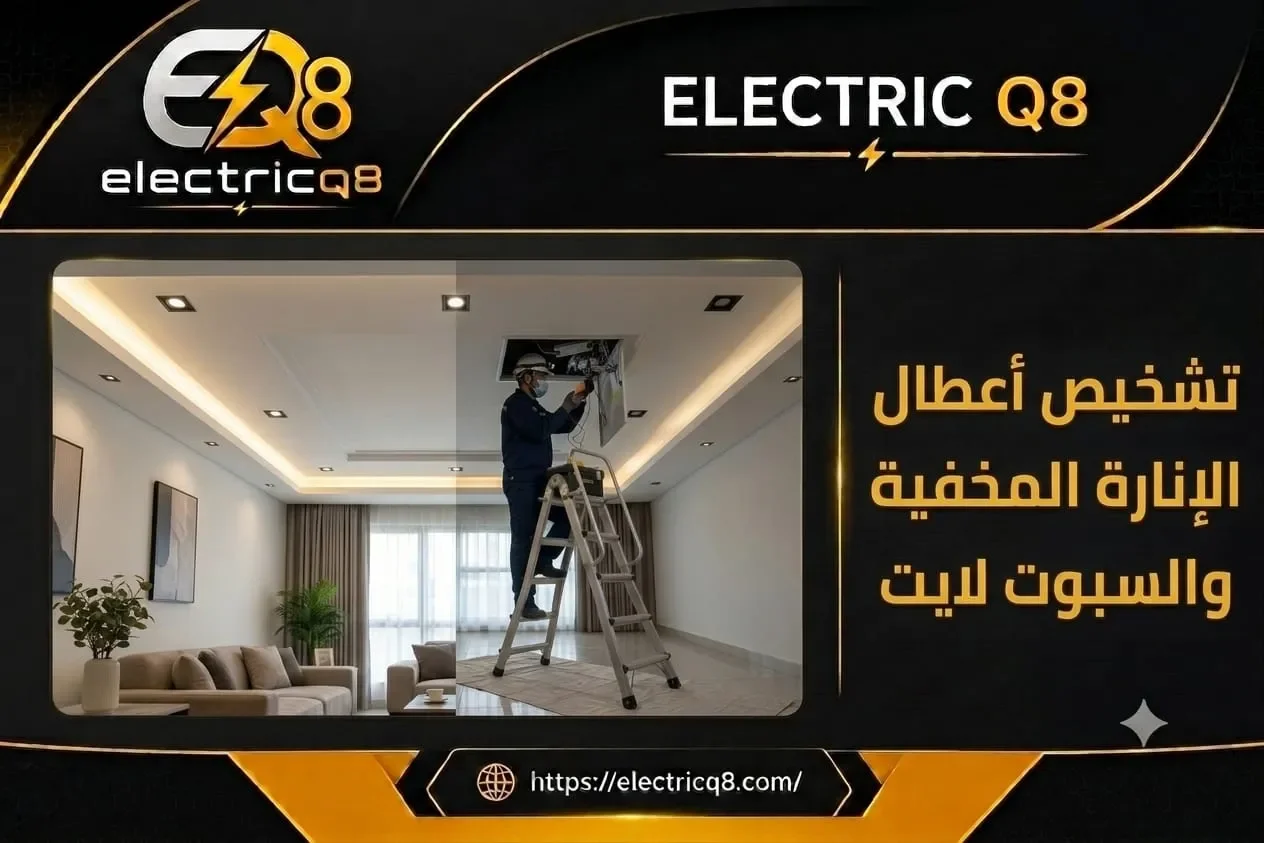
Successful majlis lighting design is based on creating lighting scenes that match different uses instead of designing only one operating mode. A majlis may be used to receive a large number of guests at one time and later serve as a quiet family seating area. It may also include television viewing or decorative features that need emphasis. If every lighting fixture operates together at the same intensity and direction, the homeowner loses flexibility even when the ceiling contains a large number of lights.
The design begins with general illumination that provides comfortable visibility for movement and seating. The next step is deciding whether additional lighting layers are needed to highlight a wall, artwork, architectural detail, or a specific seating area. Concealed lighting can create visual depth and a softer atmosphere, but its function differs from a spotlight or chandelier. Each layer should solve a particular lighting need instead of repeating the same function in different forms.
Another common mistake is selecting fixtures from photographs without understanding how they will perform in the actual space. The same spotlight can create a completely different result depending on ceiling height, beam characteristics, and its position relative to walls and furniture. Surface colors also influence reflection. A better lighting design therefore treats the majlis as a three-dimensional environment containing ceilings, walls, furniture, and people rather than simply treating the project as a ceiling plan.
-
Successful majlis lighting design provides multiple lighting scenes so the homeowner can move between guest reception and relaxed evening seating without needing exactly the same level of illumination at all times.
-
Dividing responsibilities between general, directed, and concealed lighting prevents unnecessary duplication and allows every layer to contribute a clear benefit to appearance, comfort, and practical use.
-
Lighting fixtures should be selected according to their expected effect within the actual ceiling height, room dimensions, and surface colors rather than their appearance in a catalog because the surrounding environment significantly changes the final result.
Majlis Spotlight Distribution
With majlis spotlight distribution, one of the biggest mistakes is treating the ceiling as a geometric grid that must have equally spaced points regardless of the furniture below. Symmetry may be appropriate in some designs, but it should not come at the expense of function. A spotlight positioned above an area that does not need illumination does not provide the same value as one intentionally serving a seating area or important visual feature.
Distance from walls, light direction, and fixture beam characteristics all affect the result, so there is no single spacing measurement that suits every majlis. A spotlight intended to illuminate a wall or artwork needs a different position from one supporting general illumination. If the ceiling is higher or the fixture has different light distribution characteristics, the result changes again. Spotlight positions should therefore be determined according to fixture characteristics, room dimensions, and intended use rather than copied from another majlis.
Too many spotlights can also make the ceiling appear visually crowded and create uncomfortable glare, particularly when all fixtures operate together without separate control. In some cases, fewer spotlights positioned correctly and combined with a chandelier or concealed lighting create a calmer and more balanced room. The objective is not to fill the ceiling with as many small circles as possible but to deliver light where it is needed in an appropriate way.
-
Spotlight distribution should respond to furniture, walls, and the features intended to be illuminated because a geometrically perfect ceiling grid may look organized while failing to serve the actual activities taking place below it.
-
The position of each spotlight changes according to its function, beam characteristics, and ceiling height so one fixed spacing rule should not be applied to every majlis regardless of its design.
-
Using fewer spotlights in better positions can create greater visual comfort than filling the ceiling with fixtures especially when a chandelier or concealed lighting already contributes to the overall lighting scene.
Majlis Lighting Technician in Kuwait
Choosing a majlis lighting technician in Kuwait requires someone who understands the problem before recommending new fixtures. If the complaint is that the majlis feels dark, the technician should ask where the weakness appears, when it is noticeable, whether it has existed since the original installation or appeared later, and what lighting system is currently installed. These questions help distinguish a design problem from an issue involving a fixture, connection, driver, or other electrical component and prevent the budget from being spent on modifications that do not address the actual cause.
A suitable technician should also assess the majlis after furniture is installed when the space is already in use. Standing in the center of the room and looking only at the ceiling is not enough. Seating positions, television location, walls, decorative features, shadow areas, and glare should all be considered. The technician can then recommend redirecting, relocating, or adding lighting points or changing control arrangements according to the result the homeowner actually wants.
Before a major modification begins, the work scope should be clear. Will existing points be relocated or will new ones be added? Does the project require opening the gypsum ceiling? Do switches or control systems need modification? Will the existing fixtures remain? Clarifying these issues makes the expected cost easier to understand and reduces unexpected changes during the work. If an electrical fault or internal wiring problem is involved, it should be handled by a qualified technician using appropriate safe isolation rather than opening energized connections unsafely.
-
A good majlis lighting technician determines whether the problem comes from light distribution or the electrical system before recommending changes because the same complaint of dim lighting can have several completely different causes.
-
Assessing the majlis from actual seating and usage positions reveals shadows and glare more accurately than looking only at the ceiling and makes the modification relevant to the way people experience the room.
-
Defining point relocation, additional lighting, gypsum work, and control modifications before installation gives the homeowner a clearer understanding of the project and prevents a lighting adjustment from turning into an undefined series of additional tasks.
Modifying Majlis Lighting
Modifying majlis lighting is often the right choice when the existing design is close to what is needed but requires correction rather than complete replacement. The chandelier may already be in a suitable position and the concealed lighting may work well, while a group of spotlights fails to serve the seating area or the switches are arranged in a way that forces every fixture to operate together. In this situation, a targeted modification preserves the successful parts of the design and changes only the elements responsible for the problem.
Before modification begins, the desired result should be clearly defined. Does the homeowner want the entire majlis to feel brighter, the main seating area to receive better illumination, or the room to have a calmer atmosphere in the evening? Each objective can lead to a different solution. Someone who needs clearer lighting for hospitality does not necessarily need the same modification as someone experiencing glare on a television screen. The general request to “improve the lighting” should therefore be converted into a result that can actually be observed after the work is completed.
If the modification involves relocating lighting points in a finished ceiling, its effect on gypsum and paint should also be considered. A spotlight should not simply be moved while leaving the old opening visibly unfinished, and a new point should not break the visual order of the ceiling. Electrical work and finishing should be planned together so the completed result appears as though it was part of the original design.
-
Modifying majlis lighting can be more practical and economical when the existing elements that already perform well are retained while only the points or control groups responsible for poor illumination or discomfort are corrected.
-
Defining a specific goal such as improving the main seating area, reducing glare, or creating a better evening scene makes the modification measurable instead of carrying out general changes without a clear intended result.
-
Relocating lighting points in a completed ceiling requires coordination between electrical work and finishing so previous openings disappear properly and the majlis retains a consistent appearance after the work is completed.
Best Lighting Distribution for Majlis Spaces

There is no single plan that can be called the best lighting distribution for majlis spaces and then applied to every home. A small majlis differs from a long room, and a majlis with one seating area has different requirements from a space containing several guest zones. The best distribution is the one that serves the people using the room, provides visual comfort, and supports the interior design without creating distracting dark areas or excessive glare.
When comparing two lighting designs, do not look only at the number of spotlights. Consider where the light is concentrated, whether the seating areas are properly illuminated, whether the television suffers from distracting reflections, and whether different lighting scenes can be selected from the controls. A design using fewer fixtures for clearly defined purposes may perform better than a crowded design that requires dozens of lights to be switched on just to achieve acceptable illumination.
The best distribution should also remain practical after the home is occupied. Ease of replacing fixtures, accessing system components, and understanding the control groups matters just as much as appearance. A lighting design that requires large sections of the ceiling to be opened for simple maintenance can become inconvenient over time even if it looked impressive on the first day. Quality lighting therefore combines visual performance, interior design, ease of use, and maintainability.
-
The best distribution serves the actual shape and use of the majlis instead of applying a ready-made plan because differences in furniture, room dimensions, and ceiling design change lighting requirements from one project to another.
-
Lighting quality should be judged by seating comfort, balanced illumination, and control flexibility rather than the number of fixtures because additional lights cannot compensate for poor positioning or inappropriate direction.
-
Considering maintenance and access to lighting components during the design stage keeps the majlis practical in the future and prevents a simple lighting replacement from becoming complicated ceiling work.
Conclusion
If the majlis lighting is too dim, do not immediately start buying brighter lamps or adding spotlights randomly. First identify where the weakness appears, how each part of the majlis is used, and whether the problem has existed since the lighting was installed or appeared suddenly afterward. A comfortable majlis needs lighting that serves seating, hospitality, television viewing, and interior features instead of concentrating all illumination in the center of the ceiling. Sometimes the solution is to redistribute several existing points, while other cases need an additional source in an underlit area or better control between lighting groups. The best lighting distribution for majlis spaces is not the one with the largest number of fixtures but the one that provides balanced, flexible, and comfortable illumination after the furniture is installed while remaining easy to operate and maintain over time.
Frequently Asked Questions
Why is my majlis dim even with many spotlights?
Because the number of spotlights does not guarantee good light distribution. The fixtures may be concentrated away from the seating areas, their direction may be unsuitable, or the design may depend on only one lighting layer while important parts of the majlis remain in shadow.
Will adding more spotlights fix dim majlis lighting?
Not always. If one specific area lacks sufficient light, adding a correctly positioned point may help. However, when the real problem is poor distribution of the existing fixtures, redirecting or relocating them can produce a better result than simply increasing the number of spotlights.
When is dim lighting an electrical problem?
If the lighting previously worked normally and then suddenly became weaker, or if one group develops flickering, unstable operation, or an unexpected reduction in output, the relevant electrical system, connections, and operating components should be inspected before assuming the lighting design needs to be changed.
Do I need to replace all the majlis lights?
No. If some existing fixtures remain suitable and perform their intended function, they can often be retained while only the elements responsible for poor distribution are modified. The decision depends on the condition of the fixtures, the current design, and the result required after the improvement.
How do I choose the best lighting layout for a majlis?
Start with the furniture plan and identify the seating areas, television, hospitality zones, and decorative elements that need emphasis. Lighting sources can then be assigned according to the function of each area, followed by suitable fixture and control choices so the different lighting layers work together instead of relying on one source or a random spotlight grid.