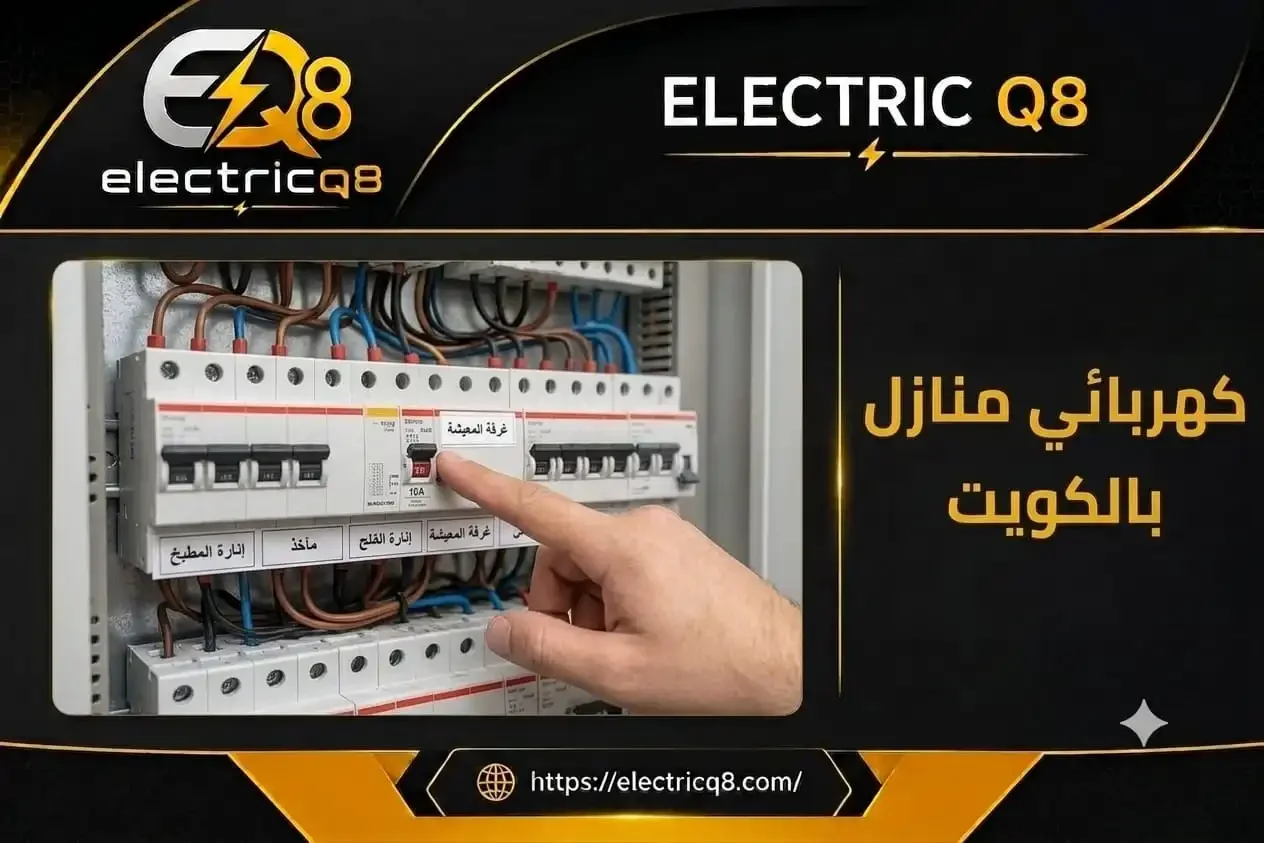
When you have a recurring short circuit or electrical contact fault at home, choosing the right electrician can make the difference between organized diagnosis and hours of trial and error involving unnecessary breaker, switch, or component replacement. A good electrician does not begin by guessing where the fault is located and does not immediately claim that the breaker or wiring is defective before testing. The process should start with clear questions about when the problem appears, which circuit is affected, and what happens immediately before the power cuts out. The possibilities are then narrowed down step by step through systematic inspection. Customers can save time from the beginning when they know what to ask, what signs to look for, and how to compare electricians before booking.
Short Circuit Detection Technician in Kuwait
Choosing a short circuit detection technician in Kuwait should not depend only on whether the technician says he can repair electrical faults or how quickly he can arrive. What matters more is the diagnostic method used after reaching the property. A short circuit may exist in a specific circuit, connection point, fixed appliance, cable, or another section of the electrical path. An electrician who starts by narrowing down possibilities in an organized way will usually save more time than someone who immediately begins changing components based on assumptions. From the first conversation, you can ask how the affected circuit will be identified, whether the reason for tripping will be checked before any replacement is suggested, and whether the technician explains the findings after inspection and testing.
A common situation in residential electrical faults is that the customer has already replaced four or five components before a specialist arrives because every previous person focused on a different possibility. One blames the breaker, another replaces a switch, while someone else suspects a particular appliance. The problem eventually returns because the source of the short circuit was never identified. A technician working methodically begins with the symptoms: does the breaker trip immediately when the circuit is energized? Does the problem appear only when one appliance is used? Does the circuit trip even when loads are not operating? Is the fault constant or intermittent? These questions reduce the search area and help determine where actual testing should begin.
It is also important that the technician does not open every electrical point in the property without a reason. Random searching wastes time and can lead to unnecessary interference with parts of the installation that are functioning normally. A better approach follows a clear sequence that begins with the affected circuit, divides it into sections according to its configuration, and uses appropriate testing to determine the direction of the fault. If a burning smell, abnormal heat, or sparking is present, the priority changes to safety and isolation of the affected area before further investigation. The customer does not need to understand every technical measurement, but should be able to understand why a particular point is being inspected and what result led the electrician to the next step.
-
A technician who identifies the affected circuit and studies the breaker-tripping pattern before opening switches or replacing components usually saves more time than someone who searches randomly throughout the property.
-
Asking when the short circuit appears and whether it is associated with a particular appliance or circuit provides practical information that helps narrow down possible causes before field testing begins.
-
An electrician who can explain why a specific section is being inspected and which possibilities have already been ruled out gives a stronger indication of diagnostic quality than one who simply recommends replacing many components.
Best Electrician for Short Circuit Detection in Kuwait

The phrase best electrician for short circuit detection in Kuwait does not necessarily mean the most expensive electrician or the person who reaches the property fastest. The better choice is usually the technician who demonstrates quality through diagnosis and clarity of decision-making. If someone immediately says, “Let us replace the breaker and see what happens,” without first determining why the breaker is tripping, that is a weak starting point. The breaker may simply be performing its protective function because a problem exists somewhere downstream. An electrician who asks about the symptoms, defines the inspection area, and then gives a conclusion supported by testing provides a much stronger basis for trust.
Another important point when comparing electricians is how they deal with complicated faults. Some short circuits are obvious and the cause is quickly visible, such as clear damage at a known connection point. Other faults are intermittent and may appear only when a particular load is operating or after the circuit has been in use for a certain period. In these cases, experience is not demonstrated by how quickly a component is replaced, but by the electrician’s ability to understand the circumstances in which the fault appears and identify where the investigation should begin. A technician with patience and a structured diagnostic plan can be far more effective than someone who decides within the first few minutes that the entire wiring system must be replaced.
The word “best” should also not be connected to exaggerated promises such as “I can find any short circuit in a few minutes.” Inspection time depends on the complexity of the circuit, the fault location, the installation layout, and how easily the suspected areas can be accessed. A reliable service gives a realistic explanation and recognizes that a simple visible fault is different from a hidden problem inside a long cable run or a circuit that has been modified several times over the years. If replacement of a component is required, the customer should also understand why it needs replacement and whether connected sections were checked. This makes the comparison about the quality of the solution rather than only about a quoted price or advertised response speed.
-
The best electrician is not the one who replaces the first component he suspects but the one who confirms the cause before replacement and explains why that particular part requires repair or replacement.
-
Intermittent electrical faults require a technician who can connect the timing of the short circuit to operating conditions instead of making a quick decision based on a brief inspection when the fault may not even be present.
-
Promising a fixed time for detecting every short circuit is not a reliable professional standard because diagnosis time varies according to circuit complexity, fault location, and accessibility.
Electrician Specialized in Short Circuit Detection
An electrician specialized in short circuit detection should have a structured diagnostic approach rather than only general experience installing switches, sockets, or lighting. A short circuit requires understanding the circuit path, protection method, branching points, and how the fault behavior changes when a particular section or load is isolated. A specialist does not automatically treat a repeatedly tripping breaker as the defective component because the breaker may simply be indicating a genuine problem elsewhere in the circuit. This is the difference between repairing the cause and temporarily hiding the symptom.
A specialist also knows when to stop guessing. When the available signs are not enough to reach a reliable conclusion, testing and gradual isolation should begin instead of relying only on previous experience. Experience is valuable, but it does not replace verification because the same visible symptom may result from different electrical causes. A breaker that trips immediately may indicate one type of fault, while a trip that occurs after a period of operation may point toward other possibilities such as load conditions or heating depending on the situation. An electrician who asks about the timing of the fault, the type of circuit, and whether any equipment or electrical modifications were recently added builds a more useful diagnostic picture before starting work.
Specialization also does not mean carrying out risky work quickly or opening energized electrical equipment unnecessarily. A reliable electrician treats safety as part of the diagnostic process, isolates the affected section before working, and uses suitable testing equipment instead of unsafe direct experimentation. If the suspected fault is within a concealed area that may require opening finishes, it is better to narrow down the location as much as possible before expanding the work. This approach protects time, reduces unnecessary repair costs, and avoids disturbing areas that are not connected to the fault.
-
A specialized electrician distinguishes between the protective function of a breaker and the actual fault inside the circuit rather than assuming repeated tripping automatically means the breaker itself has failed.
-
Specialization is demonstrated through a diagnostic sequence that connects symptoms with testing instead of relying on personal experience alone when several different faults can produce similar behavior.
-
Narrowing the fault area before opening large sections of finishes or inspecting many unrelated electrical points can reduce work time and cost while protecting healthy parts of the installation.
Electrical Fault Detection Technician in Kuwait
Choosing an electrical fault detection technician in Kuwait also requires care because people often use the term “electrical fault” or “electrical contact” to describe several different problems. Sometimes there is an actual short circuit that causes protection to operate quickly. In other situations, the problem may involve leakage, an unstable connection, or a fault that appears only when a certain appliance is used. A good technician does not rely only on the term used by the customer but first identifies the actual behavior of the circuit before deciding which type of inspection is required.
One of the main differences between a skilled technician and a general repair person is the ability to distinguish between a short circuit, leakage fault, and overload instead of treating them as one condition. The visible result for the customer may simply be a breaker that keeps tripping, but the electrical reason can be completely different from one case to another. The electrician needs to know which protective device is operating, when it trips, whether a particular appliance or section is involved, and whether the problem appears immediately or only after some time. These details prevent an inaccurate diagnosis based only on a general description.
From a service perspective, the technician should also be able to explain the result in simple language. The customer is not expected to understand electrical measurements or circuit theory but should know whether the problem is in a cable, connection point, appliance, or another section of the installation, and whether the proposed repair actually addresses the cause. When the electrician can clearly explain what was found and what possibilities were eliminated, the customer has a stronger basis for trusting the decision than when the explanation remains vague.
-
A good electrical fault technician identifies the type of tripping and circuit behavior before depending on the general term used by the customer because the same symptom can come from several different causes.
-
Knowing which breaker or protective device operates, when it operates, and which appliances are running at the time helps distinguish between faults instead of placing every problem under one general label.
-
Explaining the location of the fault and the reason behind the proposed repair gives the customer a better way to evaluate the decision and reduces the chance of paying for components that were never confirmed to be defective.
Electrician for Electrical Fault Diagnosis in Kuwait
Using an electrician for electrical fault diagnosis in Kuwait becomes particularly important when the problem is unclear or when several components have already been replaced without solving the fault. Diagnosis in this case is broader than simply locating an obvious short circuit because it involves understanding the complete circuit, connecting the symptoms with the history of the problem, and reviewing any modifications carried out before the fault began. A customer may report that a breaker keeps tripping, while proper inspection later shows that the real issue is related to a connection point, fixed appliance, or circuit arrangement.
A good electrician gathers information before performing measurements. Questions may include when the problem started, whether it followed the installation of an appliance or recent maintenance, whether one room or several areas are affected, and whether there is any smell, heat, or unusual sound. These questions are not wasted time. They can shorten the investigation considerably because they help prevent the electrician from beginning in the wrong section of the property.
Good diagnosis should also end with a clear decision. It is not enough to say that the problem is “in the electricity” or that “the wiring is old” without identifying the actual issue. If the cause has been confirmed, the electrician should explain where it is located. If further testing is required, the remaining possibilities should be stated clearly. The customer should understand what the next step is and why it is necessary. This approach improves trust and prevents repair work from expanding without a clear technical reason.
-
An electrician who collects the fault history and information about previous modifications can place the problem in context instead of testing every circuit in exactly the same way.
-
Questions asked before testing can shorten diagnosis because they help identify the sections most likely to be involved instead of searching the entire property without direction.
-
Professional diagnosis should end with a clear explanation of what was found and what genuinely needs repair rather than vague descriptions that leave the customer without a useful decision.
Choosing an Electrician in Kuwait
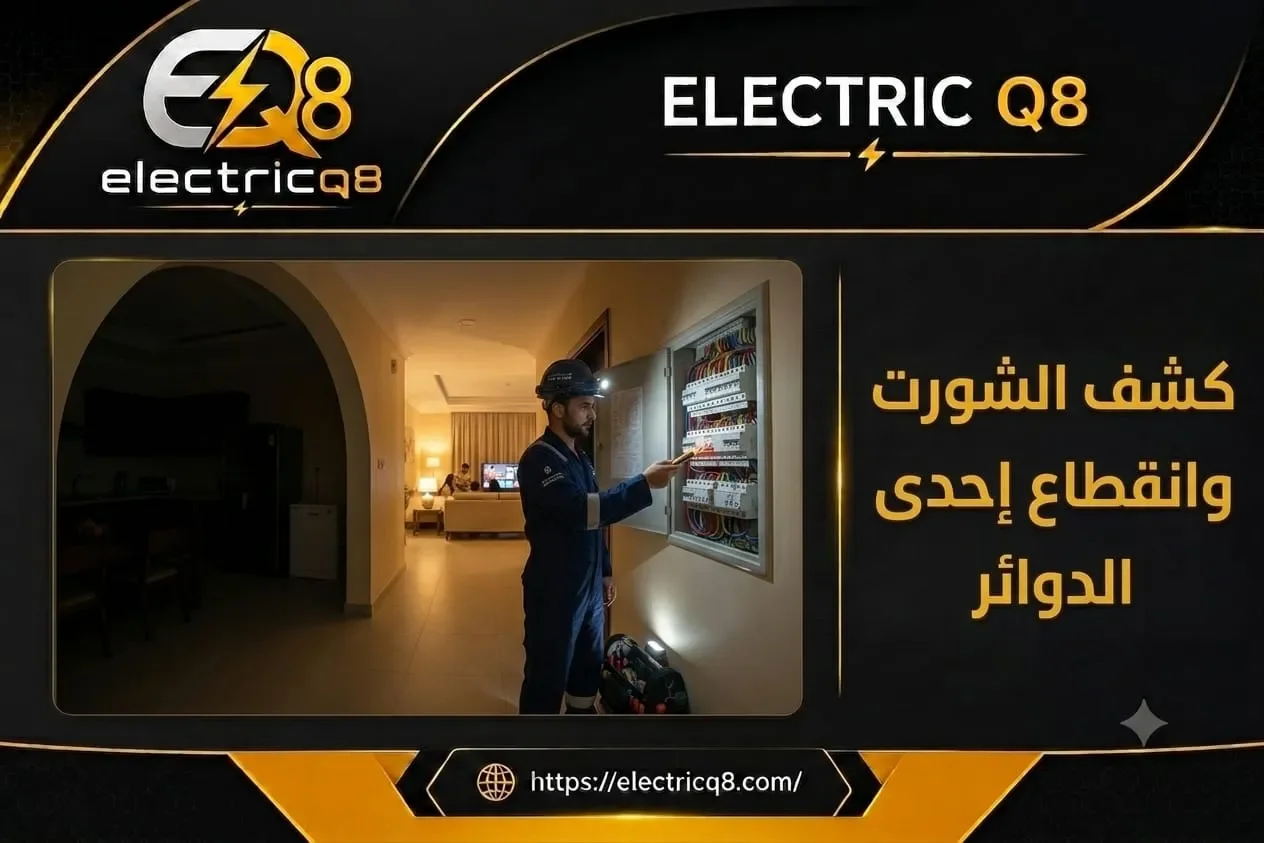
When choosing an electrician in Kuwait for a short circuit or complex electrical fault, the comparison should not be based on price alone. Cost matters, of course, but the cheapest service may become more expensive if the method depends on replacing components by trial and error. Before booking, ask about the diagnostic process, whether the reason for tripping is identified before replacement, and whether the electrician has experience dealing with intermittent and complicated faults.
Pay attention to the way the electrician communicates as well. A technician who gives a final diagnosis before inspecting the property or hearing enough details may be relying on assumptions. Someone who explains that the cause depends on the circuit and the type of tripping, and asks specific questions before giving a conclusion, is taking a more realistic approach. A professional electrician cannot guarantee that every short circuit will be located within exactly the same fixed time because some faults are obvious while others require more extensive tracing.
Trust also improves when the service scope is clear from the beginning. Ask whether the quoted amount covers inspection only or includes repair, whether replacement parts are charged separately, and whether you will be informed before additional work is carried out if the problem turns out to be larger than expected. This clarity reduces disputes and allows you to compare services fairly instead of comparing only initial advertised prices.
-
Electrician selection should consider diagnostic quality and clarity of process rather than only the lowest quoted price because random replacement can increase the final cost instead of reducing it.
-
Giving a final diagnosis before inspecting the circuit or collecting enough information is a weaker sign than an electrician who bases decisions on actual inspection results.
-
Knowing what the quoted price includes and whether parts or additional work are separate allows the customer to make a genuine comparison between services rather than relying only on the initial figure.
Electrician for Electrical Contact Fault Detection
An electrician for electrical contact fault detection is important when symptoms include repeated tripping, sparking, overheating, unusual smells, or loss of power in a particular area. The actual location of an electrical contact fault may be a connection point, cable, switch, appliance, or another part of the circuit. Reaching the cause therefore requires an inspection sequence rather than opening the nearest electrical box without evidence.
The electrician should first define the boundaries of the problem and determine whether the fault is associated with a particular load or appears even when appliances are not operating. If the problem occurs only when one appliance is used, the diagnostic direction differs from a situation where the protective device trips even with very little connected load. These comparisons help separate the appliance, wiring, and connection points instead of treating all of them as one undifferentiated possibility.
If warning signs such as a burning smell, smoke, or obvious sparking are present, safety takes priority over further testing. The affected area should not be touched, and the circuit should be isolated if this can be done safely before qualified assistance is requested. Electrical contact faults should never be investigated by hand or through opening energized connections because the fault itself may present an immediate hazard.
-
Determining whether the electrical contact appears with a specific appliance or even without operating loads helps separate possible causes and prevents blaming the appliance or wiring without evidence.
-
An electrical contact fault may exist at a very small point while affecting an entire circuit, which is why systematic tracing is more effective than immediately dismantling the nearest switch or socket.
-
Smoke, sparking, or a burning smell changes the priority from ordinary diagnosis to safety, circuit isolation where safe, and urgent qualified inspection.
Electrician for Complex Electrical Faults
The need for an electrician for complex electrical faults becomes clear when the problem keeps returning after repairs, appears intermittently, or involves more than one circuit. A complex fault does not always mean the repair itself will be large. Sometimes the actual cause is simple, but finding it requires careful understanding of the relationship between circuits, loads, and previous modifications. The technician needs to organize possibilities rather than jumping to a conclusion.
A practical example is a breaker that trips only once every few days. This type of fault is difficult because it may not appear while the electrician is at the property. Experience in this situation involves gathering the circumstances that normally precede the fault, safely recreating the same operating conditions where possible, and checking the sections associated with those conditions. An electrician who simply observes that everything is currently working may leave without identifying the problem.
Complex faults also benefit from better documentation. If one section has been isolated, a component replaced, or a particular pattern observed, recording that result can prevent the next stage of diagnosis from starting from zero. This becomes especially useful when the property contains older modifications or several circuits that have been changed over time.
-
An intermittent fault needs an electrician who can collect the conditions under which it appears and safely reconstruct the scenario rather than depending only on a brief inspection when everything may be working normally.
-
Complex faults require organized elimination of possibilities because having many potential causes does not mean replacing all of them but identifying which one actually matches the symptoms.
-
Recording what has already been inspected or ruled out can speed up later diagnosis and prevent the same steps from being repeated if the fault requires follow-up.
Electrician for Home Circuit Inspection in Kuwait
Using an electrician for home circuit inspection in Kuwait can be more appropriate when the problem does not appear to be limited to one electrical point. If several breakers operate, multiple rooms are affected, or the wiring has been modified repeatedly over the years, inspecting the circuits as a complete system can provide a clearer picture than focusing only on the most recent point where the problem appeared.
The electrician can review how the circuits are divided, how loads are distributed, which areas are served by each breaker, and whether previous modifications have created confusing or overlapping arrangements. The goal is not automatically to rewire the entire property but to understand the existing installation and determine whether the fault is local or part of a broader distribution or connection issue.
This type of inspection can also be valuable before continuing with repeated isolated repairs. If a different point on the same circuit develops a problem every few months, reviewing the complete route may be more useful than treating each point as an unrelated incident. This helps the customer understand whether the faults are separate events or whether they may share a common underlying cause.
-
Home circuit inspection becomes more useful when several areas are affected or faults repeatedly appear along the same electrical path instead of continuing to repair every point separately.
-
Understanding how breakers and circuits are divided throughout the property helps determine whether the problem is local or connected to a wider distribution issue.
-
Reviewing older electrical modifications is important because years of added wiring and alterations can change circuit behavior and make current diagnosis require a broader view.
Booking a Short Circuit Technician in Kuwait

Before booking a short circuit technician in Kuwait, prepare a few simple details that can shorten the inspection time. Note which breaker trips if you know it, when the problem began, whether it is linked to a particular appliance, and whether any component has already been replaced. You should also mention any burning smell, unusual heat, or sparking because these details can change the urgency and priority of the visit.
When booking, ask what the inspection includes, whether the technician identifies the cause before replacing components, and whether the visit fee is separate from repair costs. This simple question can help you understand whether the service is based on diagnosis or immediate component replacement. You do not need to discuss advanced electrical details, but you have every right to know the expected scope of work.
If the condition appears dangerous, do not continue using the circuit while waiting for the appointment. Smoke, visible sparking, severe heat, or a strong burning smell should be treated as warning signs. Stop using the affected section, keep away from the suspected danger point, and request urgent qualified assistance according to the seriousness of the situation. Safety is more important than collecting additional information before the electrician arrives.
-
Preparing information about when the circuit trips, which appliance is involved, and what components were previously replaced reduces time spent gathering basic information at the property and helps the technician begin from a more focused direction.
-
Asking whether the visit covers diagnosis only or includes repair provides a clearer understanding of cost and reduces misunderstandings after work begins.
-
Sparking, smoke, or severe heat changes the priority from a routine booking to hazard isolation and urgent qualified attention rather than continuing to operate the circuit.
Conclusion
Choosing a short circuit detection technician in Kuwait should not depend only on speed or price but on the electrician’s diagnostic method and ability to confirm the cause before replacing components. A better technician asks about the fault pattern, identifies the affected circuit, uses an organized inspection process, and explains what was found and why a particular repair is being recommended. If you are looking for the best electrician for short circuit detection in Kuwait, focus on clarity, systematic diagnosis, and safe handling of the circuit rather than quick promises. The more accurate your information about when the problem appears and which appliances or conditions are associated with it, the more effective booking a short circuit technician in Kuwait becomes and the lower the chance of wasting time on unnecessary testing and replacement.
Frequently Asked Questions
How can I tell if an electrician is suitable for short circuit detection before booking?
Ask how the diagnosis will be carried out and whether the electrician identifies the affected circuit and reason for tripping before replacing components. A technician who clearly explains the process and asks about the timing of the fault gives a better indication of professional diagnosis than someone who immediately suggests replacing the breaker.
Should short circuit detection always be quick?
No. Some faults are obvious while others are intermittent, concealed, or require more detailed tracing. Good speed means reaching the actual cause with as few unnecessary steps as possible, not promising exactly the same diagnostic time for every fault.
Does a breaker that keeps tripping mean the breaker is defective?
Not necessarily. The breaker may be operating correctly and protecting the circuit from a fault elsewhere. The reason for tripping should be investigated before deciding that the breaker itself requires replacement.
What information should I prepare before the electrician arrives?
Mention when the problem started, which breaker trips if known, whether the fault appears with a particular appliance, whether any electrical work was carried out recently, and whether there is heat, an unusual smell, or sparking. These details help narrow down the inspection area.
When does a short circuit become an emergency?
If there is visible smoke, obvious sparking, a strong burning smell, severe heat, or signs of thermal damage, stop using the affected circuit and arrange urgent qualified inspection while staying away from any point that may be dangerous.