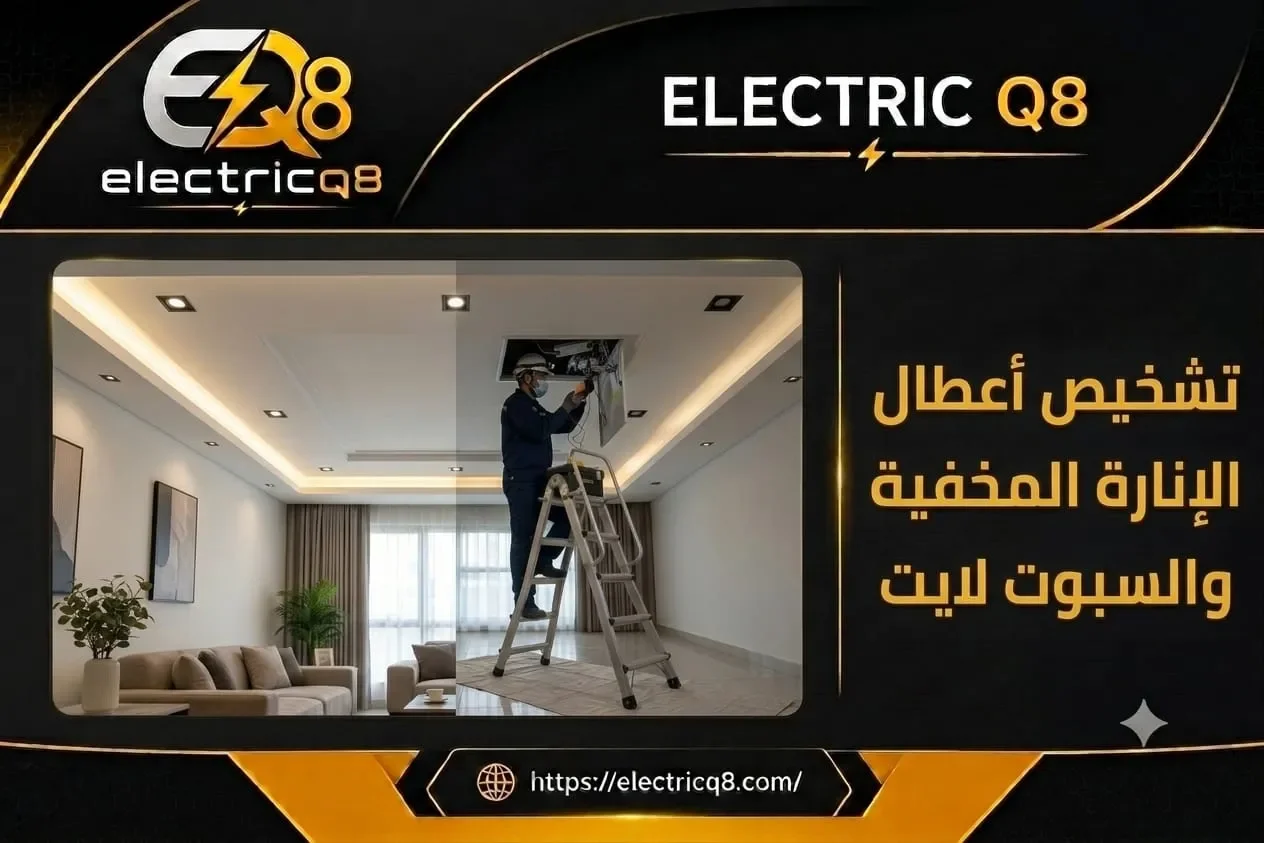
A spotlight that flickers or switches off and then comes back on does not always mean that the light unit itself has reached the end of its life. In LED lighting systems, the cause may be related to the driver, electrical connections, dimmer compatibility, excessive heat, or a problem that appears in the lighting circuit under specific operating conditions. Replacing the spotlight immediately may hide the real cause rather than solve it, especially when several spotlights show the same symptom. Proper diagnosis begins by observing when the flickering occurs, whether the problem affects one spotlight or an entire group, and whether it starts immediately after switching on or only after the lighting becomes warm. These details help the electrician determine the correct inspection path and decide whether the connection needs repair, the driver requires attention, or the faulty component genuinely needs replacement.
Spotlight Flickering in Kuwait
When a spotlight is flickering in Kuwait, the pattern of the flicker itself can provide useful information before purchasing a new spotlight. There is a clear difference between a quick flash that appears only at startup, continuous flickering while the light is operating, and a spotlight that works normally at first but begins cutting in and out after several minutes. Diagnosis also changes depending on whether the problem affects only one spotlight or an entire row or group connected to the same switch. A single affected spotlight directs attention first toward its components and local connections, while several units flickering together makes it important to investigate what they share, such as the power supply, switch, dimmer, or a common section of the circuit.
In LED spotlights, the driver is an essential part of the operating system because it converts and regulates the electrical supply into the form required by the LED module according to its design. When components inside the driver begin to deteriorate, unstable lighting may appear before the unit stops working completely. However, not every flicker means the driver has failed. A loose or unstable electrical connection can create a similar symptom, while using a dimmer that is not compatible with the spotlight or driver may produce flickering at particular dimming levels. Replacing the driver during the first visit without testing can therefore result in changing a perfectly functional component.
Heat also deserves attention, particularly when flickering begins only after the light has been operating for some time. LED units and drivers are affected by surrounding temperatures and installation conditions, and protective behavior within some components may appear when temperatures become abnormal. If a spotlight is installed inside a suspended ceiling or another location that does not allow heat to dissipate as required by the product, the installation conditions should be reviewed together with the unit itself. A good electrician examines the complete fault pattern before deciding on the repair because the objective is not simply to stop today's flickering but to prevent the same problem from returning after a new component is installed under the same conditions that contributed to the previous failure.
-
Flickering in one spotlight requires a different diagnostic approach from flickering across an entire group because an individual fault directs inspection toward the unit, its driver, and local connection, while a group problem makes the components shared by those spotlights an important part of the investigation.
-
Flickering that begins several minutes after switching on makes operating temperature and driver behavior more relevant than in a spotlight that starts flickering immediately while all components are still relatively cool.
-
The presence of a dimmer should be mentioned to the electrician from the beginning because incompatibility between the dimmer and the installed spotlights or drivers can cause flickering that will not necessarily disappear by replacing an LED unit with another similar one.
Spotlight Keeps Turning Off and On
If a spotlight keeps turning off and on, the condition is different from a slight rapid flicker because there is a clear cycle of operation and shutdown that needs to be timed and understood. A spotlight that works for ten minutes, switches off, and then returns after cooling tells a very different story from a unit that cuts out every one or two seconds. The first pattern makes heat or the behavior of an operating component under load worth investigating, while rapid interruption may direct attention toward the driver, electrical connections, or supply. Recording how long the spotlight operates before switching off and how long it remains off can contribute more to diagnosis than many customers expect.
In practical cases, a lighting unit may appear completely normal when it is switched on briefly during a quick inspection, with the fault only appearing after it reaches its normal operating temperature. If the technician runs the spotlight for only one minute, the conclusion may be that everything is working correctly, only for the problem to return after the technician leaves. For intermittent heat-related faults, the conditions under which the problem occurs should therefore be reproduced as closely as practical and the affected spotlight should be compared with similar units operating in the same area. If only one spotlight switches off while the others remain stable, the diagnostic direction is different from an entire group going dark at exactly the same time.
Electrical connections should also be checked rather than assuming that repeated shutdown is always caused by internal electronic components. A poor connection can become unstable with temperature changes or movement and result in repeated interruptions. If signs of overheating, discoloration, or a burning smell are found around a connection point, replacing the spotlight alone is not enough. The affected section needs to be assessed and repaired because installing a new unit onto a damaged connection may cause the fault to return and could damage the replacement. If there are sparks, a burning smell, or severe overheating, the affected circuit should be taken out of use and inspected by a qualified electrician rather than continuing to operate the lighting for testing.
-
Measuring the time between switching the spotlight on and its shutdown, then noting when it returns to operation, can help identify faults linked to operating temperature that may not appear during a quick test.
-
One spotlight switching off while surrounding units continue working points toward a different inspection path from an entire group shutting down simultaneously because the second condition makes shared components more relevant.
-
Finding heat damage, darkening, or a burning smell at the connections changes the scope of the repair because installing a new spotlight alone cannot correct a damaged electrical connection that may cause the same fault again.
Causes of Spotlight Flickering
Identifying the causes of spotlight flickering requires arranging the possibilities according to the pattern of the fault rather than treating the driver as the automatic answer in every case. The first useful detail is the number of affected units. If one spotlight flickers while ten others on the same circuit remain completely stable, it makes sense to begin by inspecting that unit, its driver, and its local connections. If several spotlights begin flickering at the same time, the components shared between them become more important, including the switch, dimmer, supply, or connections serving the group. This approach narrows the possible causes before any component is replaced.
The second useful detail is the relationship between flickering and the switch or dimmer. Some LED systems require compatible drivers and dimming controls to operate steadily throughout the intended dimming range. Lighting may remain stable at full brightness but begin flickering when the level is reduced, or instability may appear only at a particular setting. In this situation, purchasing a new spotlight without reviewing compatibility may reproduce exactly the same symptom. It is also important to note whether the problem began after the dimmer was changed or a different type of spotlight was installed because the sequence of events provides a practical clue about what changed immediately before the fault appeared.
The third factor involves heat, component age, and connection quality. A driver that is beginning to lose stability may provide an inconsistent output, while a poor electrical connection can cause intermittent interruption that resembles a driver fault. Excessive heat may accelerate component deterioration or make a problem appear only after a period of operation. A professional inspection therefore combines observation, testing, and a review of installation conditions. This is more effective than simply replacing the spotlight and waiting to see what happens because it identifies the cause before money is spent on a replacement and reduces the chance that the problem will return.
-
Identifying how many spotlights flicker at the same time helps distinguish a possible local fault within one unit from a shared problem that requires investigation of the power supply, controls, or connections serving the group.
-
If flickering begins after installing a new dimmer or changing the type of spotlights, compatibility between the components of the dimming system should be checked before the lighting units themselves are considered defective.
-
Comparing how the lighting behaves when it is cool with its behavior after a period of operation can reveal temperature-related problems that may remain hidden during a short test immediately after switching on.
Spotlight Repair in Kuwait
Successful spotlight repair in Kuwait depends on identifying which component caused the fault before purchasing a replacement because an LED spotlight operates as a system that includes the light module, driver, electrical connections, and sometimes a dimmer or control system. If the fault is located at a connection point, replacing the entire spotlight may make it appear that the problem has been solved before the interruption returns later. If the driver is the defective component, replacing only the driver may be appropriate when it is separate, replaceable, and compatible with the LED unit. Other integrated products require a different approach depending on their design and condition.
The price also cannot be determined accurately from the phrase "spotlight repair" alone. Repairing a simple connection is different from replacing a driver, which is also different from replacing an integrated lighting unit or tracing a fault affecting a group of spotlights. Access conditions can also influence the scope of work when units are installed in high ceilings or complex decorative structures. Pricing is therefore more meaningful when it is based on diagnosis, the number of affected units, spotlight type, and accessibility rather than applying one fixed price to faults that may have completely different causes.
After the repair, the lighting should be operated under the same conditions in which the original problem appeared. If the spotlight normally begins flickering after twenty minutes, switching it on for a few seconds after fitting the replacement component is not an adequate test. If the flicker occurs only when a dimmer is set to a particular level, that operating condition should also be tested. The goal is to confirm that the actual scenario reported by the customer has been corrected rather than merely confirming that the light turns on immediately after the work is finished.
-
Determining whether the repair involves correcting a connection, replacing a driver, or changing the complete lighting unit prevents the customer from paying for additional components that are unrelated to the diagnosed fault.
-
Repair cost varies according to the number and type of spotlights, installation location, nature of the fault, and ease of access, so diagnosis should come before accurate pricing when the cause is not immediately clear.
-
Testing the spotlight after repair under the same conditions that previously caused flickering or shutdown provides a more reliable result than switching it on for a few seconds and assuming the fault has been resolved.
Spotlight Driver Failure
A spotlight driver failure is one possible cause of flickering or shutdown, but it is not the only one and should therefore be confirmed before replacement. The driver's function is to provide the electrical output required by the LED module according to its design. Over time, or under unsuitable operating conditions, internal components can deteriorate and the problem may appear as flickering, delayed startup, shutdown after a period of operation, or complete failure. The exact symptoms vary according to the driver's design and the nature of the fault, so no single symptom proves by itself that the driver has failed.
A useful comparison can be made when several identical spotlights are installed but only one behaves differently. In this situation, the electrician can inspect the affected unit's driver and connections and compare its operating conditions with those of the functioning units. When the driver is separate from the spotlight, its specifications should be read before fitting a replacement rather than installing any component that appears similar in size or shape. Electrical compatibility between the driver and LED module is essential because a component that physically fits is not necessarily electrically suitable.
It is also worth asking why the driver failed. If the issue is ordinary deterioration of an internal component, installing the correct replacement may be sufficient. However, if temperatures around the unit are unsuitable or a connection problem is present, installing another driver without correcting the contributing factor may shorten the replacement's service life. This is where a proper inspection adds value by investigating the reason for the failure as well as identifying the damaged component.
-
Flickering, delayed startup, or shutdown after a period of operation may be related to the driver, but these symptoms overlap with other faults and are not sufficient on their own to confirm that replacement is necessary.
-
Selecting a replacement driver depends on its electrical specifications and compatibility with the LED module rather than external appearance or the fact that its wires can physically be connected.
-
Repeated driver failure in the same location should lead to a review of heat conditions, installation, and electrical connections because replacing the component repeatedly without identifying the contributing factor may allow the problem to continue.
LED Spotlight Flickers When Switched On

When an LED spotlight flickers when switched on for a short period and then stabilizes, the first question is whether this behavior appeared recently or has been present since installation. New flickering after a long period of stable operation requires a different investigation from a symptom that began immediately after installing new spotlights or a new dimmer. It is also important to determine whether the light flashes once, flickers for several seconds, and whether the symptom affects all units or only one. These details help determine whether the issue is associated with driver startup, the control system, or one particular lighting unit.
If the problem appeared after older spotlights were replaced with new LED units, the complete system should be reviewed instead of assuming that the new products are defective. An existing control unit or dimmer may have worked correctly with the previous lighting technology while interacting differently with the new load. The significant reduction in total load that often occurs after changing to LED lighting can also affect the behavior of some older control systems depending on their design. Knowing exactly what changed before the problem started can therefore save considerable diagnostic time.
If a spotlight flickers every time it is switched on and the duration of that flickering gradually increases, the change may indicate deterioration in one of the operating components and deserves inspection before the unit stops working completely. There is little benefit in waiting until the spotlight fails entirely when its behavior is clearly becoming worse. Early diagnosis may reveal that the problem remains limited to a component that can be addressed before the fault develops further.
-
Flickering that appears for the first time after years of stable operation should be assessed differently from flickering that begins immediately after new units are installed, so the history of the problem is useful diagnostic information.
-
If the fault begins after converting the lighting to LED or changing the dimmer, compatibility between the new system and the existing controls should be reviewed before randomly replacing the new spotlights.
-
An increasing duration of startup flickering over time is a change worth investigating because it may indicate gradual deterioration in an operating component rather than normal behavior of the spotlight.
Replacing a Spotlight Driver
The decision to replace a spotlight driver begins by confirming that the driver is responsible for the fault and that the design of the lighting unit allows it to be replaced appropriately. Some spotlights use a separate driver that can be accessed independently, while other products integrate the operating electronics into the lighting unit. One replacement method therefore cannot be applied to every LED spotlight. The unit type should first be identified, the existing driver's information reviewed, and the condition of the LED module considered before deciding to replace the driver.
When selecting a replacement, saying that a component is simply an "LED driver" is not enough. Its output characteristics, operating type, and other electrical requirements need to match the lighting unit it is intended to supply. Compatibility with the dimming system also matters where a dimmer is installed. Using an unsuitable driver may produce flickering, unstable performance, or a shorter component life. The replacement should therefore be selected according to technical specifications rather than price or external size alone.
Before installing the replacement, the reason the previous driver failed should also be reviewed, particularly if the problem has occurred more than once. Heat marks around the driver, discolored conductors, or damage at a connection point are details that should not be ignored. If the external cause remains present, the replacement component will operate in the same conditions. Professional repair means replacing the failed component only after identifying why it failed and confirming that the new driver is suitable for the LED unit and installation.
-
Driver replacement should follow confirmation that the component is actually faulty and an assessment of the LED module because replacing the driver without diagnosis may leave the real cause of the flickering unresolved.
-
Matching the new driver's specifications with the requirements of the spotlight and control system is more important than matching the physical appearance of the two components because electrical compatibility determines operating quality.
-
Checking for heat damage and connection problems before installing the replacement reduces the chance of another failure when the previous driver was affected by an external condition that has not yet been corrected.
Spotlight Repair Technician in Kuwait
Choosing a spotlight repair technician in Kuwait is more effective when you look for someone who diagnoses the lighting system rather than treating every spotlight problem as a component that automatically needs replacement. Useful diagnostic questions include: When does the flickering begin? Are other units affected? Is there a dimmer? Was the spotlight type changed recently? Does the unit switch off after becoming warm? These details help identify the actual cause and reduce unnecessary replacement by trial and error.
The technician should also distinguish between a fault within one unit and a problem in a shared part of the circuit. If ten spotlights all begin flickering together, it makes little sense to replace ten drivers before inspecting what those units have in common. The opposite is also true when only one spotlight is affected while the others remain stable. This diagnostic approach saves the customer from purchasing unnecessary parts and prevents a broad repair from being applied to what may actually be a local fault.
Price alone should not be the deciding factor when choosing the service, especially if a low quotation includes replacing components without diagnosis. A better price is one with a clear scope: inspection first, identification of the fault, and then confirmation of any component that genuinely needs replacement. If connection damage or signs of overheating are discovered, these should be explained to the customer rather than simply fitting the spotlight and concealing the damaged area above the ceiling.
-
A technician who asks about flicker timing, the number of affected units, and whether a dimmer is installed begins diagnosis from the pattern of the problem instead of assuming that every spotlight fault has the same cause.
-
Comparing the faulty spotlight with working units on the same circuit helps determine whether the problem is individual or connected to a shared component before replacement parts are purchased.
-
A better service clearly explains the inspection result, repair scope, and replacement-component cost when required rather than relying on a low initial price that later develops into multiple unnecessary replacements.
Spotlight Not Working
When a spotlight is not working at all, the inspection differs slightly from a flickering problem because complete loss of light can result from several points along the supply path. The LED module itself may have failed, the driver may no longer provide the required output, or electrical power may not be reaching the unit because of a connection, switch, or another part of the circuit. A spotlight that does not illuminate therefore does not automatically mean that the LED unit itself is defective.
The first useful comparison is with nearby spotlights. If every other unit works and only one remains off, the investigation can be narrowed. If an entire group stops operating at the same time, the common part of the system should be checked before opening every individual spotlight. It is also useful to know whether the complete failure was preceded by flickering or repeated shutdown and recovery because this history may indicate that the fault developed progressively rather than occurring without warning.
If the non-working spotlight has signs of overheating, a burning smell, or discoloration around it, a replacement should not be connected directly to the same wiring without inspection. The connection point needs to be evaluated first to determine whether there is damage requiring repair. A new spotlight should not be used as a test for the safety of old wiring. The electrical connection should be checked before installation so that the replacement is not damaged and a more serious problem is not hidden.
-
One failed unit while the rest of the group continues operating helps narrow the inspection to the components and connections serving that spotlight rather than treating the entire lighting circuit as faulty.
-
Knowing that a spotlight flickered or repeatedly switched off and back on before completely failing provides a useful fault history that helps the technician understand how the problem developed.
-
Signs of overheating or burning around a failed spotlight require inspection of the connections before a replacement is installed because a new lighting unit cannot repair a damaged electrical connection.
LED Spotlight Maintenance in Kuwait
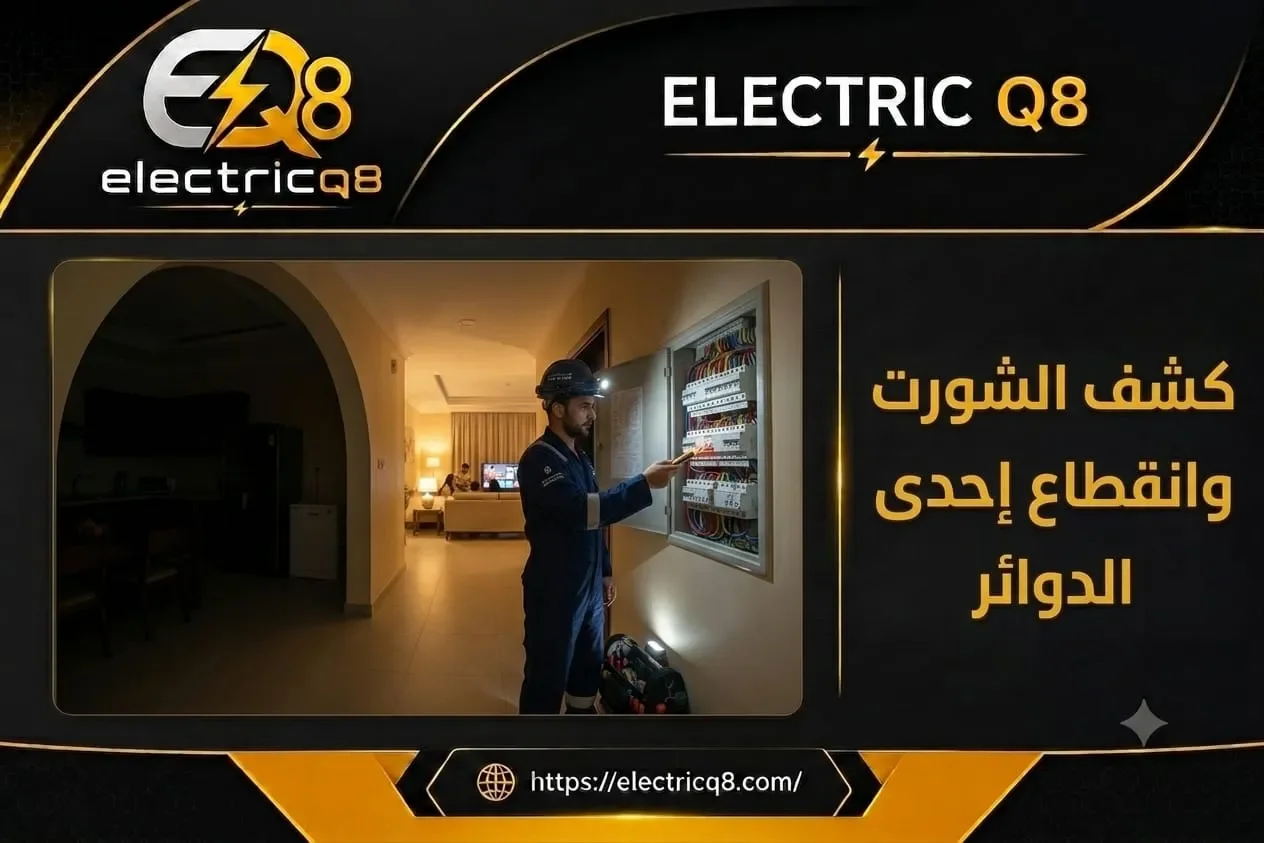
LED spotlight maintenance in Kuwait is different from simply replacing lighting units after they fail. In installations containing many spotlights, recurring fault patterns can reveal whether problems are associated with a particular driver type, a section of the ceiling with higher temperatures, or a circuit using a particular control system. These observations give maintenance real value because they turn individual failures into information that can help prevent repeated problems.
Where many spotlights are installed in a majlis, living room, office, or similar space, replacement decisions should also consider consistency in lighting performance. Installing a unit with a noticeably different color temperature or brightness may solve the electrical fault while leaving the room visually uneven. Electrical compatibility and lighting performance should therefore both be considered when selecting replacements, particularly in areas where spotlights are arranged in closely spaced rows.
Good maintenance does not mean removing every spotlight periodically without a reason. It means responding to early warning signs, reviewing recurring failures, checking connections when relevant symptoms appear, and using compatible components during replacement. If the same fault affects several similar units within a short period, the shared operating conditions should be investigated instead of continuing to replace each spotlight only when it eventually stops working.
-
Recording where and when recurring failures happen within a large LED spotlight installation can reveal a shared pattern that may remain hidden when every failed unit is treated as an unrelated individual problem.
-
Replacement selection should consider electrical compatibility together with color temperature and lighting performance so that repairing one spotlight does not create an obvious visual difference within the lighting design.
-
Repeated failure of similar units or drivers within a short period should trigger a review of operating conditions, heat, controls, and electrical connections rather than continuing with individual replacements alone.
Conclusion
If a spotlight is flickering in Kuwait or repeatedly switches off and comes back on, the best diagnostic process begins with the pattern of the problem rather than purchasing a new spotlight immediately. The number of affected units, timing of the flicker, presence of a dimmer, and relationship between the fault and operating temperature can help distinguish between driver problems, connection faults, LED unit issues, and shared components within the lighting circuit. In some cases, a spotlight driver failure is genuinely responsible, but confirming that before replacement prevents unnecessary expense and trial-and-error component changes. A good repair corrects the underlying cause and then tests the lighting under the same conditions in which the fault previously appeared. If several units repeatedly develop the same problem, investigating what they share is more effective than continuing to replace spotlights one after another without understanding why they are failing.
Frequently Asked Questions
Why does my spotlight flicker even though it still lights up?
The cause may involve the driver, an unstable electrical connection, incompatibility with a dimmer, or the effect of heat on one of the components. The fact that the spotlight still produces light does not prove that the complete system is operating correctly, so it is useful to identify when the flickering starts and whether it affects one unit or several.
Does every flickering spotlight need a new driver?
No. The driver is an important possibility, but it is not the only cause. If several spotlights flicker together, there may be a shared issue in the circuit or control system, while a single flickering unit should have its components and local connections checked before deciding to replace the driver.
Why does my spotlight work for a while and then turn off?
If shutdown is related to operating time, heat may be one of the factors that should be investigated together with the driver, connections, and installation conditions. The timing of shutdown and recovery helps the technician reproduce the problem and determine its cause.
Can a dimmer make LED spotlights flicker?
Yes. Flickering can occur when there is unsuitable compatibility between the dimmer and the LED units or drivers being used. If the problem began after installing a dimmer or changing the spotlight type, compatibility should be reviewed before replacing all the lighting units.
Should I repair the spotlight or replace the whole unit?
The decision depends on the spotlight design, the failed component, the overall condition of the unit, and whether a compatible driver is available when the driver is separate and replaceable. Inspection first determines whether repair is practical or whether replacing the complete unit is the more appropriate option instead of changing components by trial and error.