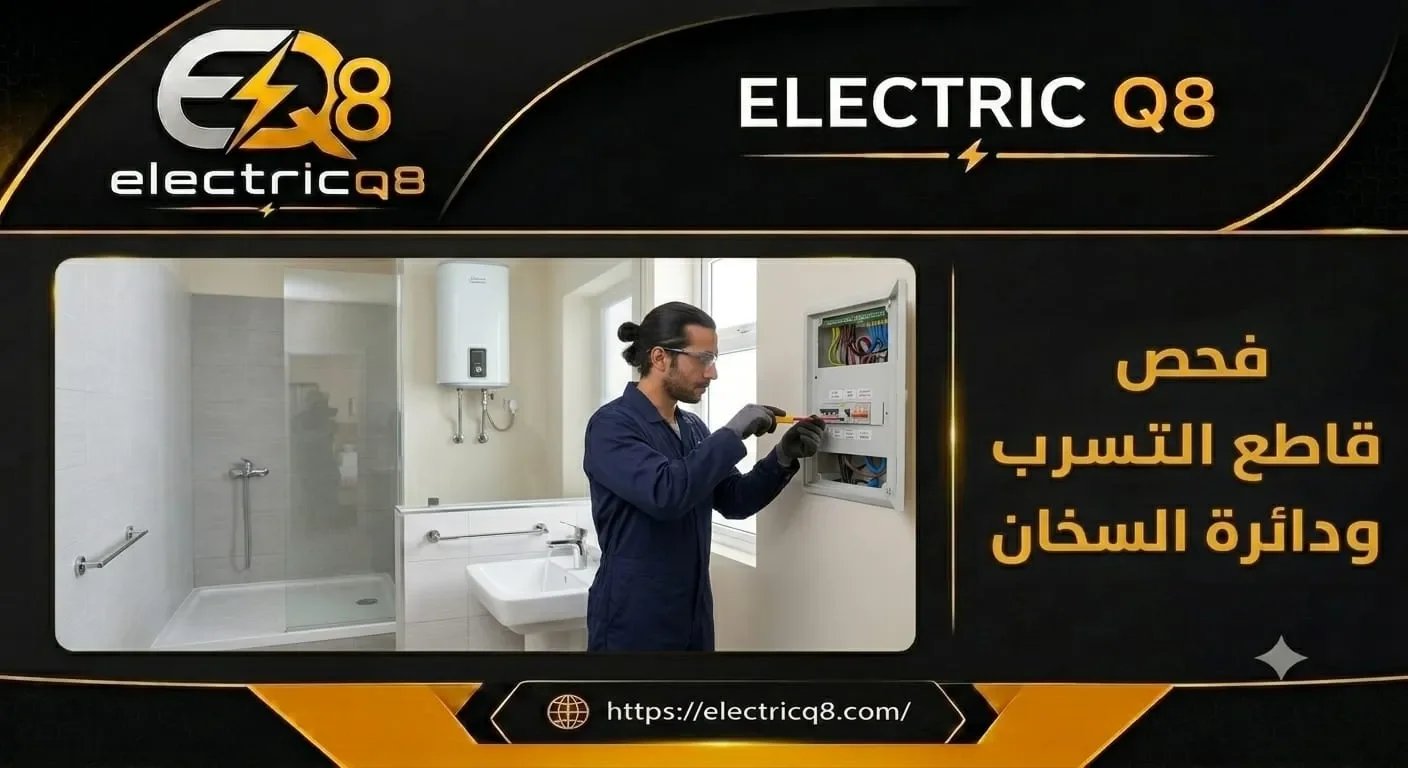
If the electricity in a bathroom keeps tripping, the problem should not be treated like an ordinary electrical fault in a dry room because the presence of water, steam, and moisture increases the importance of any weakness in insulation or electrical connections. Sometimes the cause is a specific appliance such as the water heater or exhaust fan, while in other cases the issue may involve a connection point, moisture-affected insulation, or a circuit that requires deeper inspection. The priority is not to add new wiring or replace the breaker quickly but to identify the source of the fault first and confirm the condition of the insulation and protection. Proper diagnosis begins by looking at when the trip happens, which appliances are operating, and where moisture is present before determining whether the fault is in the appliance, the circuit, or part of the bathroom wiring.
Bathroom Electricity Keeps Tripping in Kuwait
When bathroom electricity keeps tripping in Kuwait, the problem needs to be handled more carefully than many electrical faults in dry rooms because the humid environment changes both the risk level and the inspection approach. The first important question is whether the trip happens as soon as the bathroom circuit is energized or only after operating a particular appliance such as the water heater, exhaust fan, lighting, or another electrical point. This detail can significantly narrow the diagnostic process. If the breaker remains on until a specific appliance starts, inspection should focus on the relationship between that appliance and the circuit supplying it. If the trip happens without any obvious appliance being switched on, a broader review of insulation, connections, and parts of the circuit exposed to moisture may be necessary.
In practical situations, homeowners sometimes describe the entire bathroom as the source of the problem when the actual fault is limited to one appliance or connection point. In other cases, the opposite happens: the appliance may be relatively sound, while moisture or weakened insulation somewhere in the circuit causes the protective device to operate. For this reason, the water heater or breaker should not be replaced simply because the trip occurs during bathroom use. The possibilities should be separated first by checking where the fault appears, when it occurs, and whether it is constant or only happens after showering, after a period of operation, or under certain conditions.
Any tingling sensation or mild electric shock when touching a faucet, water heater, or metal surface inside the bathroom should be treated as a warning sign that requires immediate attention rather than as a minor inconvenience. Burning smells, sparks, dark marks, or abnormal heating should also lead to stopping use and arranging a qualified inspection instead of continuing to test the circuit. In areas where water and electricity are close together, there is little room for experimentation because the issue may involve leakage current or insulation failure rather than a breaker that is simply "too sensitive." The correct approach is to diagnose the cause while keeping the protective devices active and never bypassing them.
-
Identifying whether tripping is connected to the water heater, exhaust fan, lighting, or happens even without a specific appliance being switched on helps guide the inspection instead of treating the entire bathroom as one general electrical fault.
-
A fault that appears after showering or when humidity rises provides a different clue from a trip that happens consistently throughout the day, which makes the timing of the fault an important part of diagnosis rather than a secondary detail.
-
Tingling, electric shock, burning smells, sparks, or other warning signs inside the bathroom require stopping use and avoiding contact with suspected appliances or metal parts until the electrical system has been safely inspected.
Electrical Short Circuit in the Bathroom
The term electrical short circuit in the bathroom is often used to describe any tripping, sparking, or electric sensation, but technically these symptoms do not all represent the same type of fault. There may be an actual short circuit between conductors, leakage current caused by weakened insulation, or an unstable electrical connection that produces sparking or overheating. The distinction matters because every condition requires a different inspection approach. This is especially important in bathrooms where water and humidity can cause some electrical faults to appear intermittently and then disappear under drier conditions.
If the circuit trips immediately when one electrical point is used, that relationship needs to be traced. If sparks appear from a switch, outlet, or connection box, the point should not continue to be used in the hope that the problem will disappear. Similarly, if the breaker trips when the water heater operates, it should not automatically be assumed that there is a direct short circuit inside the heater. The fault may instead involve leakage current from the appliance, weakened insulation, or a problem in the branch circuit supplying it. Proper diagnosis depends on which protective device operated, the conditions at the time, and the results of electrical testing rather than the visible symptom alone.
One of the most dangerous mistakes is trying to "solve" the problem by bypassing protection, disabling a residual-current device, or disconnecting the protective earth so that the circuit stops tripping. These actions may hide the symptom but do not repair the underlying fault and can significantly increase the risk of electric shock. Unqualified users should also avoid opening electrical points or tightening wiring inside the bathroom, especially while the circuit may still be energized. The safer approach is to isolate the affected circuit when warning signs are present and arrange an inspection that determines whether the fault is in an appliance, cable, connection point, or another part of the electrical circuit.
-
The word short circuit may be used to describe a real short, sparks, leakage current, or a poor connection, so the actual symptom and the conditions in which it appears must be identified rather than relying on the general term alone.
-
Tripping when a particular appliance is switched on does not automatically prove there is a direct short inside that appliance because weakened insulation, leakage current, or a fault in the branch circuit can create a similar symptom.
-
Bypassing a protective breaker or removing earthing so that the electricity stays on is not a repair and instead removes an important layer of safety in an environment where water and humidity already increase shock risk.
Bathroom Electrical Faults Caused by Moisture
Bathroom electrical faults caused by moisture can develop when humidity or condensation reaches electrical components or when insulation and enclosures are not suitable for the environment. The problem does not always require an obvious water leak. Daily steam exposure around electrical points, boxes, or appliances can gradually contribute to corrosion, weakening of connections, or deterioration of insulation. For this reason, a circuit that operates normally while the bathroom is dry but begins tripping after use provides an important clue that should be connected to moisture conditions rather than focusing only on the breaker.
The cause may also involve an electrical point, appliance, or fitting that is unsuitable for its location or an installation that does not provide the necessary protection for the level of moisture exposure. Areas close to water sources are not the same as areas farther away, so bathroom electrical design and installation need to account for point locations, equipment type, and the appropriate level of protection according to applicable technical requirements. This becomes particularly important before any new electrical extension is added because installing a new outlet, light, or exhaust fan without considering its location can create another problem instead of solving the existing one.
From a diagnostic perspective, the relationship between humidity and the fault needs to be investigated rather than searching only for visible water marks. A connection inside a box may look completely normal from the outside while moisture has affected the internal terminals or conductor condition. In other cases, an appliance may experience reduced insulation performance once it becomes warm or is exposed to humid conditions during operation. A good inspection therefore does not stop at drying the area or replacing a cover and then restoring power. It verifies insulation, electrical connections, and the original source of the moisture-related problem before considering the fault resolved.
-
Moisture-related electrical faults may appear after showering or when steam accumulates even when there is no obvious water leak, which makes the timing and pattern of the fault important diagnostic information.
-
Electrical points and equipment inside a bathroom should be selected and positioned according to their exposure to water and moisture because different areas within the same room do not carry the same environmental risk.
-
Drying the area may temporarily hide the symptom but does not prove that insulation and connections are safe, so the underlying reason moisture was able to affect the circuit must still be identified and corrected.
Bathroom Electrical Inspection in Kuwait
A bathroom electrical inspection in Kuwait begins by understanding the nature of the fault before touching or replacing any component. Does the breaker trip only when the water heater is switched on, or does the same thing happen with the exhaust fan, lighting, or as soon as the bathroom circuit is energized? Does the problem appear after showering or remain present throughout the day? These questions shape the inspection because a fault linked to one appliance is different from a general problem affecting the circuit. In a bathroom, simply replacing a component and testing the power again is not enough because water and moisture make it necessary to confirm the condition of insulation, connections, and the protective system serving the circuit.
A professional inspection looks at relevant electrical points, appliances, and wiring rather than assuming the fault will always be visible externally. A cover may appear intact while the actual problem is inside the connection box or at a conductor affected by moisture. In other cases, the wiring may be healthy while a fixed appliance is responsible for the fault. It is also important to identify which protective device operates when the problem occurs because a residual-current device tripping provides a different diagnostic direction from an ordinary branch breaker operating due to overcurrent or a short circuit.
Once the source is identified, the electrician can determine whether the repair involves one point, part of the wiring, or a particular appliance. This distinction also matters for cost because inspecting a clear and localized fault differs from tracing an intermittent problem that appears only under humid conditions or after a period of use. The best service is one that explains what was found, why the breaker operated, and what actually needs repair rather than replacing healthy components by trial and error.
-
Inspection begins by linking the timing of the trip with the appliance or electrical point in use because this relationship narrows the possible causes instead of treating the whole bathroom as the source of the fault.
-
Identifying which protective device operates is important because residual-current protection is interpreted differently from an overcurrent or ordinary branch breaker trip.
-
Cost varies according to the scope of the fault because repairing one moisture-affected point is different from tracing an intermittent problem through several parts of the circuit or testing a fixed bathroom appliance.
Electrical Leakage in the Bathroom
Electrical leakage in the bathroom means that part of the electrical current is flowing through an unintended path rather than remaining within the designed circuit. In a humid environment, this becomes particularly important because water, wet surfaces, and metal fixtures increase the need for caution. Leakage may result from weakened insulation inside an appliance, cable, or connection point, or from moisture reaching an electrical component. For this reason, the fact that the breaker can be reset after an area dries does not mean the fault has disappeared.
Warning signs can include a protective device tripping when a specific appliance is switched on, a tingling sensation when touching a metal surface, or a problem that appears after humidity increases. These signs are useful clues but should not be treated as a final diagnosis without proper testing because the same symptom can have more than one cause. The objective is to identify the path through which the leakage is occurring and determine whether the fault is in the appliance, its supply wiring, or another point within the circuit.
The principle here should be very clear: protection should never be disabled in order to keep the bathroom in use. If a residual-current device is operating, its function is to respond to a condition that requires investigation. Protective earthing should also never be disconnected and temporary wiring should not be used to bypass the problem. A proper repair keeps the protective system active and corrects the source of the leakage itself because hiding the trip without repairing the fault leaves the hazard in place.
-
Electrical leakage may originate from an appliance, cable, or connection point, so the cause should not be limited to the first suspected component without testing that identifies the actual leakage path.
-
Tingling or electric shock when touching a metal surface inside the bathroom should be treated as a warning sign that requires stopping use and avoiding further testing until the circuit has been inspected.
-
Keeping the protective breaker operational after repair is essential because bypassing the breaker or earthing does not correct the leakage and instead removes an important safety feature.
Breaker Trips When Bathroom Power Is Switched On
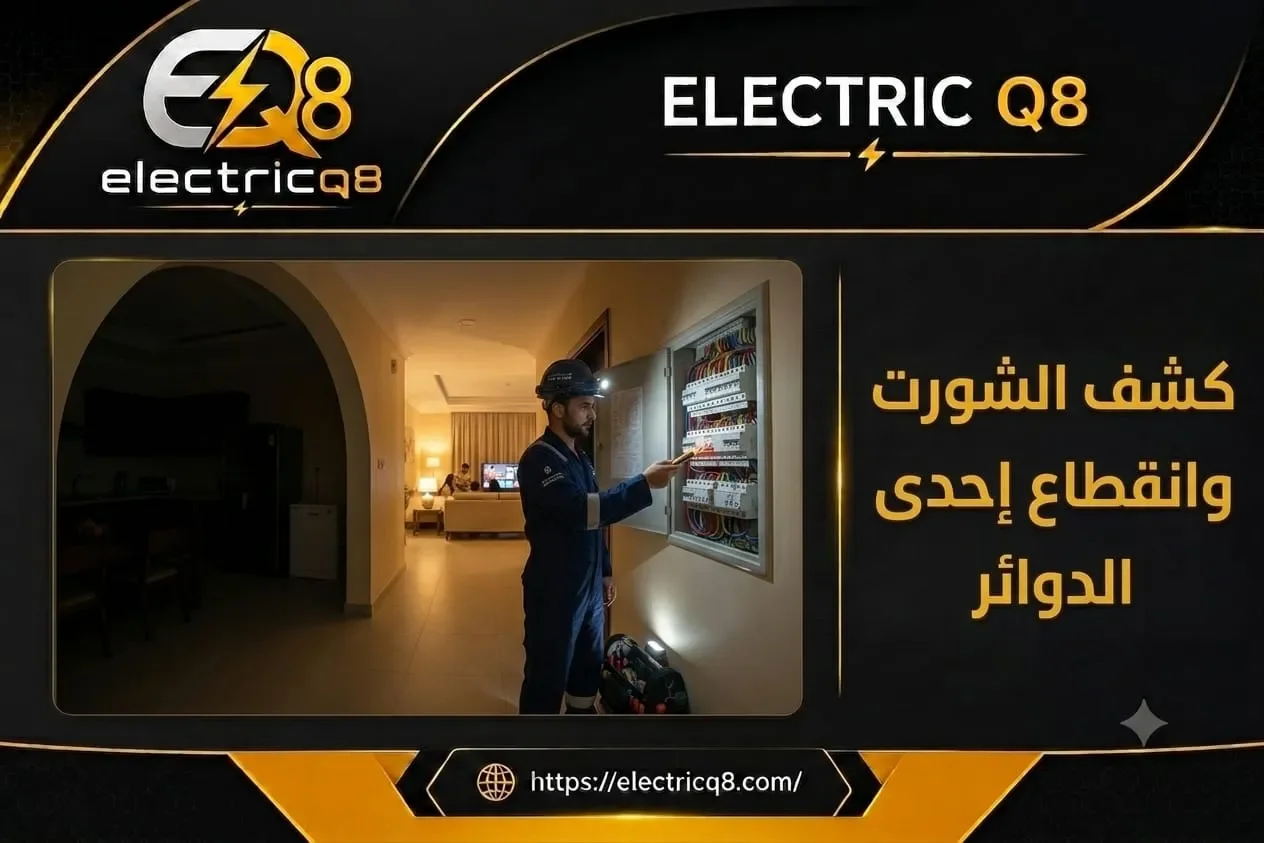
If the breaker trips when bathroom power is switched on, the first step is to clarify what "switching on the bathroom power" actually means. Does the breaker operate immediately when the circuit is energized, when the lighting is switched on, or only when the water heater or exhaust fan starts? Each situation leads the inspection in a different direction. Immediate tripping when the circuit is energized may indicate a fault that is already present and requires isolation and tracing, while tripping linked to one appliance directs attention toward that appliance or the branch supplying it.
It is also necessary to determine which breaker is operating. If the bathroom branch breaker trips, the possible causes may differ from a residual-current device protecting several circuits. In some homes, the user may not know which device operated and may simply report that "the electricity went off." The electrician therefore needs to inspect the distribution board and identify the protective device involved before building the diagnosis.
Repeatedly resetting a breaker in the hope that it will eventually stay on is a common mistake. If a real electrical fault is present, repeated resetting does not repair it and may re-energize an unsafe part of the circuit. After repeated trips, the affected circuit should remain out of service until the cause is inspected. If the event is accompanied by sparks, a burning smell, abnormal heat, or unusual sounds, the need for prompt inspection becomes even greater.
-
Identifying the exact moment when the trip occurs helps determine whether the fault is continuously present in the circuit or only appears when a specific appliance or electrical point is operated.
-
Knowing which protective device trips prevents confusion between overload or short-circuit problems and leakage-current conditions that require a different diagnostic approach.
-
Repeatedly resetting the breaker without knowing the reason is not a valid test and can re-energize a circuit containing a fault that should be inspected before further use.
Bathroom Electrical Insulation Testing
The importance of bathroom electrical insulation testing comes from the fact that some faults are not visible to the eye. A cable may look normal externally while its insulation properties have deteriorated in a hidden section, or a particular appliance may lose part of its insulation integrity under operating conditions. Insulation testing therefore provides information that cannot be obtained from visual inspection alone and is especially valuable when leakage current or moisture-related tripping is suspected.
Insulation testing should not be performed randomly on a circuit while every connected appliance remains attached. Some electronic equipment needs to be handled appropriately before certain tests are applied. A qualified electrician determines what needs to be isolated, what should be disconnected, and how the test can be carried out without exposing equipment or people to unnecessary risk. The purpose is not simply to obtain a reading but to understand whether the insulation condition is acceptable and where the problem may be concentrated.
The results can also guide the repair decision. If the fault is limited to one appliance, it can be handled differently from a situation involving deteriorated insulation in part of the fixed wiring. If the readings change under humid conditions or after a particular appliance has been operating, that information can further narrow the search area. This is where real testing provides far more value than replacing wiring simply because it is suspected.
-
Insulation testing can reveal faults that are not visible from the appearance of cables and electrical points, making it particularly useful when repeated tripping or moisture-related leakage is suspected.
-
Testing should be carried out in a way that considers equipment connected to the circuit because proper measurement requires suitable preparation and disconnection of components where necessary.
-
Insulation-test results help determine whether the required repair involves one appliance or a section of the wiring instead of moving directly to complete rewiring without evidence.
Bathroom Electrical Fault Repair in Kuwait
Successful bathroom electrical fault repair in Kuwait depends on correcting the reason the problem developed rather than simply restoring power. If moisture entered an electrical point, replacing the cover alone is not enough if the moisture source remains or the internal connections have already been affected. If one appliance is producing leakage current, replacing the breaker does not solve the condition. Every repair should therefore be connected to a clear inspection result.
There can be a significant difference in cost between repairing one simple electrical point and dealing with damaged wiring, replacing a defective appliance, or correcting unsuitable protection. For this reason, any price given before inspection is often only an estimate. It is better to identify the extent of the fault and then explain the required work so the customer knows whether the repair concerns one point, an electrical circuit, or a fixed appliance.
A good repair also includes verification after the work is completed. The circuit should be tested to confirm that the original trip no longer occurs, the protective devices continue operating correctly, and the affected electrical points are suitable for normal use. If moisture caused or contributed to the fault, the factor that allowed moisture to reach the electrical system should also be addressed so that the problem does not return shortly afterward.
-
A proper repair goes beyond restoring electricity and addresses the actual source of moisture, insulation weakness, or appliance fault identified during the inspection.
-
Defining the scope of the fault before pricing helps prevent unnecessary replacement of healthy components because repairing one point is very different from repairing an entire circuit or fixed appliance.
-
Testing the circuit after the repair is essential to confirm that the trip no longer occurs and that the protective devices continue to operate correctly during normal use.
Electrician for Bathroom Faults in Kuwait
Choosing an electrician for bathroom faults in Kuwait should not be based only on arrival time or the lowest price. The diagnostic method matters more because bathroom electrical problems require someone who can distinguish between leakage current, short circuits, overcurrent, appliance faults, and moisture-related deterioration. An electrician who begins by asking when the breaker trips, which appliance is being used, and which protective device operates is showing a more useful diagnostic approach than someone who immediately recommends replacing wiring or breakers without testing.
A good service also explains the findings in language the customer can understand. The customer should know whether the fault is in the water heater, exhaust fan, a connection point, or part of the fixed wiring and why the breaker has been operating. This explanation becomes particularly important when the recommended work is more extensive than replacing one small component. The customer should also understand why some parts do not need replacement so that the inspection does not turn into a list of unnecessary changes.
A suitable electrician treats safety as part of the service rather than as an optional extra. Protective devices should not be disabled to continue testing and the customer should not be asked to operate a suspected appliance while water is present. In a bathroom, shortcuts in electrical safety are not a sign of efficiency. The better approach is a structured diagnosis followed by a clearly defined repair and final testing.
-
An electrician who connects moisture conditions with the type of breaker and the appliance associated with the trip is more likely to reach an accurate diagnosis than someone relying on a single symptom such as power loss.
-
Explaining the actual cause of the fault reduces unnecessary replacement and helps the customer make decisions based on inspection results rather than approving work without understanding what will be changed.
-
Refusing to bypass protection or operate suspect equipment during testing is an essential part of service quality in an environment where water and humidity increase electrical risk.
Protecting Bathroom Electricity From Moisture

Protecting bathroom electricity from moisture begins with proper design and installation before any fault appears. Electrical point locations should take into account areas exposed to water and steam as well as how the bathroom is actually used. Equipment and fittings should also be suitable for the environment and location according to applicable technical requirements. An outlet, switch, or appliance should not be installed in an unsuitable position simply because it is the easiest place to run the wiring.
Ventilation also plays a role because it reduces the buildup of steam and condensation, but it is not a substitute for proper electrical protection. Having a good exhaust fan does not make it acceptable to install an unsuitable electrical point close to a water source. Likewise, good insulation does not eliminate the need for the required protective devices. These measures complement each other and no single step can address every electrical risk in a bathroom.
Whenever a bathroom is renovated or a new electrical extension is added, the situation should be reassessed rather than automatically connecting the new point to the nearest existing circuit. The modification may change the load, place the connection in an area with greater moisture exposure, or require different equipment. Planning before installation is therefore one of the most effective ways to reduce future bathroom electrical faults.
-
Choosing electrical point locations according to exposure to water and steam reduces the likelihood of moisture reaching components that are not suitable for that environment.
-
Good ventilation helps reduce condensation but does not replace appropriate electrical equipment or the protective devices required for the circuit.
-
Any new bathroom electrical extension should be reviewed for location, load, and protection before installation rather than simply connecting it to the nearest existing point.
Conclusion
If bathroom electricity keeps tripping in Kuwait, the right solution is not to install new wiring or quickly replace the breaker before finding the cause. Moisture, weakened insulation, leakage current, appliance faults, and connection problems are all possibilities that need to be separated and diagnosed clearly. Because bathrooms bring water and electricity close together, any tingling sensation, sparks, burning smell, or repeated tripping should be treated more seriously than an ordinary inconvenience. A good inspection identifies the source of the problem, keeps the protective devices active, and repairs only the affected part. When bathroom electrical fault repair in Kuwait is required, the work should be based on testing and the actual condition of the circuit rather than guesswork or replacing parts by trial and error.
Frequently Asked Questions
Why does the bathroom electricity trip after showering?
Higher humidity or condensation may be affecting an electrical point, appliance, or section of wiring where the insulation is weakened. The fact that the problem appears after showering is an important clue, but inspection is still required to identify the actual location of the fault.
Does a bathroom breaker trip mean the water heater is faulty?
Not necessarily. The water heater may be responsible, but the trip can also come from the supply circuit, electrical connections, or moisture-related leakage. The appliance and the circuit should therefore be inspected together before deciding that the heater needs replacement.
Can I reset the breaker if it trips again?
If the breaker continues to trip, especially when there is a burning smell, sparks, abnormal heat, or tingling, do not keep resetting it. Leave the affected circuit out of service until the cause has been inspected by a qualified electrician.
Can moisture alone cause electrical leakage?
Moisture can contribute to or worsen a problem when it reaches electrical components or when insulation is unsuitable for the environment. However, the final cause still needs to be confirmed because the presence of moisture does not automatically mean that the entire circuit is damaged.
When do I need new electrical wiring in a bathroom?
New wiring may be required if inspection shows that the existing circuit is unsuitable for the intended use or if a new appliance or electrical point needs a different supply arrangement. The decision should follow inspection of insulation, load, location, and protection rather than being made before those factors are checked.