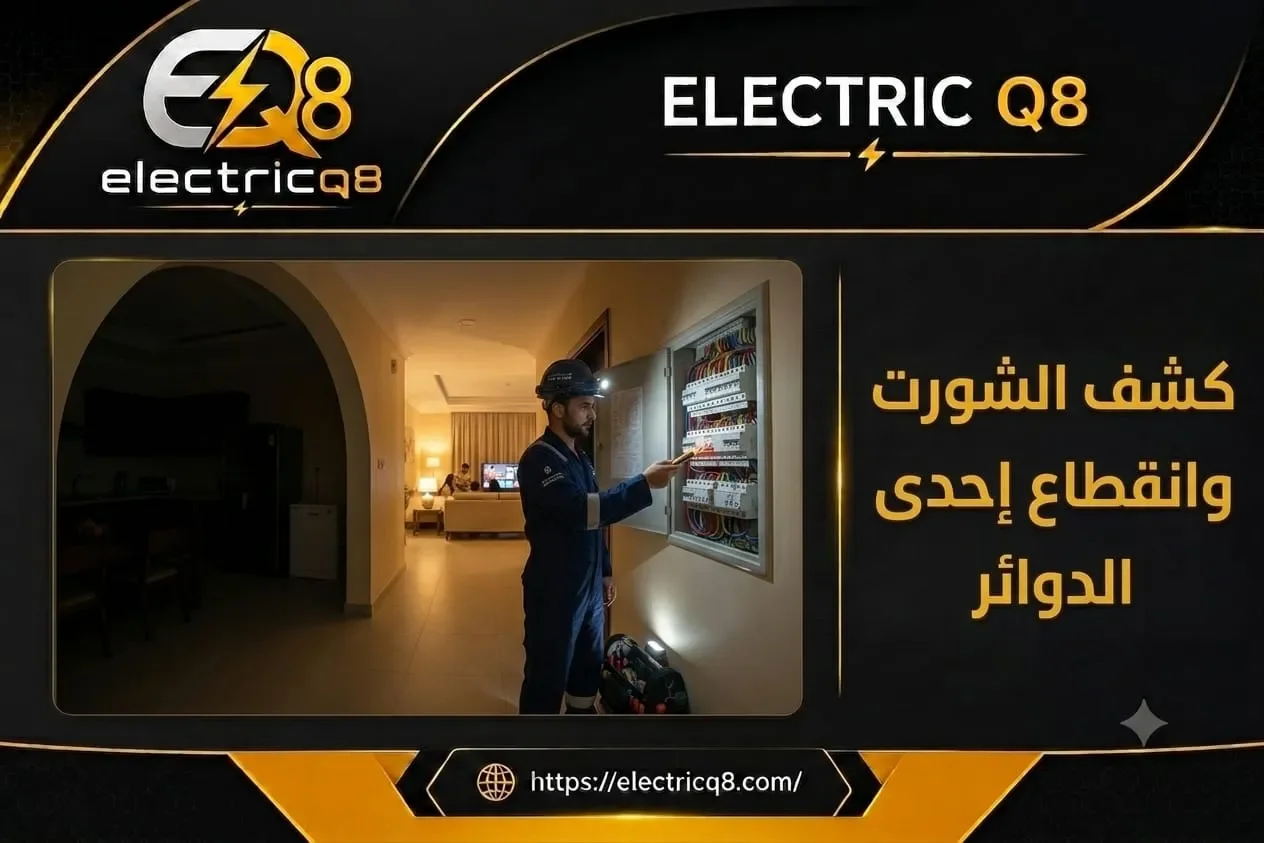
When hidden lighting stops working completely, it does not automatically mean that the entire LED strip has burned out. In many cases, the problem may be located in a shared power supply point, LED power supply, electrical connection, or another part of the circuit serving the complete lighting run. This is where systematic diagnosis differs from randomly opening the ceiling or replacing sections of LED strip one after another. The first step is to determine whether the failure happened suddenly or after gradual deterioration, whether the entire run or only one section has stopped working, and whether several lighting areas share the same switch or power source. These details guide the inspection and help locate the actual cause with the least possible disturbance to the ceiling and decorative finishes.
Hidden Lighting Not Working
When hidden lighting is not working, the first priority is to define the extent of the fault before touching any part of the ceiling or opening the gypsum board. If you have a long hidden LED run that suddenly goes completely dark while the other lighting in the room continues working normally, a fault in a shared supply or control component is more likely to deserve attention than assuming every section of the LED strip failed at exactly the same moment. If one section still works while another section is off, the diagnosis changes and greater attention is given to an interruption along the run, a connection between sections, or a separate supply serving the affected area. This simple comparison can prevent a considerable amount of unnecessary dismantling.
From practical hidden-lighting faults, homeowners sometimes see an entire ceiling feature go dark and immediately request replacement of the complete LED strip. However, many installations use one or more power supplies to operate the strips, and one of these components can fail while the LED strips themselves remain serviceable. The problem may also be related to a switch, control module, or shared connection point that has lost power. A good electrician therefore starts by following the electrical sequence of the circuit and identifying where the supply disappears rather than beginning at a random location inside the gypsum ceiling and opening sections that may have nothing to do with the fault.
It is also important to know what happened before the lighting stopped. Was there flickering, reduced brightness, or intermittent shutdown during the previous days? Was a switch or dimmer changed, or were ceiling or painting works recently carried out near the lighting run? Did the failure occur after a power interruption or after the lighting had been operating for a long period? These details do not provide a final diagnosis on their own, but they help arrange the possible causes logically. The better repair is the one that preserves the existing finish as much as possible and relies on systematic circuit inspection before any cutting or unnecessary opening of the gypsum board.
-
When the entire hidden-lighting run stops at once, the power supply and shared control components should be investigated before assuming that every LED strip inside the ceiling failed simultaneously.
-
When one section continues operating while another section has stopped, this provides an important clue that there may be an interruption, connection fault, or separate supply issue within the affected part rather than a general failure of the entire circuit.
-
Knowing whether the failure was preceded by flickering, reduced brightness, ceiling work, or changes to the control system helps guide the inspection and prevents work from starting at a random location unrelated to the actual cause.
Hidden Lighting Repair in Kuwait

Successful hidden lighting repair in Kuwait depends on how accurately the fault is located as much as it depends on repairing the defective component itself. Because this type of lighting is usually installed inside gypsum-board recesses or behind decorative ceiling details, careless dismantling can turn a relatively simple electrical fault into damaged finishes that require additional plastering and painting. Before any section is opened, the technician should determine where the electrical supply runs and where the power supplies, drivers, or connection points are located whenever the original design is known or can be traced. The more systematic the inspection, the lower the chance of opening areas that are completely healthy.
There is also no single repair price that applies to every hidden-lighting fault. A failed power supply that is easily accessible is completely different from a damaged connection buried inside a long ceiling run, and both are different from a complete LED strip that has reached the end of its usable condition. The situation also changes when the lighting system is divided between several drivers, power supplies, or control units. Accurate pricing should therefore follow identification of the fault location, component type, and access requirements rather than relying only on the question, "How much does hidden-lighting repair cost?"
The better service does not stop once the lights come back on. After repair, the lighting run should be operated for a suitable period and checked for abnormal heat, noticeable differences in brightness, or a connection point that may have contributed to the original problem. If the failed component was damaged because of trapped heat, unsuitable loading, or a poor electrical connection, installing a replacement without correcting the contributing condition may allow the fault to return later. This is the difference between a temporary repair and a proper service focused on the underlying cause.
-
Reaching the fault after tracing the electrical supply path reduces the likelihood of opening gypsum board or decorative finishes in healthy areas and turns the repair from random investigation into a targeted intervention.
-
Repair cost depends on the location of the failed component, ease of access, type of LED system, and number of power-supply units, which makes diagnosis more reliable than applying one fixed price to every hidden-lighting problem.
-
Reviewing why a component failed after identifying it is important because replacing a power supply or damaged connection without addressing heat, loading, or poor termination may allow the same problem to return.
Hidden Lighting Fault
The phrase hidden lighting fault can describe many different conditions, including complete shutdown, reduced brightness, uneven light output, flickering, or lighting that switches off after operating for a period of time. Each symptom leads diagnosis in a different direction. A complete shutdown makes the components shared by the circuit an early priority, while reduced brightness in a specific section may be related to voltage drop along the run, a connection point, or a problem within a particular section depending on the design of the system. Describing the actual symptom accurately is therefore much more useful than simply saying that the lighting is "broken."
It is also necessary to distinguish between a fault in the LED strip itself and a failure in the components responsible for operating it. Many hidden-lighting systems rely on power supplies, control units, or divided supply arrangements serving specific lengths of LED strip. If one operating unit fails, the customer may assume that all the hidden lighting has failed even though the problem is located at a single point before the strip. The opposite can also occur when the power supply is functioning but there is an interruption or deterioration within part of the LED run. Testing and tracing are therefore more valuable than replacing components based on assumptions.
A common mistake is installing a new LED strip before confirming that the existing power arrangement is suitable for it. If the strip type, power requirement, or total length changes without reviewing the operating requirements, the lighting may work initially and later develop heat problems, reduced brightness, or power-supply failures. A proper repair looks at the complete system including the LED strip, length of the run, power supplies, connections, controls, and installation conditions. This changes the diagnostic question from "Which component is broken?" to "Why did this part of the system fail?" and usually produces a more stable long-term result.
-
Determining whether the fault involves complete shutdown, reduced brightness, flickering, or differences between sections helps separate the possible causes instead of treating every hidden-lighting problem as the same failure.
-
Checking power supplies, control units, and connection points before replacing the LED strip prevents healthy components from being discarded when the actual fault is located in a shared component earlier in the circuit.
-
Changing the strip type or length without reviewing its power requirements can create a new fault, so any replacement should consider the complete lighting system rather than only the visible component.
Hidden Lighting Completely Not Working
When hidden lighting is completely not working, this information is diagnostically important because a complete system shutdown differs from failure of a small section of LED strip. If several meters of hidden lighting operate from a shared supply and all of them go dark at exactly the same time, it makes little sense to start opening and testing the strip meter by meter before confirming the electrical supply and inspecting the shared components serving the complete run. The system may also be divided between several power supplies even though it appears to the customer as one continuous lighting feature, so the actual installation arrangement should be understood before deciding where the fault is located.
The difference becomes even more important in large ceilings. Hidden lighting may surround an entire living room while the electrical installation is actually divided into several sections, each with its own supply arrangement but controlled from one location. If everything stops working, the electrician needs to determine where these sections come together and which shared component could cause the complete loss of lighting. If testing shows that the supply reaches one section but does not continue correctly beyond it, the investigation can then be narrowed without disturbing the rest of the ceiling.
If the complete shutdown was preceded by a noticeable change such as widespread flickering, reduced brightness, or intermittent operation, those earlier symptoms become part of the fault history. Similarly, if a burning smell or signs of overheating appear near a power supply or electrical connection, the lighting should not repeatedly be switched back on for testing. The affected circuit should remain out of use until it can be properly inspected because the objective is not merely to restore the lighting but also to confirm that there is no damaged connection hidden inside the ceiling finish.
-
When all hidden lighting stops simultaneously, inspection should prioritize the power supply, control system, and shared connection points before the LED strip is opened along the ceiling in search of an unconfirmed failure.
-
Understanding that a lighting run that looks visually continuous may actually be divided into several electrical supplies helps locate the affected section according to the real installation rather than the decorative appearance alone.
-
Widespread flickering, reduced brightness, or a burning smell before complete shutdown provides useful diagnostic history and should be reported because it helps explain how the fault developed.
Hidden Lighting Circuit Repair
Hidden lighting circuit repair is different from simply replacing an LED strip because the circuit includes the electrical path that allows the lighting to operate from the supply source through to the lighting units. The problem may begin at the switch, control unit, power supply, connection point, or another section of the wiring. If inspection confirms that the LED strip itself is healthy, there is no reason to replace it simply because it is easier to reach than the actual electrical fault.
A systematic approach mentally divides the circuit into stages and then determines where power is available and where it disappears. This type of electrical tracing should be performed by a qualified electrician and is not suitable as a DIY task inside a ceiling containing wiring that may be energized. The purpose is not to open every point but to narrow the fault location step by step. If power reaches the operating unit but the required output is absent, the diagnostic direction is different from a situation where electrical supply never reaches the unit at all.
When a connection point inside the circuit is repaired, the condition of the surrounding conductors should also be reviewed rather than focusing only on the section that became disconnected. If the fault resulted from a poor connection and produced heat, part of the insulation or the connection terminals may also have been affected. Simply reconnecting the same damaged end without assessing its condition can allow the problem to return. Professional repair removes the cause of the fault, restores the connection correctly, and then tests the system under normal operation to confirm stability.
-
Circuit repair begins by identifying the stage at which electrical supply is lost instead of replacing the complete LED strip simply because the final symptom is a lack of light.
-
Power reaching the operating unit with no correct output is different from the supply never reaching that unit, so systematic tracing reduces the number of areas that need to be opened or components that need to be replaced.
-
A connection point that has suffered overheating requires inspection of its terminals and surrounding insulation before reconnection because correcting the loose contact alone may not be enough when thermal damage has already occurred.
Gypsum Board Lighting Inspection in Kuwait
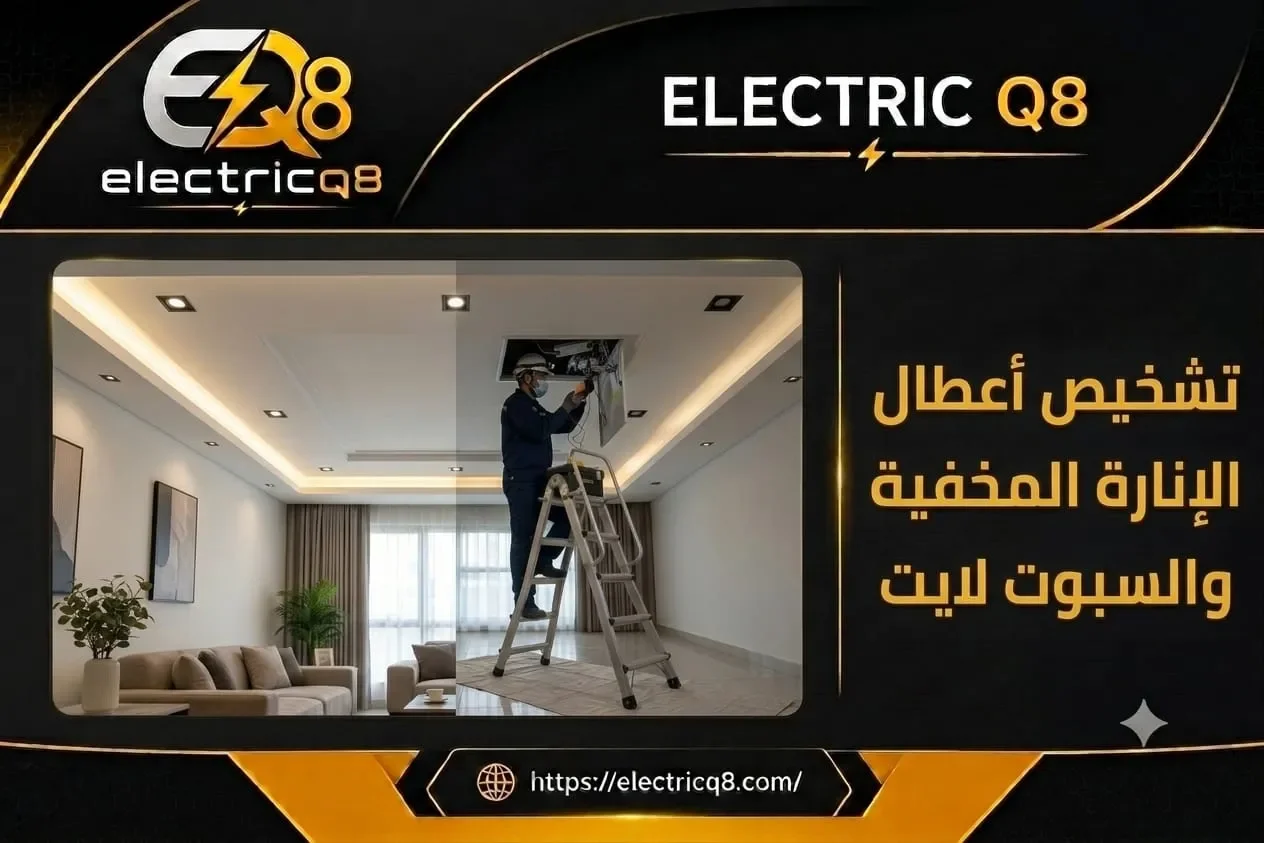
The importance of gypsum board lighting inspection in Kuwait comes from the fact that the ceiling finish can make some components more difficult to access than exposed lighting. A power supply may be installed behind a clear service opening or in a location accessible through a spotlight opening, while another design may place it somewhere that must be accurately located before access is possible. The quality and planning of the original installation therefore have a significant effect on how easily the system can be maintained years later.
The electrician begins by understanding how the lighting is divided, how many areas have stopped working, and how those areas are controlled. If the gypsum-board lighting consists of two runs and one continues working while the other has stopped, this information helps identify the supply associated with the failed section. The inspection can also consider unusual heat, discoloration, or sounds near locations where operating components may be installed. There is no reason to cut the gypsum board simply because someone assumes that a driver is located behind a particular section.
When new hidden lighting is being installed, future maintenance should also be considered from the beginning. Components that may eventually require service or replacement should be installed with reasonable accessibility according to the installation method and product requirements. Hiding everything may produce a clean appearance on the day the project is completed, but it can make future faults considerably more expensive if there is no practical way to reach serviceable components. A good inspection can therefore provide information that prevents the same accessibility problem during future modifications.
-
Identifying how gypsum-board lighting is divided before opening the ceiling helps connect the failed area to its supply source rather than creating exploratory openings in several locations without evidence.
-
Knowing the locations of power supplies and connection points from original plans or previous installation information reduces inspection time and protects the gypsum and paint compared with trying to locate these components only after a fault occurs.
-
Considering future access to serviceable components when installing new hidden lighting makes later repairs easier than a system in which every operating component has been concealed without planned access.
LED Hidden Lighting Maintenance
LED hidden lighting maintenance involves more than replacing sections after they stop working. If a system has been operating for years and begins showing differences in brightness, changes in light color, or repeated failures in nearby sections, these symptoms deserve an assessment of the overall installation. Some problems may be related to the age of the LED strip while others may involve the power supplies, heat, or electrical connection points. Useful maintenance distinguishes between these causes instead of automatically replacing the entire system.
In long lighting runs, differences may sometimes be noticed between the beginning and end of a strip or one section may appear weaker than another. A single conclusion should not be applied immediately because the reason depends on the supply arrangement, run length, strip specifications, and connections. The electrician should review the existing design and compare performance between sections to determine whether one point needs repair or whether the supply arrangement should be reconsidered during a larger renovation.
Maintenance is also an opportunity to correct unsuitable decisions made during earlier repairs rather than repeating them. If every failed power supply has previously been replaced with a different component without documentation, the ceiling may eventually contain several unrelated parts that are difficult to trace. During repair, recording the type and location of installed components where practical can make future maintenance faster and more accurate.
-
Changes in brightness or light color between sections of a run may provide information about the condition of the strip or its power arrangement and deserve assessment before the fault develops into complete shutdown.
-
Repeated failures within the same area should lead to investigation of a shared factor such as heat or electrical connections instead of treating every failed component as an unrelated event.
-
Documenting the locations of operating units and the types of components installed during maintenance makes future inspection faster and prevents the ceiling from accumulating different components without a clear record of which section each one serves.
Electrician for Hidden Lighting Repair in Kuwait
Choosing an electrician for hidden lighting repair in Kuwait should depend on the ability to trace the circuit while protecting the ceiling finish rather than on how quickly someone recommends replacing the LED strip. Ask how the system will be inspected. Will the electrician identify the supply source and circuit divisions first? Will the power supply and electrical connections be checked before requesting that gypsum board be opened? Can the electrician explain where the suspected fault is located and why access to a particular area may be required? These answers are more valuable than a quick promise to replace everything and finish the job.
The right electrician should also distinguish between faults involving the electrical supply and problems within the LED operating components according to the design of the system. Not every section inside the ceiling should be approached in the same way. Appropriate measurements should be used to determine where the supply stops without asking the customer to open several areas by trial and error. If access to a concealed point is genuinely required, that decision should be based on inspection findings as far as practical.
For trust and cost control, the scope of the work should be clear before the repair expands. If testing proves that the fault is limited to one power supply, there is no reason to replace a complete LED strip that remains in good condition. If the strips themselves have deteriorated across several sections, the reason for recommending broader replacement should be explained. A better service gives the customer a technical reason for the decision rather than simply presenting a list of components to replace.
-
An electrician who begins by identifying circuit divisions and power sources reduces the likelihood of opening healthy ceiling sections compared with someone who starts searching directly at the LED strip without tracing the system.
-
Explaining why access to a specific point inside the gypsum board is necessary gives the customer a clearer understanding of the repair scope and makes any disturbance to the finish based on diagnosis rather than guesswork.
-
Recommending replacement only for the damaged component when the rest of the system is healthy provides better value than replacing the complete installation while the original cause remains unknown.
Hidden Lighting Strip Problem
A hidden lighting strip problem can appear in different ways depending on the type of failure. A small section may stop while the rest of the strip continues working, individual LED points may become weaker, the color may change in one area, or the lighting may stop after a particular point along the run. These symptoms differ from complete shutdown caused by a shared power-supply component, so seeing the strip continue operating partially provides useful information about where the investigation should focus.
When a damaged section is replaced, compatibility with the existing lighting should also be considered. A difference in color temperature or brightness can make the new section visually obvious even when it operates correctly from an electrical perspective. The electrical specifications and connection method also need to be considered rather than purchasing the nearest available roll of LED strip. In decorative installations, the visual result is part of a successful repair just as much as restoring electrical operation.
If the strip repeatedly fails at exactly the same location, the issue may not be the quality of the strip alone. Heat conditions, installation method, connection quality, or power-supply design may all deserve investigation. Replacing the same section every few months without finding the reason turns maintenance into a recurring expense instead of a permanent repair.
-
A failed section with the remainder of the LED run still operating helps locate the problem more precisely than complete shutdown caused by a shared supply component.
-
Selecting a replacement section requires attention to electrical specifications, color temperature, and brightness so the new section integrates with the existing system rather than creating an obvious difference after repair.
-
Repeated strip failure in the same location should lead to a review of installation conditions, heat, and power supply because replacing the damaged section alone may correct the symptom without removing its cause.
Hidden Ceiling Lighting Repair in Kuwait

Hidden ceiling lighting repair in Kuwait requires combining electrical diagnosis with protection of the decorative finish because an incorrect decision about where to gain access can add restoration costs that have nothing to do with the original fault. Inspection should begin from accessible components such as the circuit board, switch, control system, and known access points before moving gradually toward concealed sections according to the test results. This sequence reduces the need to open the ceiling.
In some cases, the electrician may discover that the original system was installed in a way that makes future maintenance unnecessarily difficult, such as placing a serviceable power supply inside a completely inaccessible space. If access becomes necessary during the repair, it may be possible to improve future serviceability rather than closing the component back into the same difficult location, provided this is suitable for the installation and design. The repair can therefore become an opportunity to correct a weakness in the original setup.
Before the job is completed, the entire lighting run should be tested rather than only the section that was repaired. The electrician should confirm stable operation, consistent lighting along the run, and the absence of sections that flicker, cut out, or become unusually weak. When a component has been replaced, its compatibility with the rest of the system should also be verified. The desired result is not simply that the lights come back on, but that the circuit operates reliably and can be maintained more clearly in the future.
-
Beginning the inspection from available access points and progressing according to electrical test results reduces potential ceiling damage compared with opening the finish first and searching for the fault afterward.
-
Discovering a serviceable component inside a completely inaccessible location can provide an opportunity to improve future access during the repair when doing so is practical and suitable for the installation.
-
Testing the complete lighting run after the work is finished can reveal any remaining weakness elsewhere and confirms that the replacement component is compatible with the system rather than serving only as a temporary way to restore light.
Conclusion
When hidden lighting is not working, the correct response is not to start opening the gypsum board or purchase a new LED strip before identifying where the electrical path has failed. Complete shutdown may be caused by a shared component, while failure of one section introduces different possibilities involving the strip, connections, or divided power supply. For this reason, proper hidden lighting circuit repair depends on systematic tracing from the source to the affected section while preserving the ceiling finish as much as possible. When hidden lighting repair in Kuwait is required, it is better to choose a service that explains the cause, defines the repair scope, and tests the system after completion instead of replacing components by trial and error. The more access decisions are based on measurements and clear diagnosis, the less unnecessary dismantling is required and the greater the chance of correcting the problem at its source.
Frequently Asked Questions
Why did all my hidden lighting stop at once?
If the entire lighting run stops at the same time, the cause may be a shared component such as the power supply, control system, or an operating unit serving the complete run. It does not necessarily mean that every LED strip failed simultaneously. Inspection determines where the electrical supply is lost before a replacement decision is made.
Do you have to open the gypsum board to repair hidden lighting?
Not always. Inspection should begin from accessible points and known components to locate the fault before any opening is made. If the failed component is inside a completely inaccessible area, some work on the ceiling finish may be necessary, but the required location should be narrowed down as accurately as possible before opening it.
How do I know if the LED strip or power supply is faulty?
A section of strip continuing to work while another section has stopped can provide a different diagnostic clue from the complete lighting run going dark. However, the final decision requires inspection of the supply, output, and connections. The appearance of the fault helps guide diagnosis but does not replace proper electrical testing.
How much does hidden lighting repair cost in Kuwait?
The cost depends on the type of fault, number of affected sections, type of operating components, ease of access, and whether the work requires intervention in the gypsum board or decorative finish. Identifying the cause first therefore provides a more accurate basis for pricing than applying one fixed price to every hidden-lighting problem.
Should I replace all hidden lighting if sections start failing?
Not necessarily. If deterioration is limited and a compatible replacement section can be installed, a targeted repair may be sufficient. If several sections have deteriorated or the system is older and repeatedly developing faults, the cost of continued individual repairs can be compared with a broader lighting upgrade before deciding which option provides better value.